Governor Gavin Newsom signed legislation Monday permanently establishing California’s Farm to School program into state law ensuring public schools continue to receive locally sourced, farm-fresh produce.
“California is leading the nation in supporting children’s health by serving nutritious, locally grown school meals and providing food education that equips students with lifelong healthy habits,” Newsom said in a press release. “Supporting California farmers, local communities, and the health of California’s children remains a top priority, which is why we have secured permanent funding for California’s nation-leading Farm to School Program.”
The signing follows an announcement from Newsom and First Partner Jennifer Siebel Newsom last month that nearly 3.5 billion free school meals have been served since the implementation of the state’s “first-in-the-nation” universal school meal program in 2021.
According to the food advocacy group Nourish California, more than 2 million children in the state live in households that struggle with food insecurity.
“California’s kids deserve access to school meals that are locally sourced and full of nutrients to help them reach their full potential and thrive,” Siebel Newsom said. “Our Farm to School Program has been a lifeline for children across the state, not only providing free, healthy meals but strengthening local economies through food worker training and supporting California farmers and producers.”
Before now, funding through the Farm to School Incubator Grant Program was a cycle-by-cycle endeavor. The bill now locks in $24.6 million dollars in next year’s budget. The goal being to strengthen regional food systems and expand nutrition education.
“It’s hard to overstate how important this step is,” said CDFA Secretary Karen Ross. “It will guarantee some certainty of market so that many small farms and local farms will have opportunities to grow a certain market as opposed to planting crops and hoping you can find outlets to sell it.”
According to CDFA, 100% of the farmers funded by the program to date are small, mid-size, or socially and economically disadvantaged producers using climate-smart, organic, or regenerative practices. Every $1 invested, the incubator grants generate $2.10 of localized economic activity.
To bridge the gap between farmers and nutritional directors, Ross says CDFA employs 16 "regional navigators" across the state who act as “matchmakers”, helping schools identify local crops within 50 to 100 miles.
“By putting this kind of stability into a program, to say that this is at the level at which we can continue to grow this program, our goal is to reach 100% of the school districts,” she said.
The Farm to School Incubator Grant program, administered by CDFA, has directed $86 million dollars into 375 regional projects since 2021, reaching 49% percent of all public schools in the state, according to the Governor’s office.
Through Farm to School, Ross says farmers have seen increases in opportunities to get their produce into more food hubs, community food hubs, and aggregation sites.
Local Farmers benefit
Randy Stannard runs Root 64, a small one-acre urban farmstead in the Tallac Village neighborhood in Sacramento. He started it with his partner, Sarah McCammon, in 2017 and sells a wide variety of produce to local restaurants and through the Midtown Farmers Market. Root 64 also has a farmstand that sells every Saturday April through November.
The first grant Stannard ever wrote was a $20,000 proposal through the Farm to School program to acquire several commercial sized caterpillar tunnels—shade cloth coverings that can protect crops and extend seasons.
“[That’s] a lot of money for us and a lot of really critical infrastructure that helped us make a big jump,” Stannard said.
Stannard now sells bulk produce directly to the Sacramento City Unified School District’s Central Kitchen, located just over a mile from the farm and to the Davis-based SPORK Food Hub, which serves over 40 school districts and is another beneficiary of Farm to School.
Being able to deliver healthy, nutrient-dense food to students in his own backyard evokes a sense of pride for Stannard.
“You just can't get higher quality produce than what they're able to get through us. And that feels great," Stannard said. “We have a son that goes to a Sacramento City Unified School. It's all kind of connected and it helps enhance our connection to the community.”
For small and mid-sized farmers struggling against rising inflation and climate change, the permanent backing of the program represents more than just financial relief.
Kyle Forrest Burns runs Burns Blossom Farm, an organic, family-owned farm in Chico, with his wife, Mel Burns. He calls the job fulfilling, but it can also take its toll.
“As a farmer, you suffer from a lot of burnout, you suffer from depression, it's a pretty tough job,” Burns said. “Farming in the Central Valley where temperatures exceed 100 degrees, I often go ‘is this going to work?’ Seeing the government back projects like this helps me realize that with support we can make this work.”
Burns received a $306,000 grant from the program in 2023 which enabled him to build a new insulated wash and pack barn facility. He called Farm to School funding “instrumental” to the success and growth of his farm.
“Such a huge game changer to be able to have an insulated building in our climate as well as a giant shade structure to grow organic blackberries and raspberries in the Central Valley,” Burns said.
The funds went towards purchasing a Kubota tractor as well which allowed them to scale up and mechanize their farming.
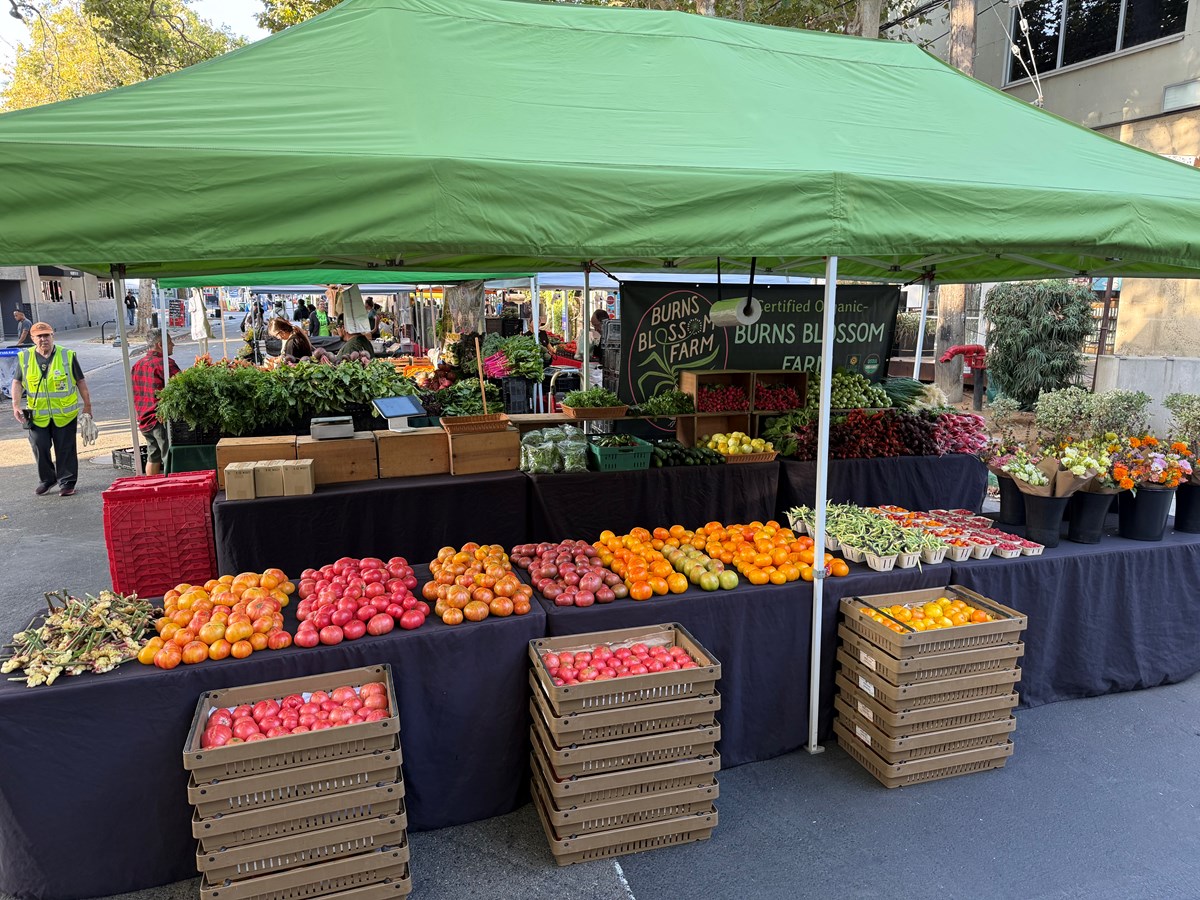 Burns Blossom Farm vendor tent at a farmers' market.Courtesy of Burns Blossom Farm
Taking the classroom outside
Both Burns and Stannard have leveraged their farms to not only feed school children healthy food but educate students about where that food comes from.
As part of the Farm to School grants, Stannard’s expanded operations includes providing “experiential and educational opportunities” through the Urban Agriculture Academy (UAA) at Luther Burbank High School in Sacramento.
The academy explores sustainable agriculture while focusing on impacts food justice, health, and nutrition can have on diverse urban communities, according to the Sacramento City Unified School District website. Root 64 uses its resources to help build up the school’s own on-site market garden and work with the school's internship program.
“It's a food system,” Stannard said of supporting schools' agricultural programs. “Strengthening that creates resilience. It really builds a lot of strength in our regional economy. I think that's valuable.”
Burns has opened his farm to students, showing the importance of the connection to one's food by hosting hands-on food education through field trips and taste testing events.
“We had second graders out and I pulled the radish out of the ground in front of them, and they squealed with delight and shock. They had never seen a vegetable come out of the ground,” Burns said. “It's so exciting to just see this shiny gem unearthed out of the soil.”
Burns finds that while the day-to-day grind of operating an organic farm can be grueling at times, he says being able to send food to school districts and educate children has been an "amazing" lifestyle.
"I find a lot of gratification in sharing, and the fact that I get paid to share beautiful produce with people and children and schools is even more exciting.” Burns said. “If kids can witness that and see it, I believe they will share it with their parents and their friends, and it just continues to ripple outward."
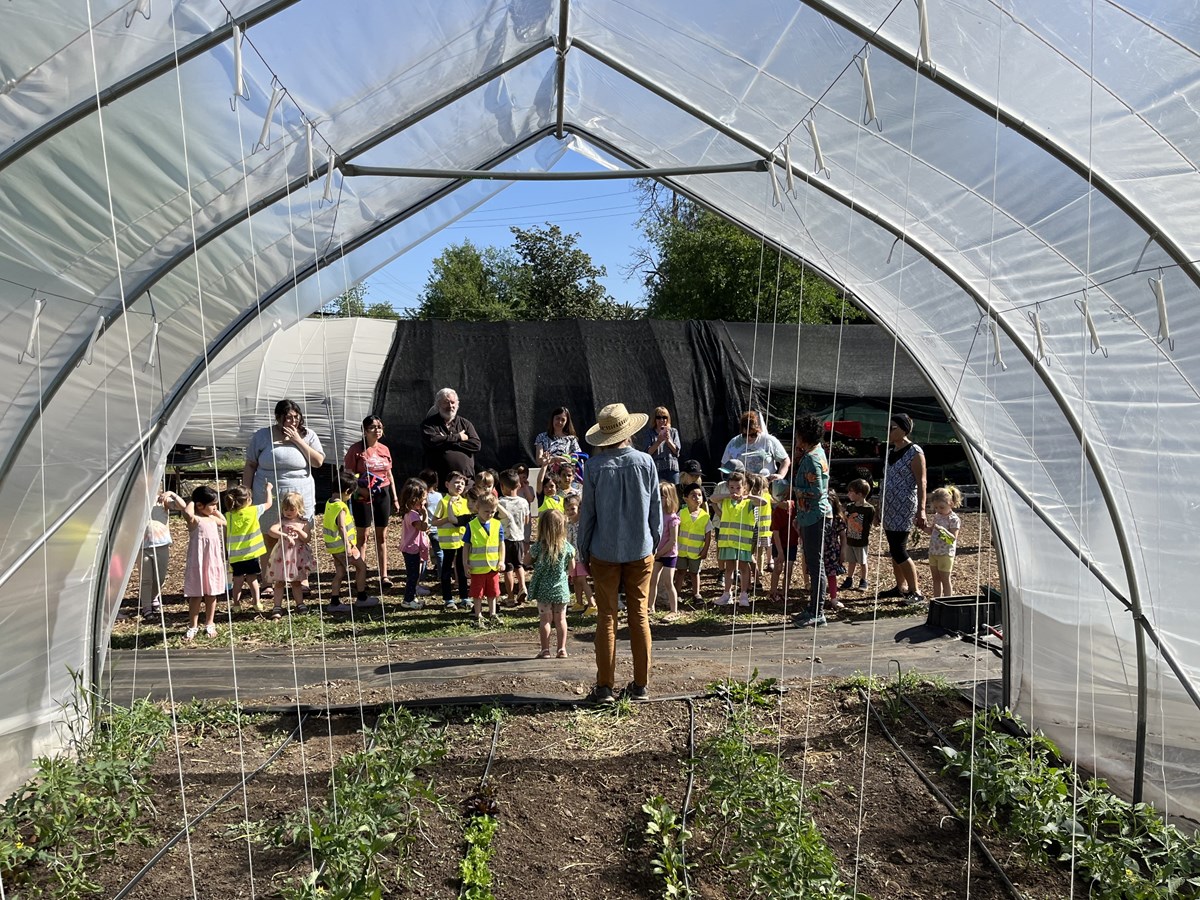 School children on a field trip to Burns Blossom Farm to learn about where their fresh fruits and vegetables come from.Courtesy of Burns Blossom Farm
Follow us for more stories like this
CapRadio provides a trusted source of news because of you. As a nonprofit organization, donations from people like you sustain the journalism that allows us to discover stories that are important to our audience. If you believe in what we do and support our mission, please donate today.
Donate Today