California lawmakers approved a temporary lifeline for hundreds of small farmers after the Trump administration ended a federal program that helped connect local farms with schools, food banks and other community organizations.
Governor Gavin Newsom recently signed a state budget that includes $15 million to keep the Local Food Purchase Assistance Program operating for another year. The Biden-era program helped schools, food banks and other organizations buy fresh food directly from small farms before it was eliminated earlier this year.
The Trump administration said it ended the program because it was considered as a temporary pandemic-era initiative that no longer aligned with current priorities.
The state funding replaces the lost federal dollars for one year while advocates push Congress to restore long-term funding in the next federal farm bill.
The program has become an important way for Yolo County farmers to keep locally grown food in the community.
From the fields to local classrooms
Jim Knight never planned on becoming an apricot farmer.
He was told the apricot trees on his property were dead when he moved to Esparto several years ago. They turned out to be Royal Blenheim apricots, which are a rare heirloom variety prized for its flavor but too delicate to survive shipping to most grocery stores.
The Polestar Farm owner now sells much of his harvest to nearby schools.
“You can’t get ripe apricots anywhere except on a farm stand because you have to pick it too green to really have that taste,” he said. “So they call me and I can pick it a day or so before and get it to them and they use it within three days. So the kids are getting all this fresh fruit and it’s amazing. And that wouldn’t happen without the support.”
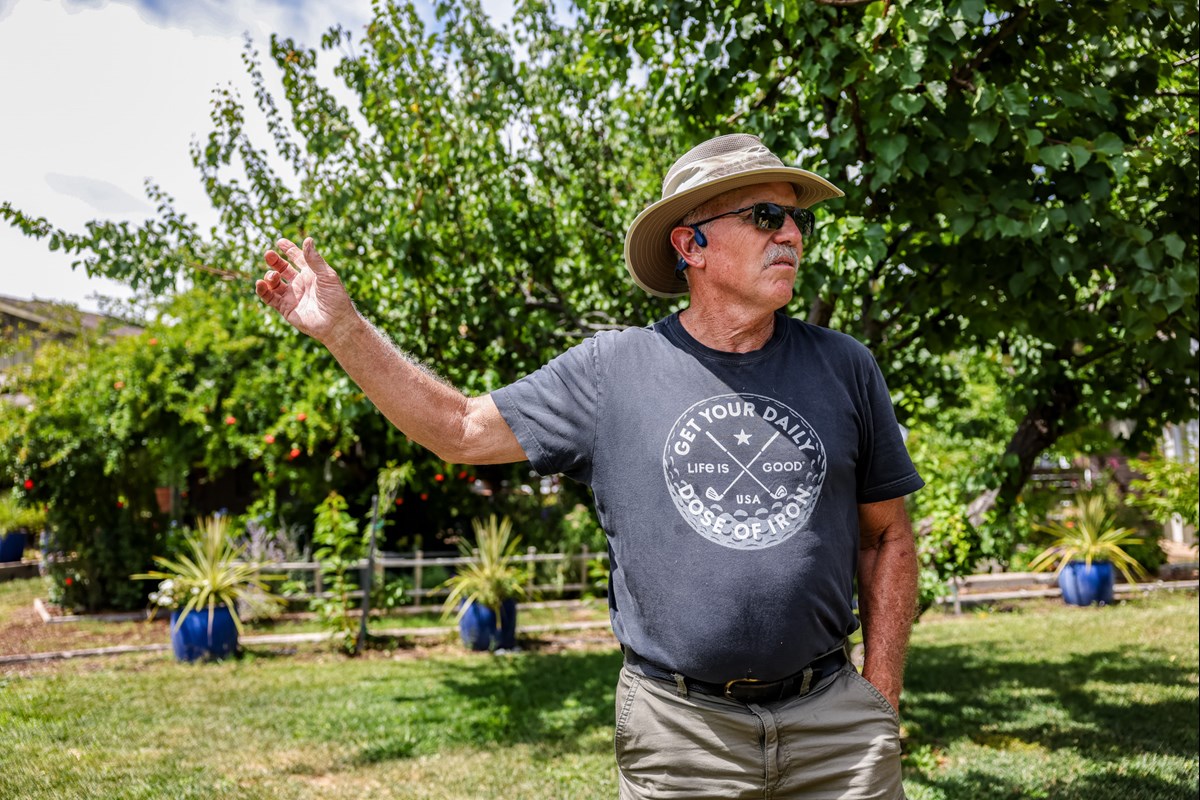 Polestar Farm owner Jim Knight Monday, June 29, 2026, in Esparto.(Chris Felts/CapRadio News)
Knight said his farm has also helped teach students valuable life skills. He has several local high school students pick fruit early in the morning during harvest season.
The former educator said one student even used her earnings to fund a Future Farmers of America livestock project.
“It’s enjoyable to be able to work with the high school,” he said. “Being an administrator and a teacher, I love bringing the school into it.”
Knight worries losing a program like LFPA could mean fewer opportunities like these as small farms operating on tight margins continue to disappear.
“We’re losing small farms right and left,” he said. “The federal support is not what it could be.”
A recent USDA report found that California lost 400 farms last year alone.
A lifeline for small farmers
Beth Smoker is the policy director for the California Food and Farming Network and said one of the program’s biggest benefits was giving farmers the confidence to plan future crops.
“They were able to do very real crop planning knowing that they would then have a market to buy that produce,” Smoker said. “So it was really stable.”
Smoker said the program strengthened regional food systems by helping farmers, food banks and schools rely less on national supply chains and more on food grown nearby.
One example she highlighted was Hmong farmers growing culturally familiar produce that were able to reach Hmong community members through local food banks.
“Food is more than just calories,” Smoker said. “It is nutrients that feed you culturally as well.”
Jamie Fanous with the Community Alliance with Family Farmers said the program’s impact extends beyond agriculture, noting that every dollar spent on a small farm generates roughly two dollars in the local economy.
“They’re spending money at the local hardware store, they’re buying boxes down the street for packing these weekly food boxes,” she said. “So it does have a tremendous impact on rural economies that you don’t really see with many programs and that’s what really made this special.”
Fanous said over 800 California farmers participated in the program helping supply food to roughly 50 food banks across the state.
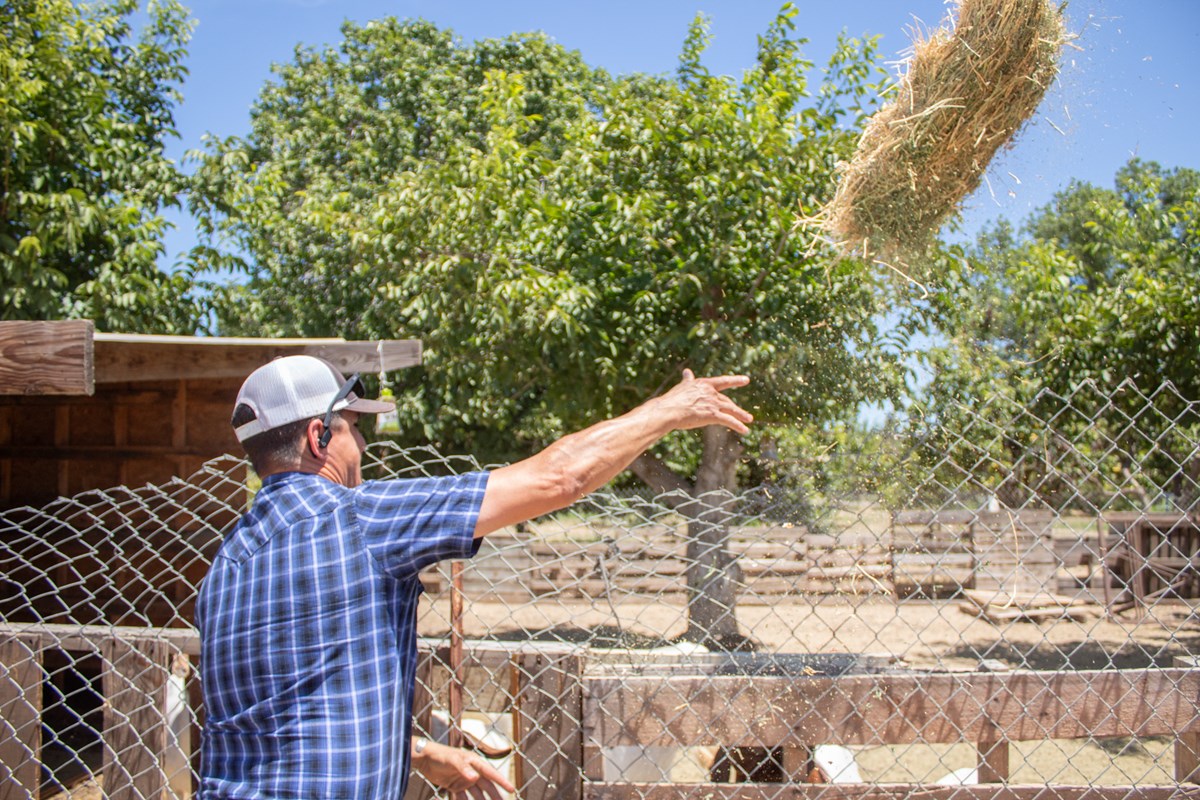 Stephen Gordon throws a bale of hay to feed his goats Monday, June 29, 2026, in Esparto.(Gerardo Zavala/CapRadio News)
Food insecurity remains high
The program also became an important source of fresh food for Californians experiencing food insecurity.
Smoker said food banks continue serving high numbers of families years after the pandemic and that she expects demand to increase as federal changes reduce access to food assistance programs.
“Hundreds of thousands of people are being unenrolled from CalFresh due to those cuts and they’ll still be hungry,” Smoker said. “So they’ll be turning to their local food banks.”
A 2024 Yolo County Food Bank survey found roughly one in three county households experience food insecurity with higher rates in rural communities like Esparto.
Yolo County Supervisor Angel Barajas said the county continues investing in food bank partnerships to help families in need.
“That’s been a partnership for many years and it’s continuing,” he stressed. “So we’re still investing some funding for those families in great need.”
A temporary solution
Stephen Gordon’s Cadena Farm in Esparto grows citrus, almonds, corn and other crops. He said roughly 5% of his annual production is sold through LFPA partnerships with local food hubs.
But Gordon said losing that reliable income makes it much harder for small farms to compete.
“If I have all this citrus and I’m already moving that much weight in one year and then I have the same amount the next year and we can’t move the same, then where is it supposed to go?” Gordon said. “If we’re not pushing it locally then we’re pushing it commercially, which is not nearly as much as far as your bottom dollar is concerned. We can’t compete with that.”
Earlier this year, Gordon joined small farm advocates at the State Capitol to ask lawmakers for three years of replacement funding after the federal program ended.
He met with Democratic Assembly Majority Leader Cecilia Aguiar-Curry, whose district includes Esparto. Gordon said she warned them that securing multiple years of funding would be difficult given the state’s ongoing budget challenges.
“I think Ms. Curry kind of prepared us for that before we left her office,” Gordon said. “That this was a temporary band-aid to a future fight.”
Advocates say Newsom’s budget provides an important bridge but they hope Congress restores permanent federal funding in the next farm bill.
But Gordon said the uncertainty around future funding — at the state or federal level — makes it difficult for small farms to plan beyond the next growing season.
“I can go down to the Capitol all I want, but at the end of the day, is my voice being heard enough and loud enough?” Gordon said. “I don’t know. In the meantime, we’ll just keep trying.”
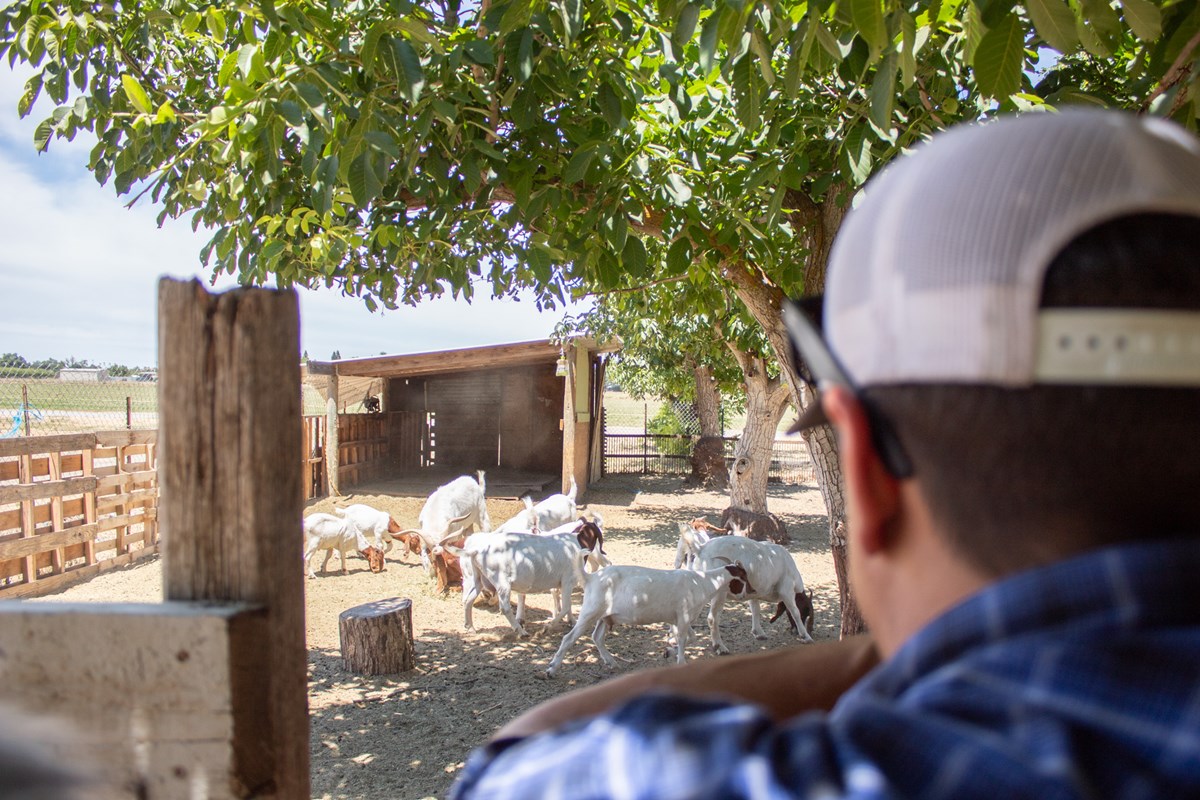 Stephen Gordon looks at his goats Monday, June 29, 2026, in Esparto.(Gerardo Zavala/CapRadio News)
Follow us for more stories like this
CapRadio provides a trusted source of news because of you. As a nonprofit organization, donations from people like you sustain the journalism that allows us to discover stories that are important to our audience. If you believe in what we do and support our mission, please donate today.
Donate Today