Thousands of state workers reported to work in-person Wednesday as Governor Gavin Newsom’s return to office (RTO) mandate for state employees took effect.
The order, which Newsom issued in March, requires state employees to work in-person four days a week starting July 1, up from the current two day requirement. It sparked pushback, and at times public protest from state workers who argue the mandate will increase traffic conditions, produce more pollution, and hurt employees who do not have reliable childcare options.
“During the summer is a little hard for parents to come back to work full time because we have to figure out what to do with our kids during the day,” said Rosaleen Ortiz de Jesus as she was on her way into work Wednesday morning.
The California Department of Developmental Services employee says she arrived an hour early to allow herself time as state workers were expected to flood downtown Sacramento, but still had trouble finding parking.
“If I could figure out the child situation and the parking situation, I’m fine coming back to work. Those are the big issues for me,” Ortiz de Jesus added.
Some state workers say they don’t mind returning to the office for the majority of the time, but acknowledge it’ll change road and parking conditions.
“I suspect probably the next couple days, since this is a holiday weekend, next week especially when it’s a full week, that’s when we’ll really start to feel the pinch in terms of the traffic, the parking,” said Eric Merrill, an employee with the California Department of State Hospitals, also on his way into the office.
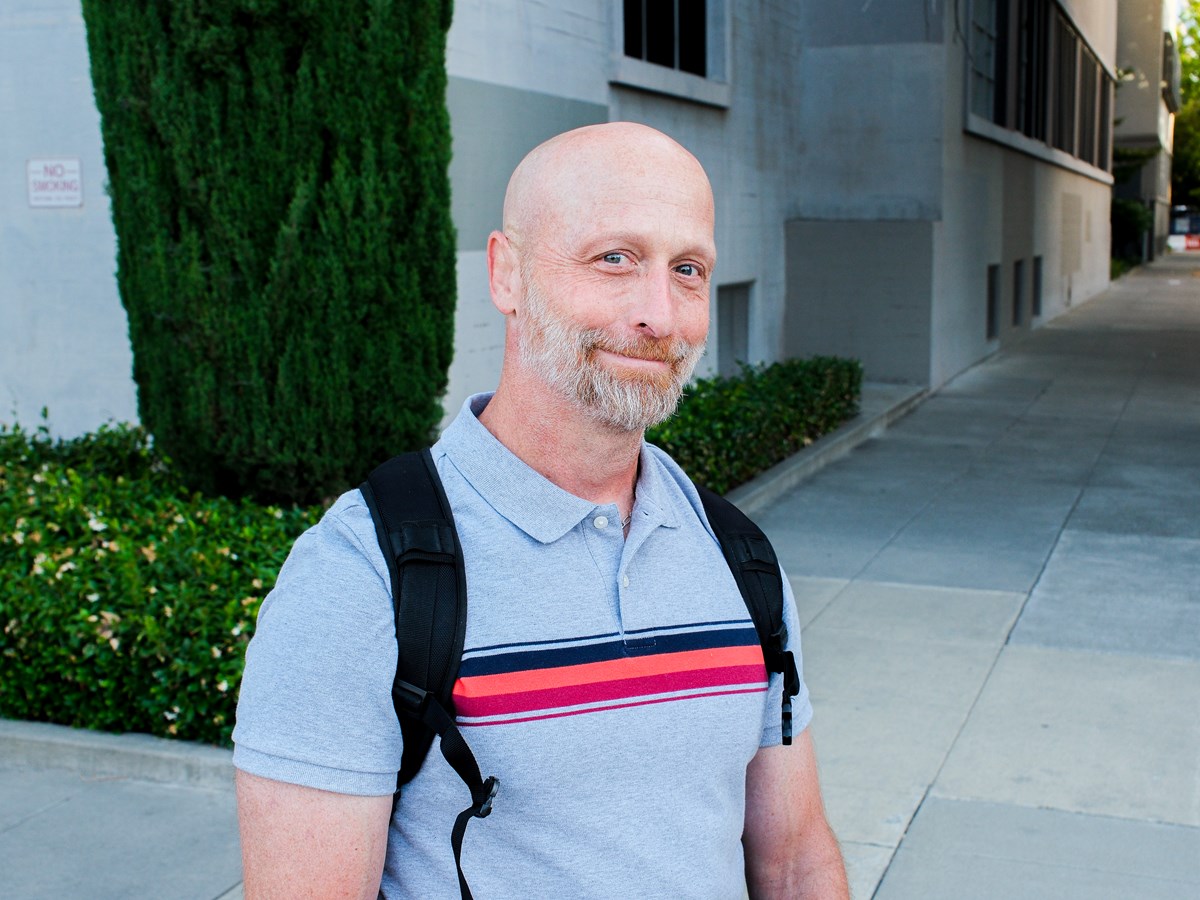 Eric Merrill works for the California Department of State Hospitals poses for a photo on his way into work on July 1, 2026.Ruth Finch/CapRadio
“I feel the pinch particularly for younger couples who have kids, you know dealing with daycare and now they have to shuffle it around,” Merrill added. “My kids are older so it’s not as bad for me, but I do feel for them.”
Other state workers are concerned their departments will not have the space needed to accommodate a large-scale return to office mandate after the state increased hiring during the pandemic.
“It’s a lot of chaos because seating, preparation, those things they have quite figured it all out yet,” said Monica Grimes, an employee with the California Department of Social Services.
In making the case for in-person work, Newsom has argued his RTO mandate will increase productivity and bolster downtown businesses that have struggled since the pandemic.
But many state workers have been publicly pushing back against the return to office mandate in recent weeks including members of SEIU Local 1000, the California Association of Professional Scientists (CAPS), the Professional Engineers in California Government (PECG), and the California Attorneys, Administrative Law Judges, and Hearing Officers in State Employment (CASE).
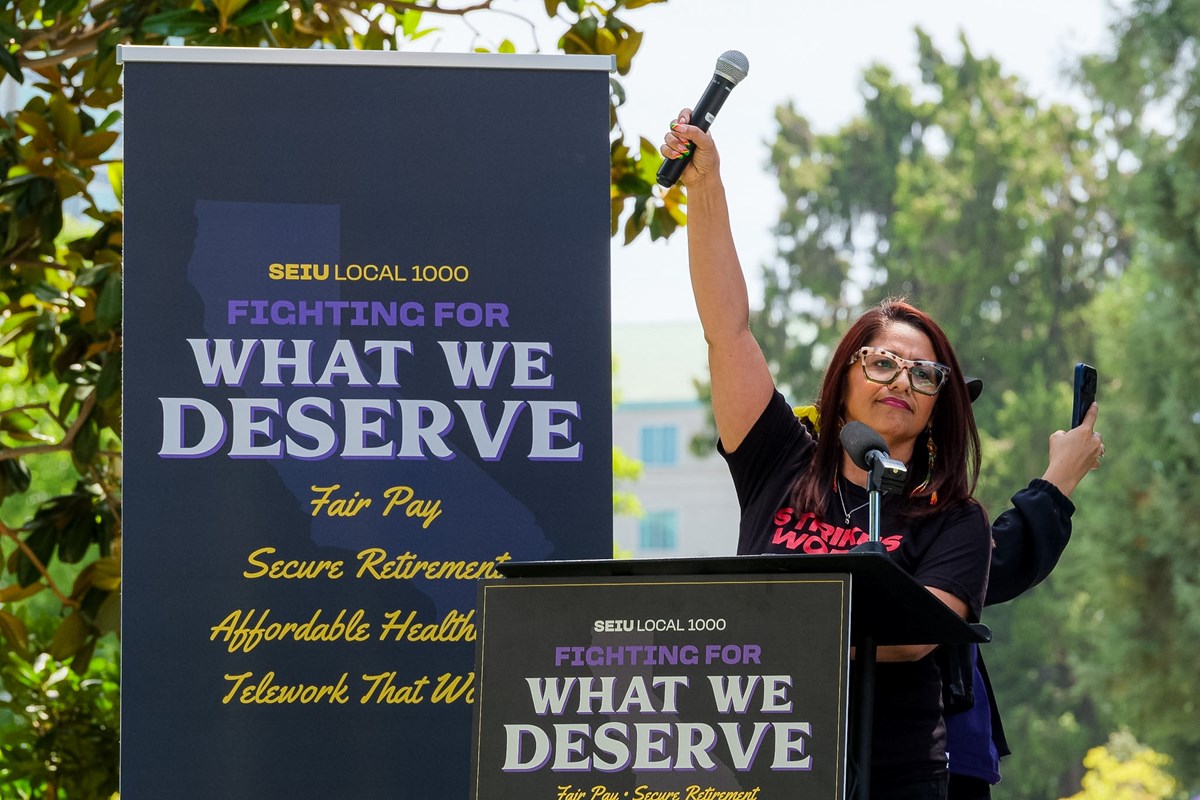 SEIU Local 1000 President Anica Walls speaks to a crowd of SEIU workers on the capitol lawn on July 1, 2026.Ruth Finch/CapRadio
“I refuse to be disrespected and pushed aside by this administration,” shouted SEIU Local 1000 president Anica Walls at a rally on Wednesday in front of the State Capitol.
The union filed an unfair labor practice complaint against the administration with the Public Employment Relations Board (PERB) last month, alleging CalHR refuses to bargain in good faith for failing to consider remote work options. Bargaining representatives say the administration again rejected the union’s remote work and pay proposals during negotiations this week. SEIU Local 1000’s contract expired on July 1.
“Telework is absolutely a negotiable working condition,” Walls told CapRadio. “The state can't simply make a unilateral decision that affects hundreds of thousands of workers without meeting its obligation to bargain.”
CalHR acknowledged the unfair labor practice charge in a statement to CapRadio, but declined to comment on labor negotiations with state worker unions.
“CalHR respects the confidentiality of the bargaining process and does not speak on ongoing negotiations. CalHR remains committed to continuing to negotiate in good faith with SEIU Local 1000. The State has reviewed SEIU Local 1000’s unfair practice charge filing and is responding as appropriate through the PERB process,” said Angela Musallam, a spokesperson for CalHR.
Pending state legislation
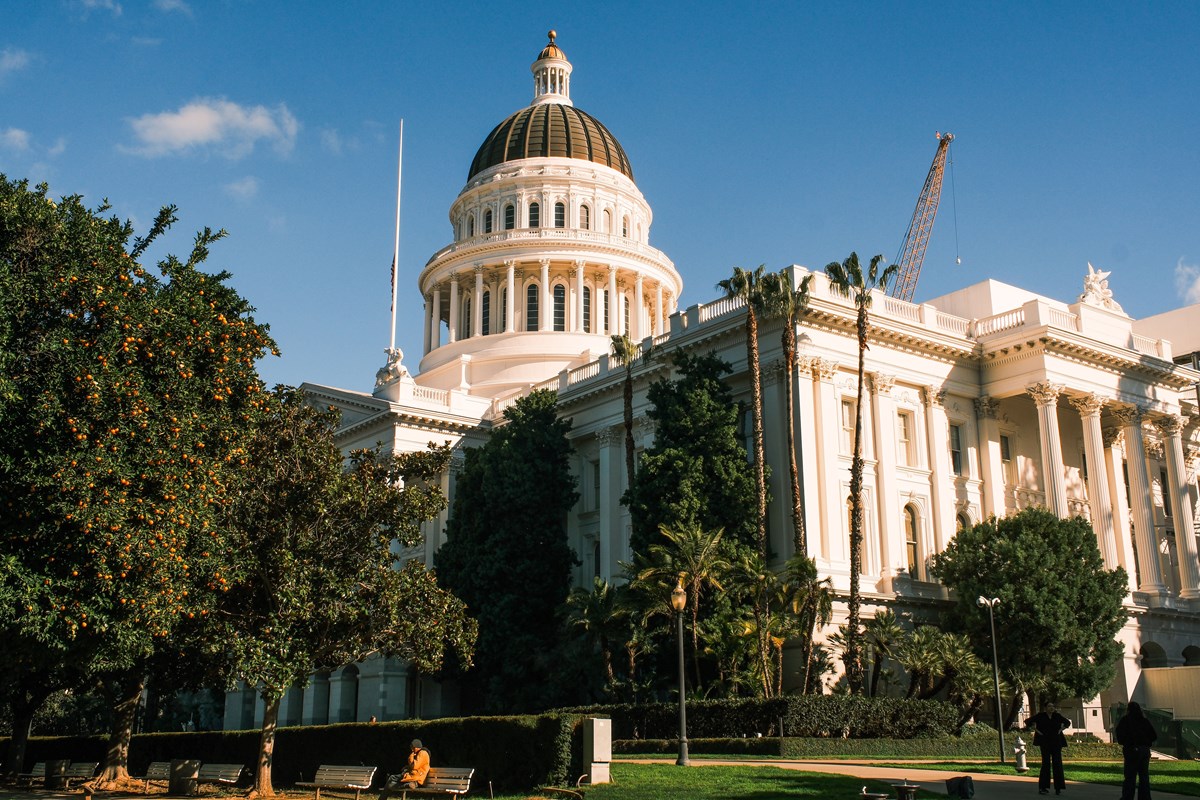 The California State Capitol building in downtown Sacramento on January 7th, 2026.Ruth Finch/CapRadio
A bill moving through the state legislature would enable state agencies to develop their own telework policies. It would also require the California Department of General Services to establish a telework dashboard evaluating the cost-savings and efficiency measures of remote work.
Democratic Assemblymember Alex Lee of Milpitas introduced Assembly Bill 1729 and says he’s looking for ways to fast track the bill through the legislative process as state workers given the RTO deadline.
“We're exporting all avenues possible, but we hope we send a strong signal to the administration that the legislature is willing to be on the side of its state employees,” Lee said.
The bill has passed the Assembly and is being heard in Senate committees. It’s garnered bipartisan support from a coalition of lawmakers, but would have to be signed by Governor Gavin Newsom to become law. Newsom has been steadfast in his return to office mandate, indicating he isn’t likely to support the state legislation.
As state workers return to office buildings throughout the state, Lee argues the state could have a problem on its hands when it comes to retaining quality employees.
“I think it is a disaster pending and you may see people frankly go find other opportunities because they're not going to uproot their entire families and their lives just so that they can suddenly change their work life habits even though they've lived this entire way for six years,” Lee said.
CapRadio's Ruth Finch contributed reporting to this story.
Follow us for more stories like this
CapRadio provides a trusted source of news because of you. As a nonprofit organization, donations from people like you sustain the journalism that allows us to discover stories that are important to our audience. If you believe in what we do and support our mission, please donate today.
Donate Today