Bay Area drone delivery company Zipline hopes to one day fly your burrito — and all kinds of consumer goods — right to your front porch.
It’s already doing so in Dallas and elsewhere across the country.
But before it can expand, Zipline’s aircraft are flying thousands of test missions above a vast Yolo County ranch near Esparto, where the Stone family has run cattle for half a century and the drones aren’t the only innovation.
On a recent tour of the Yolo Land & Cattle Company, co-owner Casey Stone stops to gaze at Zipline’s test site. He calls it “the space center,” a hub of activity almost hidden by the ranch’s fog-cloaked foothills about 40 miles west of Sacramento.
Dozens of white drones with flashing green and red lights take to the sky. They’re hovering over the middle of his 7,500-acre property.
Two-story tall drone docking towers wait for their return. Zipline engineers monitor their flight from the ground below.
Stone describes the scene this way: “My analogy is when you see ‘Close Encounters [of the Third Kind]’, where they’re climbing around the mountain and they see the extraterrestrial space station there — that’s kind of what it is.”
They might look surreal, but Zipline’s drones aren’t something out of a movie. Instead, they’re on the cutting-edge of consumer goods transportation. The company, based in South San Francisco, is in competition with tech behemoths like Amazon and Google to dominate the future of air deliveries.
A game changer for delivery
In Yolo County, Zipline’s drones operate 24 hours a day, 7 days a week, flying hundreds of feet above the Stone family’s green pastures and rolling hills east of Lake Berryessa.
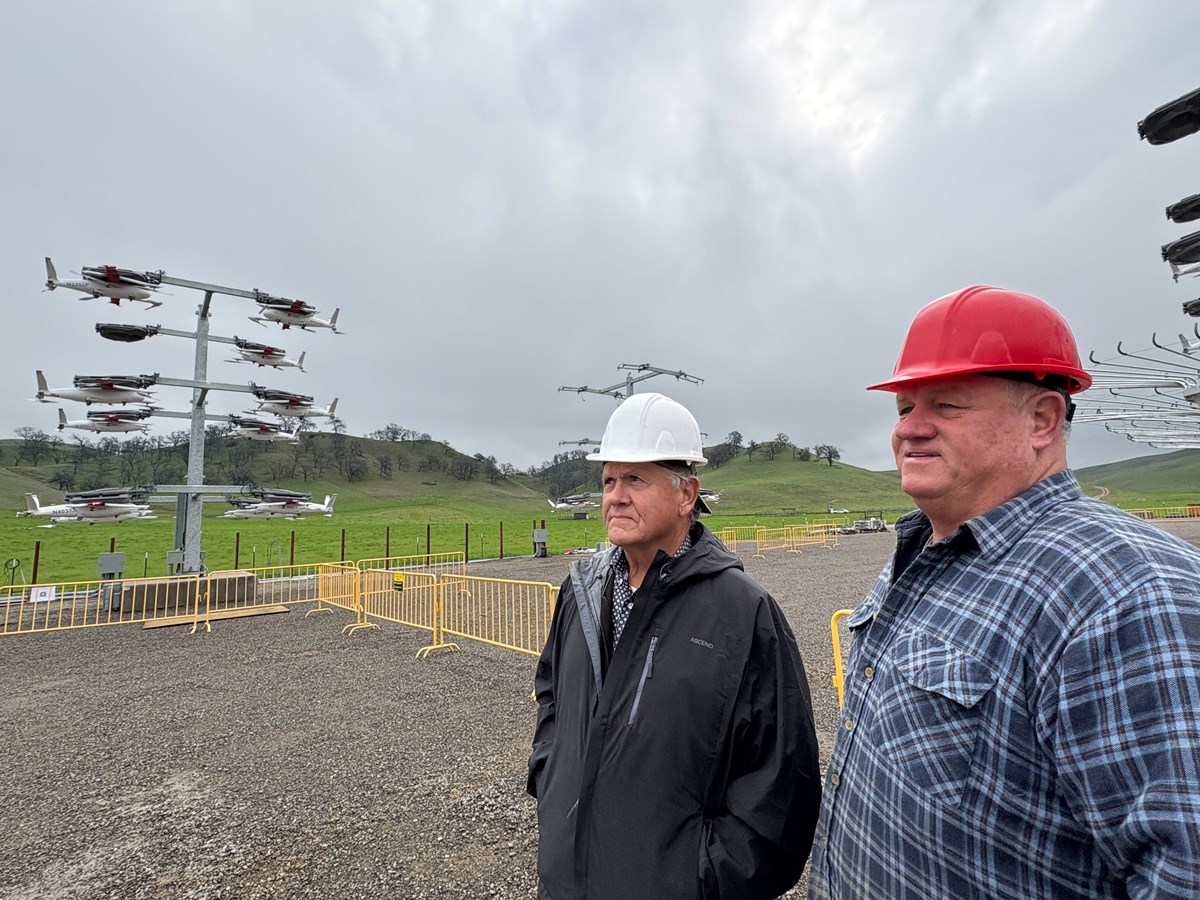 Brothers Scott (left) and Casey Stone own and manage the 7,500-acre cattle ranch in Yolo County where Zipline tests its drone deliveries.Chris Nichols/CapRadio
Zipline’s Mike Rigby is in charge of the drone testing.
His company believes its technology will be a game changer — one that takes millions of delivery cars and trucks off the road and replaces them with faster, cleaner electric-powered aircraft.
“As our CEO famously likes to say, ‘You don’t need a 4,000 pound vehicle to chauffeur your burrito to yah,’” Rigby says. “We can do that a lot more economically and efficiently through this aircraft.”
Zipline drones carry up to eight pounds of goods. The company can fit everything from medicine to groceries to gardening supplies inside the six-foot-long aircraft.
But rather than touching down outside your home or office, the drones themselves stay high above. Rigby, as if he’s reading from a sci-fi script, explains what happens next: “And then the zip has a small little droid unit that comes out of the belly of the aircraft on a tether. It has its own propulsion system, as well. So, it’s kind of a sub-aircraft.”
That “droid unit” has your delivery inside. The goal is to gently drop your order from Chipotle, Crumbl Cookies or Wal-Mart — all Zipline partners — at the desired location. Maybe even the back of your pickup.
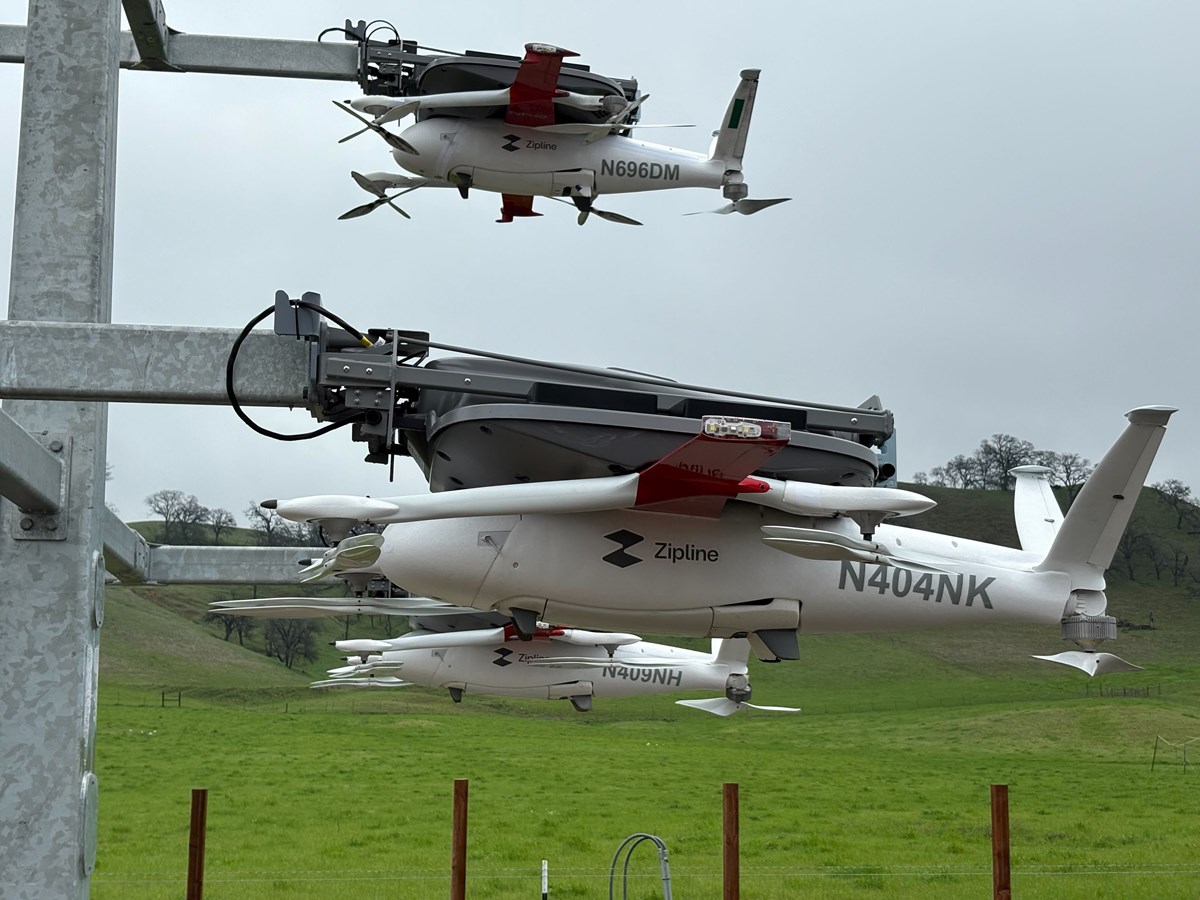 Zipline drones make their deliveries by lowering down a ‘droid unit’ from the belly of the aircraft. Chris Nichols/CapRadio
But to get their deliveries just right, Zipline needs wide open testing sites. For that reason, it partners with three ranches altogether including one in Half Moon Bay and a cold weather testing site in Wyoming.
Driving in Scott Stone’s ATV up and down the Yolo County ranch’s dirt roads and open pastures, you can see why his property makes the perfect venue.
“So this place was started back in 1976 with my dad and his partner,” he says, noting this is the company’s 50th year in operation.
Scott and his brother Casey Stone manage the ranch. It’s dotted with majestic oaks and black angus cattle.
“We raise cows and have babies every year,” Scott Stone says. “In October we wean the calves and then turn them back out into the mountains and the winter pasture ranches.”
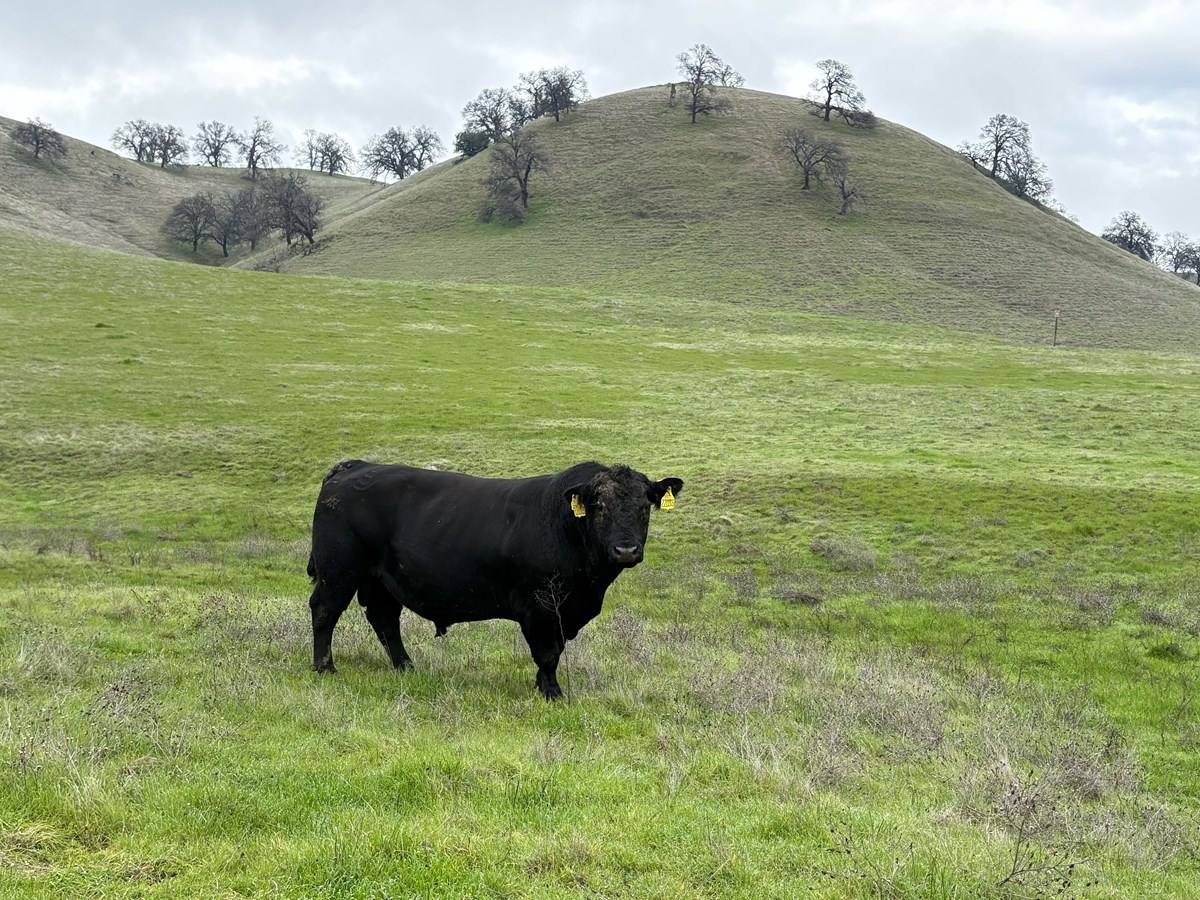 The Stone family’s commercial cattle operation produces grass-fed natural Angus beef.Chris Nichols/CapRadio
But the bucolic property is far more than just a place to raise livestock.
It’s served as a backdrop for films and TV ads. The ranch makes money off its compost production. They have a carbon sink and a real estate business.
Scott Stone says traditional ag companies need to get creative to survive.
That’s why the Stone family embraced Zipline when it approached them a decade ago, Stone says. Notably, the livestock don’t seem to mind the constant drone testing.
“We’ve never had any issues with any cows A) being struck by the drones or B) being bothered by them,” Scott Stone adds.
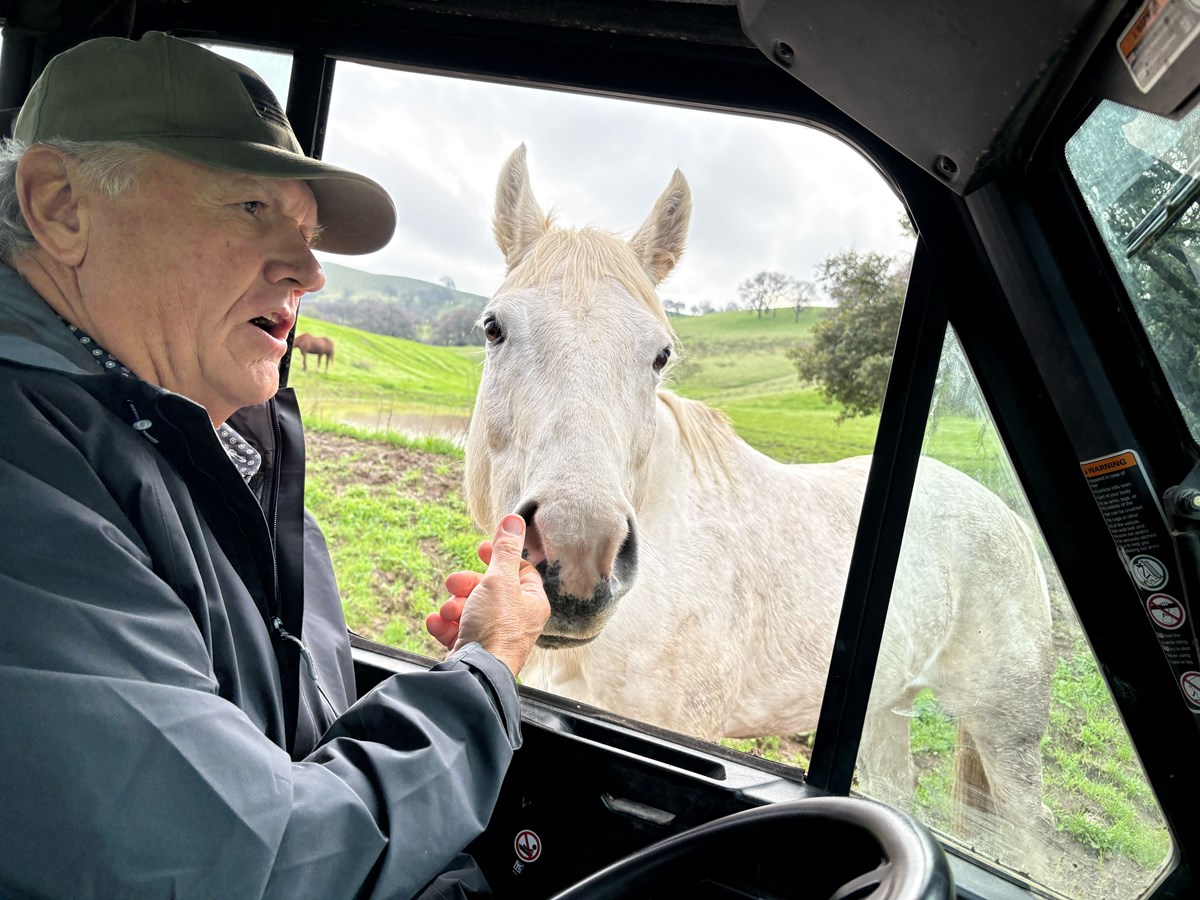 The Yolo Land & Cattle Company started in 1976. Brothers Scott (left) and Casey Stone manage the ranch near Esparto.Chris Nichols/CapRadio
Scott Stone says his family also admires Zipline's values. They were impressed with how the company got its start more than a decade ago delivering medicine to remote villages in Africa.
He says they wanted to be part of what’s next for Zipline while ensuring his family could keep its traditional ranching operation alive by diversifying its revenue streams.
“There are so many benefits of what these folks are doing out here on so many levels,” Scott Stone says of Zipline. “It’s working hand-in-hand with agriculture. It’s not to the detriment of agriculture. It’s not to the detriment of the ranch. It’s to the benefit of mankind.”
While Zipline perfects its deliveries across the country, the Stone ranch will be home to even more aircraft. The Yolo County planning commission last fall gave the green light for expanded testing on the property.
Follow us for more stories like this
CapRadio provides a trusted source of news because of you. As a nonprofit organization, donations from people like you sustain the journalism that allows us to discover stories that are important to our audience. If you believe in what we do and support our mission, please donate today.
Donate Today