Update 5:05 p.m. May 13:
Sacramento County’s homeless population jumped 13% this year to an estimated 7,458 people, according to results from the 2026 Point-In-Time Count released on Wednesday.
That’s up from the most recent count two years ago, but is noticeably less than the county’s record high of nearly 9,300 unhoused residents in 2022.
Joseph Smith, chair of the Continuum of Care Board that oversees the region’s homelessness response, said that a single night can never fully capture the experiences of people living outdoors and in shelters.
“That data is useful, but it also reminds us how large and complex the work still is,” Smith said.
Sacramento County Board Supervisor Rosario Rodriguez said that Sacramento County is investing more than ever in addressing homelessness.
“Our approach is simple. We have to do whatever it takes to move people off the streets in a better, safer and more stable situation,” Rodriguez said. “[Success] is not measured by how much money we spend. Success is measured by the outcomes and fewer people living on our streets."
Unsheltered numbers spike in Rancho Cordova, Citrus Heights
Another key finding in the report was that the number of unsheltered people experiencing homelessness spiked in some suburban cities in the region. Unsheltered residents are those living on the street, in cars or abandoned buildings.
While the cities of Sacramento and Folsom saw a decrease in unsheltered populations, Elk Grove, Citrus Heights, Rancho Cordova, Galt and unincorporated county land saw an increase. In Rancho Cordova, the total tripled while in Citrus Heights the amount jumped one and a half times.
Samantha Lieuwen, a city spokesperson for Rancho Cordova, largely dismissed the report’s findings.
“The most recent Point-in-Time count reflects just that—a point in time,” Lieuwen said in an email to CapRadio. “We thought 2024’s low count was an anomaly. We believe this year’s higher count is an anomaly, as well, since neither count aligns with the data our four Homeless Navigators collect seven days per week, year-round.”
She went on to say “Regardless of the count, the City of Rancho Cordova is committed to its strategy of assisting individuals and families experiencing homelessness. We believe in a service-first approach, which means working with homeless individuals and families who are actively seeking help and support.”
Rodriguez represents some of the suburban cities that saw an increase in unsheltered homelessness, based on the report’s findings. Her District 4 seat on the Board of Supervisors, covers the northeastern portion of the county and parts or all of Orangevale, Folsom and Citrus Heights. She said she didn’t know the reason for the sharp increases, but she had a proposal.
“I want more affordable housing in Sacramento County. The problem is we don’t have enough funding to be able to help developers create more affordable housing,” Rodriguez said. “We have the land to be able to build it, but it's getting it built.”
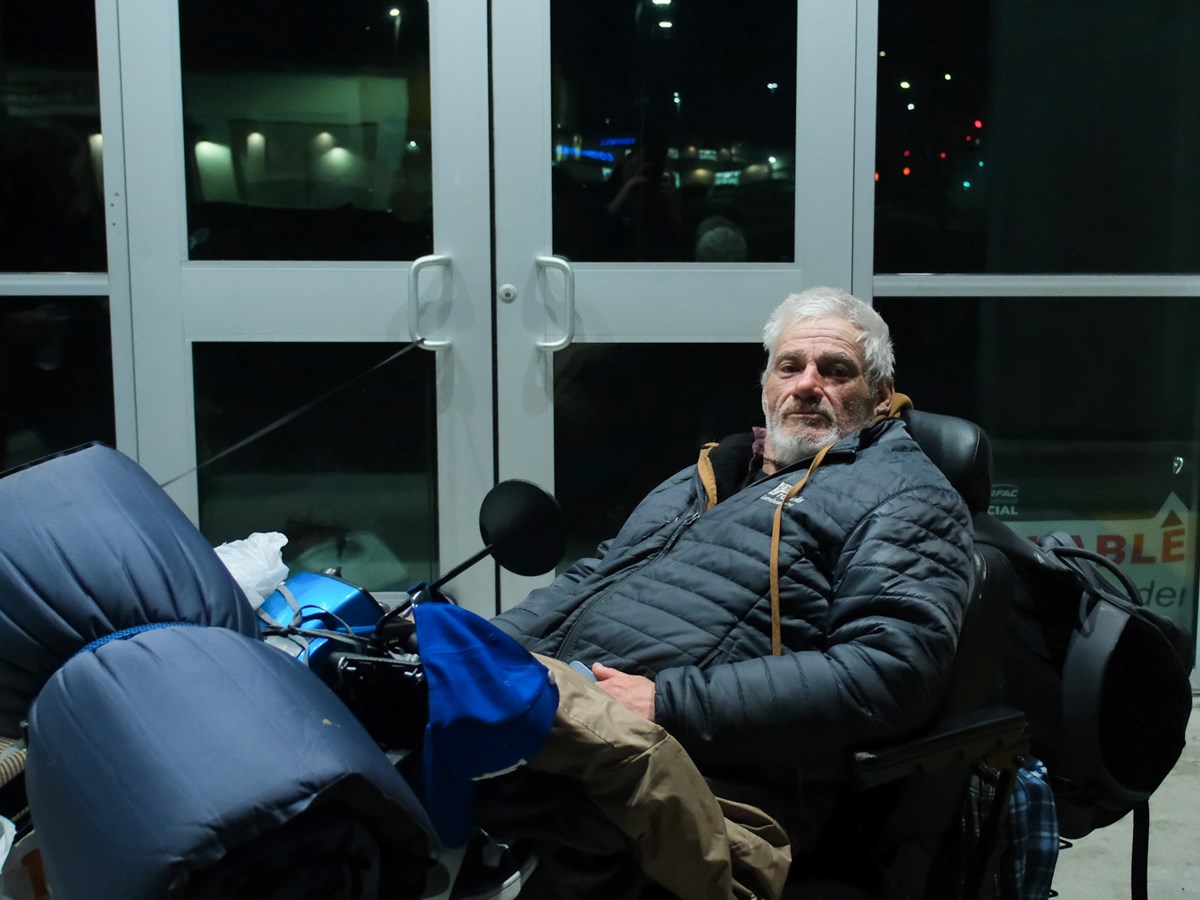 Ralph Tikker, an unhoused man living in Sacramento for seven years, in a shopping center off Stockton Boulevard on Jan. 26, 2026.Ruth Finch/CapRadio
Cost of living ‘untenable’
Every year since 2019, Sacramento Steps Forward has asked unhoused people what they thought would most help prevent homelessness. Every year, the most popular answer has been the same: more affordable housing.
Jeff, is a military veteran who declined to provide his last name and has experienced homelessness in the past. He was at Friendship Park outside of Loaves and Fishes, a Sacramento nonprofit that assists the homeless population in Sacramento.
Jeff said he receives housing vouchers and that he thought more jobs need to be brought to California, and that the state needs more affordable housing.
“There needs to be some sort of more affordable infrastructure, because the cost of living in California has just become untenable,” Jeff said.
While Sacramento Mayor Kevin McCarty has focused heavily on building tiny home communities to help address homelessness, he also said that affordable housing is an issue in the region.
“The lack of affordable housing is hindering our opportunity to transfer people off the streets,” McCarty said. He also worried about federal funding running dry.
“I got an urgent message from the US Conference of Mayors telling us… the federal government is looking at zeroing out not only Continuum of Care Funding, but federal housing monies,” McCarty said.
More unhoused residents turn to shelter
Sacramento County’s sheltered population saw a significant 21.8% increase to 3,253 compared with two years ago, according to this year’s report. This includes people who lack permanent housing, but live in emergency shelters or safe havens. Meanwhile, the unsheltered homeless population saw a smaller 6.6% rise to 4,205.
McCarty said despite budget concerns in the tens of millions of dollars, the city of Sacramento will not be closing any shelters. He also said while no new formal agreement has been reached regarding city and county cooperation on addressing homelessness, officials from the two local governments will be meeting on a monthly basis to help tackle the issue.
Homeless advocates have criticized the city for banning camping around city hall and increasing the removal of encampments in the area. Angela Hassell, the executive director at Loaves and Fishes, said that enforcement can displace those without permanent housing.
“[Ordinances] we have on the books in the city and county of Sacramento allows for larger encampments to be swept. It happens over and again,” Hassell said. “That pushes folks out of areas into some of the further reaching areas like the county or Rancho Cordova.”
However, McCarty said he doesn’t think stepped-up enforcement in the city of Sacramento led to the larger homeless numbers in neighboring cities.
“Sacramento has been criticized for not having enough enforcement,” McCarty said. “I think it's more of the issue that poverty and homelessness has no boundaries… We’re all in this together.”
According to Hassell, removing encampments can destabilize unhoused people’s lives and make it harder for them to find housing.
“We’re asking the impossible of people. If people don’t have a home base, a place that’s consistent … it can be a tent, it can be a tiny home,” Hassell said. “We have to be providing the housing and pathways to stability in order for any of this to move forward.”
Riley Palmer contributed reporting to this story.
Original story:
Sacramento County’s homeless population jumped 13% this year to an estimated 7,458 people, according to results from the 2026 Point-In-Time Count released on Wednesday.
That’s up from the most recent count two years ago, but is noticeably less than the county’s record high of nearly 9,300 unhoused residents in 2022.
The federally-mandated count was conducted in January by thousands of volunteers who spread out across the county’s urban and suburban neighborhoods, and included measurements of both sheltered and unsheltered residents.
The survey results help determine funding for the homeless services regionwide.
Here’s what to know:
- There were 843 more people in the Sacramento region experiencing homelessness, both sheltered and unsheltered, in 2026 compared with two years ago. In 2024, the survey counted 6,615 people compared to this year’s 7,458.
- Sacramento County’s sheltered population saw a significant 21.8% increase to 3,253 compared with two years ago. This includes people who lack permanent housing, but live in emergency shelters or safe havens.
- Meanwhile, the unsheltered homeless population, meaning people living on the street or in vehicles, saw a smaller 6.6% rise to 4,205.
- Unsheltered people experiencing homelessness are becoming more geographically spread out. There was a decrease in unsheltered populations in the city of Sacramento, but an increase in all other counted regions beside Folsom. That includes Elk Grove, Citrus Heights, Rancho Cordova and Galt.
- More people are experiencing chronic homelessness. Over 700 more people in the Sacramento region reported experiencing chronic homelessness since 2024. The majority of that increase was from people who were sheltered at the time of the count.
- More unhoused people with self-reported serious mental illnesses are being sheltered. 2026 saw a 71% increase in people with serious mental illnesses from 2024 in shelter beds. However, there was still an overall increase in people with serious mental illnesses experiencing homelessness in the region.
Follow us for more stories like this
CapRadio provides a trusted source of news because of you. As a nonprofit organization, donations from people like you sustain the journalism that allows us to discover stories that are important to our audience. If you believe in what we do and support our mission, please donate today.
Donate Today