In the winter, rice fields in the Sacramento region are flooded with water. It’s a common method to prepare the field for new growth.
With the help of a program led by California Trout, some farmers have opted to start flushing that water into the Sacramento River as a way to aid winter-run Chinook salmon.
Researchers have found that this water is rich with zooplankton (sometimes referred to as “bugs”), which is a main source of food for young salmon. As the species’ population struggles in the face of impacts from human development and shrinking habitats, researchers say access to this water source could help them thrive.
Jennifer Kronk, California Trout’s Central Valley Lead Field Technician, is leading ongoing research that investigates the full breadth of impacts the nutrient-rich water from rice farms has on the growth of these fish in the Sacramento River. She and her team observe how baby salmon, called fry, grow in areas with or without that water.
CapRadio spoke with Kronk about how salmon have been impacted by human development, and what we can do to help the species in a new environment.
This interview has been edited for length and clarity.
At this time of year, what are Chinook salmon up to? What goes on during this part of their life cycle?
Right now, these little salmon are coming out of either hatcheries or, if they were naturally spawned and hatched, they're following their natural instincts and going towards the ocean. And during this time, they pretty much want to get as fat as they can. So they're eating, hanging out and just following the river downstream.
A lot has changed for salmon life cycles since settlers arrived and widespread development began in the Sacramento Valley. What did that change for these salmon?
Historically, they used to have all this access to floodplains. When the winter rains came, it filled up the Sacramento River. It spilled over into the floodplains and that provided a lot of this slow moving, shallow water [where] lots of bugs are produced.
So the fish kind of got to get off the highway, so to speak, and go out there, eat a whole bunch, be safe from predators and not have to expend as much energy in the cold, fast river. Then [later] jump back on the highway, go off into the ocean.
But as humans have come into the Valley, we wanted to live here, we wanted to farm here, and when these flood events would happen, that kind of screwed everything up.
So, we built these levees and then these fish didn't have any more access to these floodplains, even in high water years. There's always a consequence, especially since nature is usually affected by these human influences.
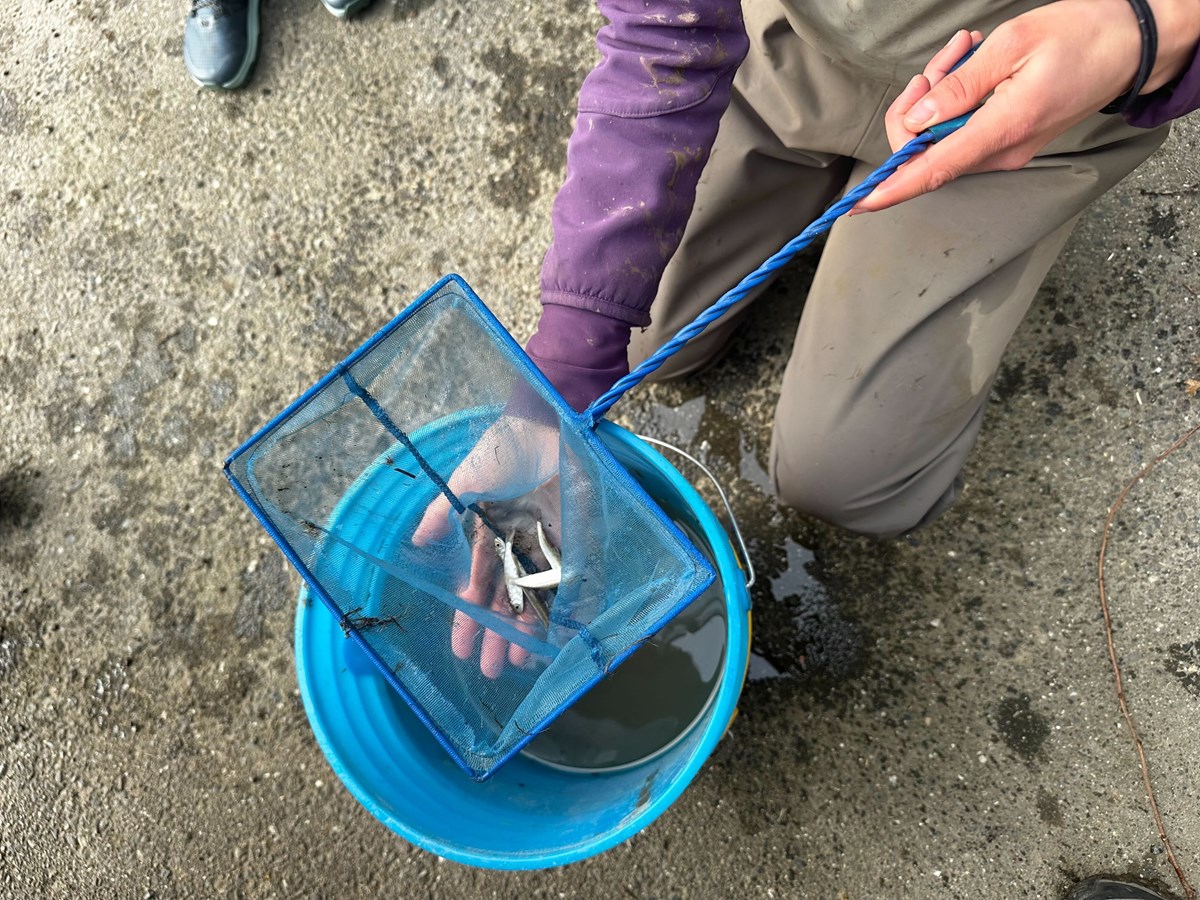 Jennifer Kronk attempts to get a squirming fry in position to get measured on Feb. 24.Manola Secaira/CapRadio
So these fish got cut off from a really important food source and rest stop in their journey. Now you’re looking at the parts of the year when rice fields are flooded as one answer to this dilemma. Can you tell me what you’re looking for in your research?
Here in the Sacramento Valley, there's a lot of rice that is grown. And so what's happening in the rice field when the water's in there, there's all these little bugs that are eating the algae, eating the rice straw, eating other weeds and whatever is in there. It’s just producing a large amount of water bugs.
We're trying to prove our hypothesis that providing salmon with this rich fish food water from the rice fields, [bringing it to] the Sacramento River when they are migrating down, is actually beneficial for them.
The way that this study is able to show that is having the fish above an export point, at an export point and below, and show the differences in growth of these fish.
And by export point, you mean?
It's basically just a pump house that pumps the water from the rice field into the Sacramento River. It pumps it over the levee, and so we call that an export point where they're exporting all of that rich food water into the Sacramento River.
So then, we are showing the growth of these fish and how they differ between those three distinct points above, at and below the export point, showing that a fish above this export point is not getting access to all this food and is growing slower, not growing as big. They're going to be far skinnier. Compare that to the fish at the export point, that are literally just getting food shoved in their face.
Not only are we measuring the length of the fish, but you can have a really long fish, but it'd be super, super skinny. We want them to be deep bodied, just have really full tummies and also be really long.
So, we are showing we can provide this food to them that will give them the sustenance that they need, that they are not able to access anymore.
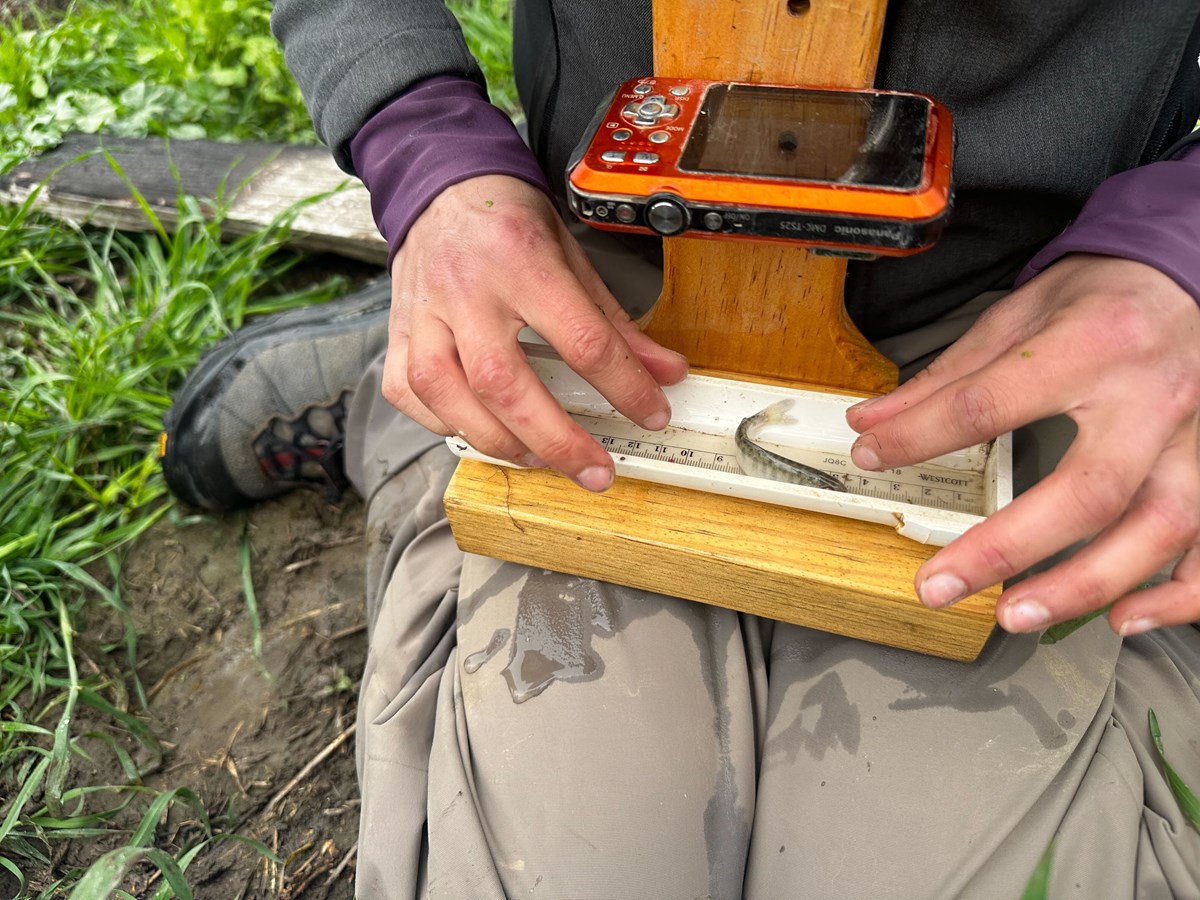 Jennifer Kronk prepares to measure the fries her team has been observing as part of their ongoing research on Feb. 24.Manola Secaira/CapRadio
It sounds like there's also a piece of the solution here where we have to play an active part in helping wildlife like salmon live in this environment that they aren't quite adapted to. Is that right?
Yeah, exactly. Nothing is ever going to be exactly how it was when humans were not here. It's never going to happen. The best we can do is help them with what we have already changed.
We're just helping a small part of the grand picture … kind of trying to help on every little bit that we can to coexist together a little more efficiently.
Do you know of any places where people can go see salmon locally?
For salmon spawning and coming upstream, there are a lot of places. One that is really popular, and I've gone there a couple times during spawning season, is the Nimbus Fish Hatchery. You can watch them go up the little fish ladder. I think that's the best place and it's very family-friendly. They have this really cool information center and a lot of people [there] if you have questions.