It’s no secret that grocery prices have been rising across the country for years. There are a lot of factors that go into why consumers are seeing sky high prices – the pandemic combined with global unrest, has only increased the rise.
Nate Rose of the California Grocers Association said every major event from war, tariffs, drought or energy costs ultimately shows up in one place: the price tag on the grocery shelf.
“The average grocery store profit margin is 1.7% so it's extremely thin profit margins,” Rose said. “When there are kind of shocks to the system, there's not a lot of cushion to absorb those costs, and prices tend to rise, and that's sort of been the environment that we've been operating under really since COVID.”
Food prices are up 33% nationally since 2020, according to the Consumer Price Index. Wage growth has not kept up, so people are spending more on groceries.
Rose said there are “two-bucket” factors that are contributing to driving costs – man-made and nature-based disruptions.
“Nearly 80% of beef cow herds have been impacted by drought in this country, and so prices have gone up for that reason,” he said. “In past years, eggs were kind of the poster child for this dynamic, and there was a lot of avian influenza and things that decreased the supply and made prices go up.”
Man-made disruptions include the war in Iran, which affects energy costs, and 50% tariffs on aluminum and steel that are making prices of canned goods rise.
Tomatoes are also seeing an increase in prices because we import 90% from Mexico when it’s not in season, according to Rose.
“With the war in Iran also disrupting fuel, it's probably going to drive up diesel costs, which goes into the tractors that till the fields and the trucks that transport the food to the stores,” he said. “You can kind of think about how these things will show up as a form of higher prices.”
A recent study from the Urban Institute looking at how American families are paying for groceries found nearly 1 in 5 working adults paid for groceries with savings not intended for daily expenses.
About 35% paid with credit cards, with most not being able to pay off the full balance on their cards.
Shopping around in Sacramento
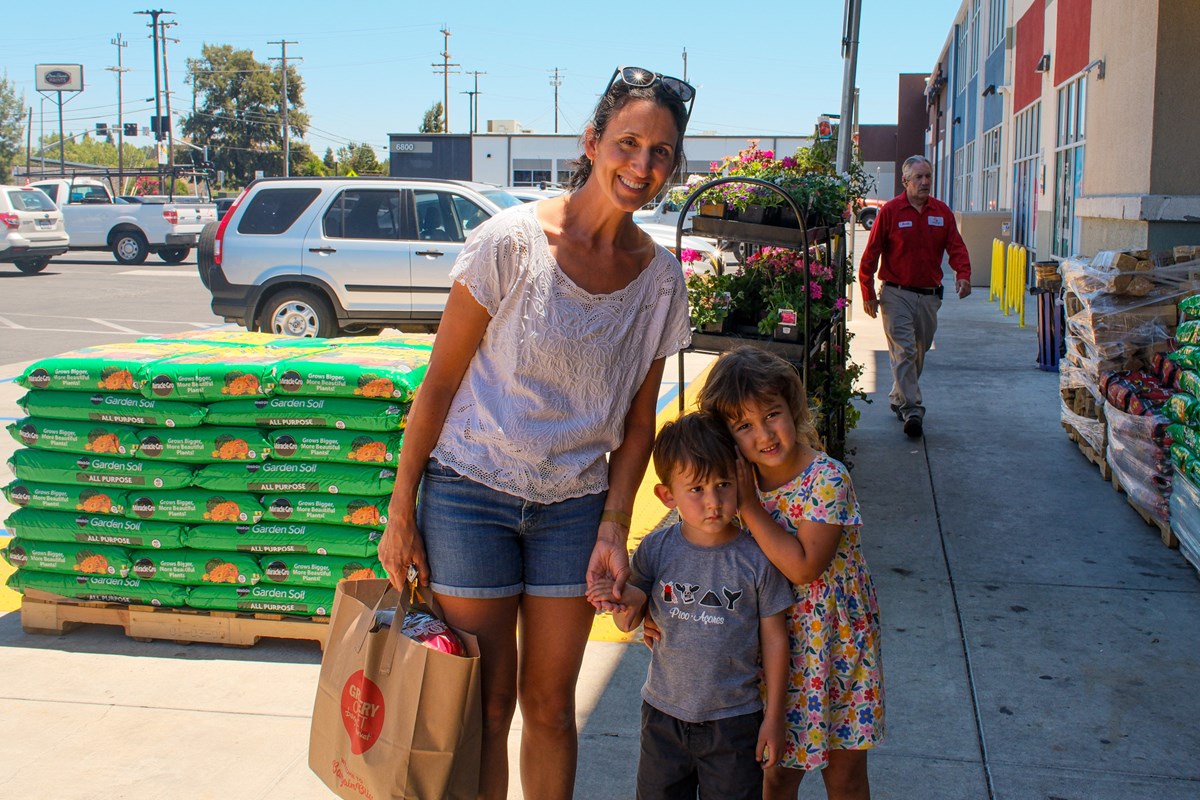 Annette Schimpf outside Grocery Outlet on Folsom Blvd. said because she has two little kids, she often shops at Costco, but she likes to shop around for deals and also goes to Grocery Outlet, Target and Winco.Ruth Finch/CapRadio
Shoppers in Sacramento are doing what they can amid the price increases nationwide including Isaiah Stone who took his 2-year-old daughter on a grocery run, Tuesday, June 23.
He likes shopping at Save Mart compared to other grocery stores in the area.
“I feel like just the deals they have, it saves me a bit more each month,” Stone said. “Kind of in the long run, for each year, kind of goes a long way.”
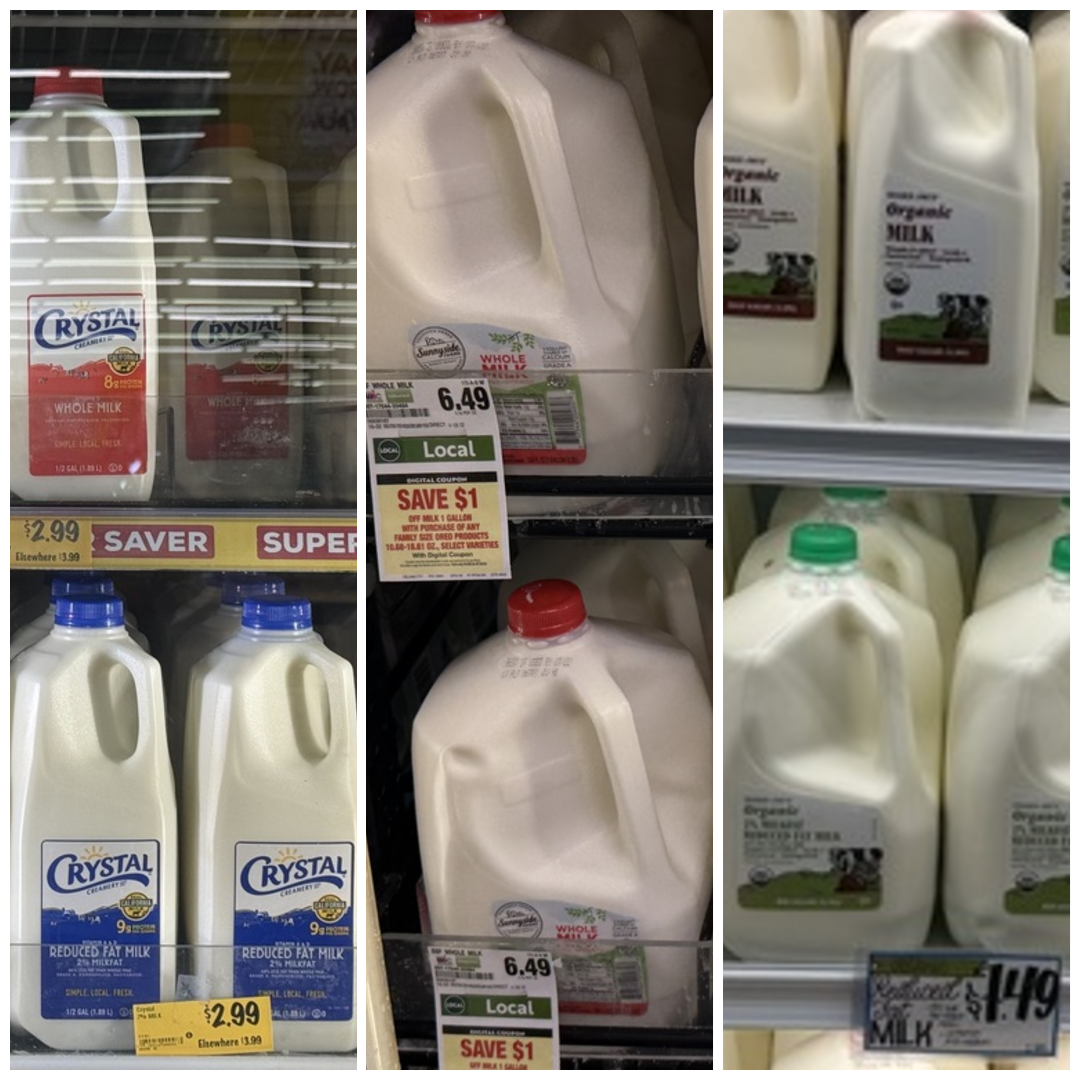 Prices of milk from three stores in Sacramento – (left) Grocery Outlet, (middle) Save Mart and (right) Trader Joe’s as of Friday July 10, 2026.Keyshawn Davis/CapRadio
Food product prices vary depending on what items you’re shopping for – the size, quantities and the brand. When it comes to dairy products like milk at Save Mart — prices are as low as $3.79 for a half gallon of 2% reduced fat milk, $6.49 for a gallon of whole milk, and $6.99 for a half gallon of lactose-free milk.
If you compare those prices to a place like Trader Joe’s which has their own brand of milk products – you’re seeing prices like $2.99 for a half gallon of 2% reduced fat milk, $7.49 for a gallon of whole milk, and $3.99 for a half gallon of the lactose-free milk.
Christina Rogers, who was grocery shopping at Trader Joe’s on June 23, said she has also noticed price increases while shopping and has come up with a method.
“I always come in with a list, and the little slip of paper gets smaller and smaller each time,” Rogers said.
She noticed an increase in two particular food items.
“Mainly the dairy products and protein,” Rogers said. “We're vegetarian, so we have to buy specific kinds of protein, and that's really taking a big bite out of the budget.”
If shoppers are looking into saving money on protein, Grocery Outlet is selling their cage free large eggs as low as 99 cents, compared to the same type of eggs at Save Mart where the cheapest dozen eggs is $4.09 and at Trader Joe’s where the lowest price is $2.99.
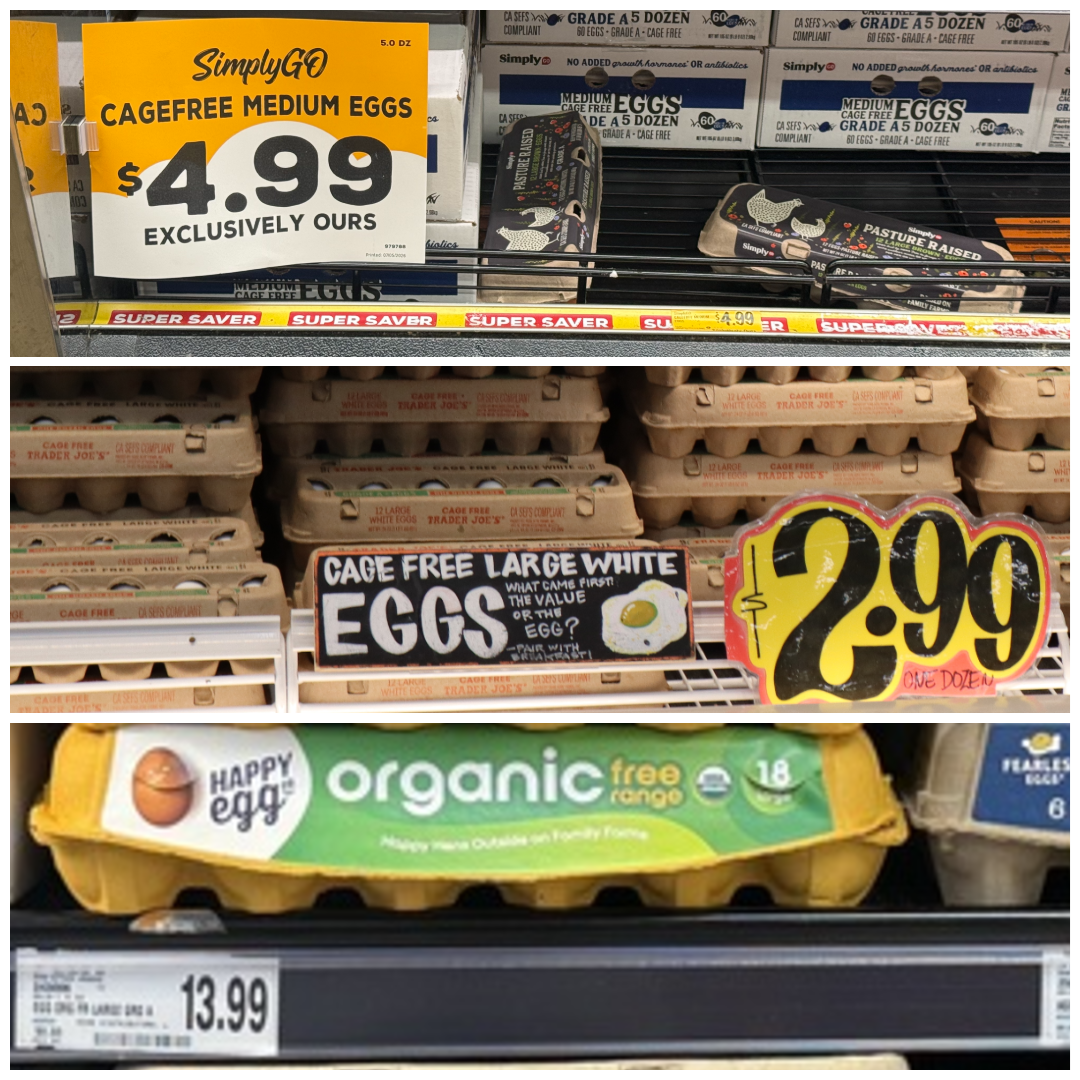 Prices of eggs from three different stores – Save Mart (bottom), Grocery Outlet (top) and Traders Joe’s (middle) as of Friday July 10, 2026.Keyshawn Davis/CapRadio
Director of Merchandising, Nova Wetherwax, is in charge of working with vendors and setting prices for items at the Sacramento Natural Foods Co-op, a member-owned grocery store.
Vendors sometimes offer her heartfelt explanations for why they need to raise prices on their goods. Fuel cost is a big one because that ends up impacting the retail price that customers see, she added.
“It’s unpleasant for the entire supply chain,” she said. “From the producer to the customer, nobody’s happy about it.”
Wetherwax said she only updates prices when it’s absolutely necessary, “so that we can meet our margin goals, pay our vendors, pay our staff fairly and meet all of our overhead.”
“The customers are our members and our owners,” she said. “We are a for-profit organization but the goal is not to squeeze at all.”
The Co-op also offers a community discount program and additional discounts for SNAP recipients, she added.
CapRadio reached out to other surrounding grocers and supermarkets of various sizes: Raley's, Nugget Market, Save Mart, Placerville Food Co-op and Corti Brothers. They either declined an interview or did not respond.
Rose, with the Grocers Association, said one of the best tips for consumers who want to save money at the grocery store is to participate in their rewards programs.
“I think we know that the average consumer saves, I think around $1,200 from loyalty programs and discounts offered by grocers, so definitely take advantage of those sorts of opportunities,” he said. “Those are super important, and most of the time, pretty easy things to sign up for and participate in.”
Farmers market option
 Alchemist CDCs Market Match vendor booth where people can double up on their CalFresh benefits.Keyshawn Davis/CapRadio
While supermarket prices rise, shoppers can find fresh produce and groceries at your local farmers market.
In Sacramento, the Alchemist Community Development Corporation is a nonprofit organization that focuses on land, food and economic opportunities. The organization runs five certified farmers markets in Sacramento.
Saoirse Scott, the Alchemist CDC’s Farmers Market Manager, said farmers markets are affordable, noting that some prices might be slightly higher than grocery stores, but the freshness of the produce often justify the costs.
“Sometimes they are going to be a little bit more expensive than a grocery store, like depending on the market, depending on the area that it's in,” Scott said. “You're gonna feel like you're spending money in either location, and at the market, you're gonna get fresher food, bigger quantities of it, and you might actually pay less in some cases.”
Alchemist CDC offers a Market Match program to CalFresh recipients, allowing people who shop at the participating farmers’ markets to double their EBT funds up to $15, which could help low-income families.
“It's also extra income for farmers as well, and so especially when everything was happening with changes to SNAP and eligibility, it helps keep the economy running,” Scott said. “That money goes directly back into local farmers who are in your community, in your local economy, and that strengthens everybody, not just the folks depending on those programs.”
But can you get all of your groceries at the farmers market?
Scott said you can at their many locations in Sacramento including Arden-Arcade, Elk Grove, Meadowview, Rancho Cordova, Florin, and Central Sacramento Sunday, which is under the freeway by Southside Park.
“Those are all really good markets where you can go, and you can get everything that you need,” she said.
Follow us for more stories like this
CapRadio provides a trusted source of news because of you. As a nonprofit organization, donations from people like you sustain the journalism that allows us to discover stories that are important to our audience. If you believe in what we do and support our mission, please donate today.
Donate Today