Summer has traditionally been the time that wildfires come into focus in California, but that risk has now grown into a year-round threat.
This reality is fueling an alarmingly-strained insurance market, with companies declining to provide new fire coverage or renew existing policies.
These developments have pushed hundreds of thousands of people onto California’s “insurer of last resort,” known as the FAIR Plan, which was designed to provide basic fire insurance for high-risk properties when traditional companies have refused.
In recent years the number of FAIR Plan policies have ballooned 152%, from roughly 270,000 policies in 2022 to more than 680,000 as of March 2026.
To keep up with that demand, and to offset major losses during disasters like the Los Angeles wildfires last January, the San Francisco Chronicle reports the FAIR Plan is planning to hike rates an average of 30% this fall.
Dave Jones served as California’s Insurance Commissioner from 2011-2019, and is now the director of the Climate Risk Initiative Center at the UC Berkeley School of Law. He spoke with Insight Host Vicki Gonzalez about how these rate increases could impact residents across the Golden State.
This interview has been edited for length and clarity.
Interview highlights
You served as Insurance Commissioner during some of California's most severe and deadly disasters. What are the biggest changes you've seen over that time?
I think the biggest change is that the background risk of wildfire continues to climb, and we've moved from a “wildfire season” to wildfire being part of our new normal throughout the entirety of the year. What's happening globally is that insurance company losses are going up because of global losses from hurricanes, wildfires, floods. That's happening in the United States as well, and that's because we're not doing enough fast enough to reduce greenhouse gas emissions which are driving global temperature rise, causing more frequent and severe weather-related events which are killing us, injuring us, destroying our homes, and also causing insurance companies to pay out a lot more.
Insurance companies respond in two ways simultaneously when they have big losses; they raise prices and they write less insurance. Both of those are happening across the United States, as well as in California. So what we're experiencing, which is very acute and severe, is not unique to California.
It has been reported that the FAIR Plan will hike its rates nearly 30% on average come October. This is the first rate hike since 2023, which was almost 16%. Why was such a large increase necessary?
I think the commissioner ultimately approved that rate increase because the FAIR Plan’s losses have been so substantial. With the LA wildfires the FAIR Plan lost so much money that they ran out of money. [They] needed an infusion of a billion dollars, half of which came from the insurers [and] half of which is coming from all the rest of us.
They demonstrated to the commissioner that they needed a rate increase, and that's the average rate increase. For some homes in some areas it's going to be substantially higher because the risk they face is substantially higher. I think that's sadly just the tip of the iceberg because as wildfire risk continues to grow…I think we're going to see more rate increases occurring over time from the FAIR Plan and from the private insurers.
For this upcoming rate hike on the FAIR Plan, will this impact all 680,000 policyholders?
Yes, all of them will see some level of rate increase. To the extent that the FAIR Plan is beginning to take into account home hardening and defensible space — they were asked by the commissioner to do that some number of years ago, [it’s a] question mark whether they are — then maybe you won't see a rate increase. But I think it's a pretty good bet if you're on the FAIR Plan, you’re getting a rate increase.
Planning for an on-average 30% hike is considerable. How are policyholders made aware of this?
They're supposed to send you a notice; typically the way they do this is upon renewal. Everybody buys their insurance at a different time, but there are one-year policies and that’s true with the FAIR Plan. You're supposed to get a notice 60 days or so in advance of your renewal that will tell you “this is a new rate you're going to be charged as your policy renews.”
I don't think they're going to unilaterally impose it on existing contracts that people are in; I don't think they can. But a back of the envelope calculation right now, it's 30% on average. So take your existing FAIR Plan price and plus it up by 30%, and that could be where you are, or it could be more than that.
How can people prepare for this, what options are available?
One thing we need to do collectively is pass a law that requires the private insurers and the FAIR Plan to take into account mitigations. When you do things to reduce risk for your property, you get credit for it. The FAIR Plan is supposed to be offering a discount if you do home hardening, defensible space. You should take a look at the insurance department standards for what one can and should do to make your home safer from wildfire. How big will the discount be? Probably not substantial, but at least it's something. The other thing that we need to do is see if there are ways to get people off the FAIR Plan. There are some insurers that are writing in what's called the “non-admitted market,” where there's a bit less regulation, that are actually trying to write policies off the FAIR Plan.
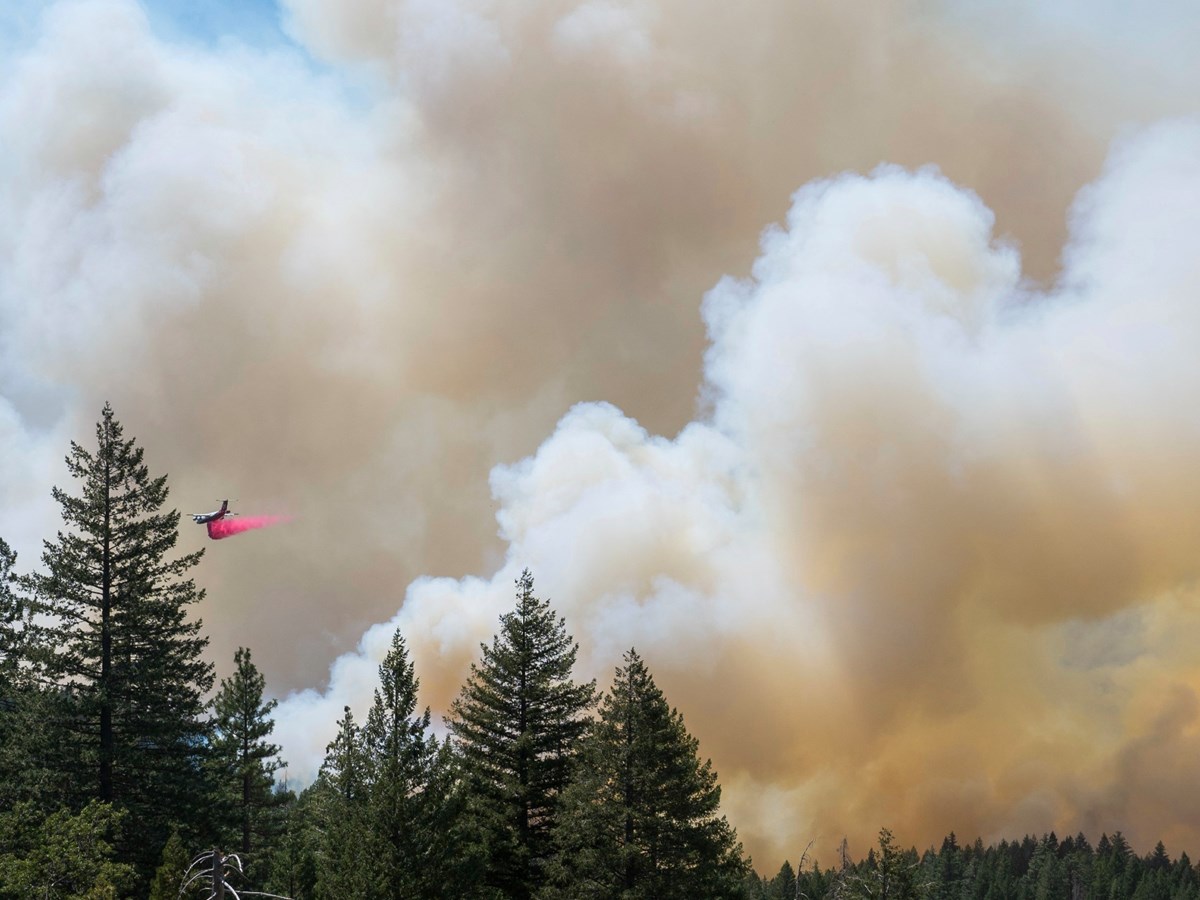 A plane drops fire retardant on the Park Fire near Forest Ranch, Calif., Sunday, July 28, 2024.AP Photo/Nic Coury
Then, we need to improve the regulations that were just recently enacted which gave the insurers a number of things that they had asked for. They wanted the ability to include reinsurance costs and rates, they got that. They wanted the ability to use forward-looking probabilistic models, they got that. In exchange what they were supposed to do was increase the amount of insurance policies that they're writing in the high wildfire risk areas, which could then be an opportunity for more people to get off the FAIR Plan.
The problem is the way that this has been executed. The baseline against which the insurance companies are going to be measured, to see if they are writing more policies in the high wildfire risk areas, is 2025. They've been non-renewing in 2021-2024, and effectively lowered the number and percentage of policies they were writing in [those] areas. Now they’re being told they have to write a bit more, but that “more” is measured after they non-renewed a substantial volume of policies. Changing that regulation to put a higher obligation on them is important to get them to write more in these high wildfire risk areas, in exchange for the things they got as a part of this regulatory change.
The insurance market is national, and there are programs like national flood insurance. Why not make fire insurance a national issue?
There have been proposals to do that. I think the big concern I have about those proposals is that these national insurance schemes oftentimes are very regressive. You have renters paying through their federal income taxes to subsidize home insurance in the National Flood Insurance Program (NFIP.) They don't send the right price signal [about risk], so the NFIP is expensive as it is… and we've been doing a lot more real estate development in areas that are going to flood, because people think they can get this national flood insurance program. And, they require a substantial amount of subsidy from the federal government.
I think the better route is to improve the regulations to better protect consumers. I've got a proposal at my center to have a federal reinsurance program for FAIR Plans. Have the federal government provide lower-cost reinsurance to the California FAIR Plan and the other 34 state FAIR Plans. Why? Because reinsurance for FAIR Plans is really expensive because the plans are insuring the riskiest risks. The reinsurers know that, so they have them over a barrel and they charge them a lot.
A lower cost federal reinsurance program targeted at the FAIR Plans, helping those in the greatest need, I think is something that could help reduce prices for policyholders. In a way that avoids setting up a national scheme of insurance.
Follow us for more stories like this
CapRadio provides a trusted source of news because of you. As a nonprofit organization, donations from people like you sustain the journalism that allows us to discover stories that are important to our audience. If you believe in what we do and support our mission, please donate today.
Donate Today