A plan to move forward with building a new community near Natomas and Garden Highway received the go-ahead from the Sacramento County Board of Supervisors on Tuesday.
The project, called Upper Westside, has been the source of years of controversy between Sacramento County, the Sacramento City Council and nearby residents.
Supervisors voted unanimously to approve the overall plan. The decision allows a new community to be built on roughly 2,000 acres of farmland. Once fully built out, the project could include nearly 9,400 homes, new schools, parks and commercial space, though it must clear additional hurdles before construction can start.
County planning documents estimate it could eventually become home to about 25,000 people, a population comparable to that of the city of Galt.
Drew Marshburn, a Natomas resident, told supervisors the plan would create lasting environmental and community impacts.
“The Upper West Side plan is fraught with negative climate and community impacts. The Natomas Basin Conservancy opposes it. The city council itself opposes it,” Marshburn said. “Adding 20,000 residents to the Natomas Basin puts current and future residents in serious danger.”
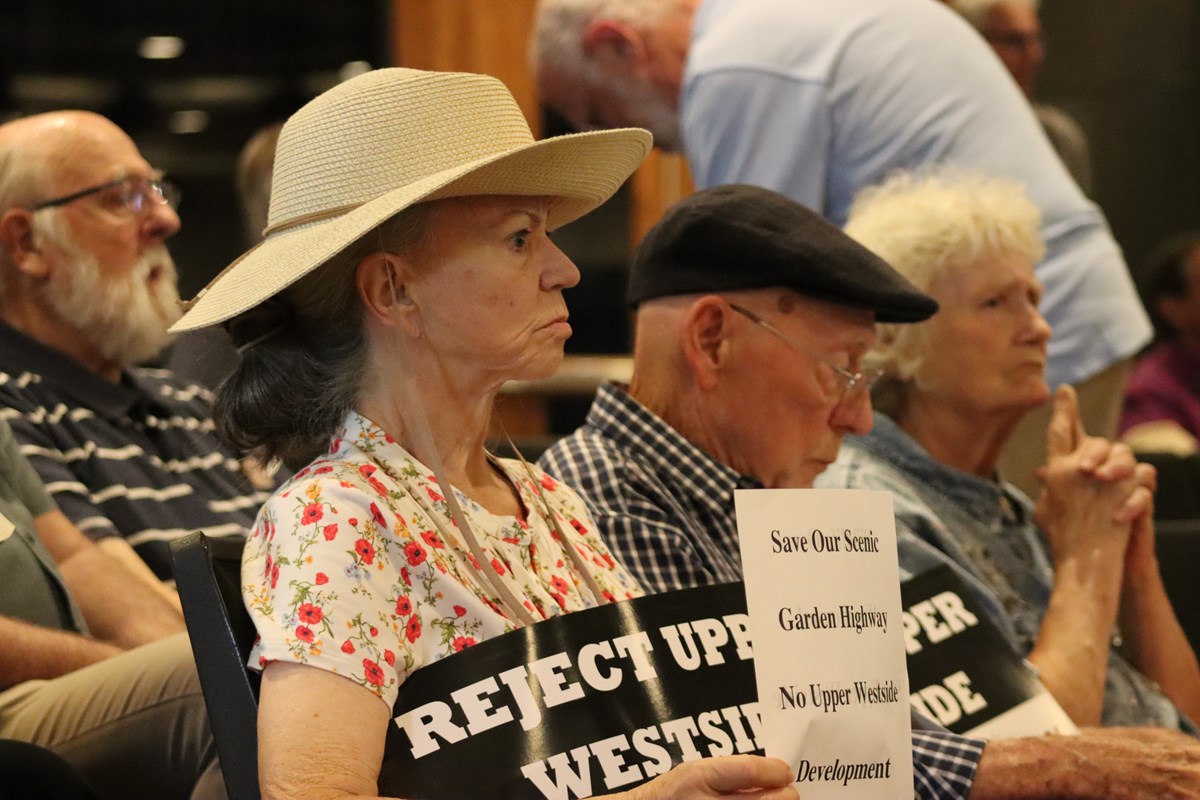 Melanie Herman holds a sign opposing the Upper Westside project during a Sacramento County Board of Supervisors meeting Tuesday, June 16, 2026Tony Rodriguez/CapRadio
The planning for Upper West Side began in 2018. Critics have argued the project ignores a 2002 agreement between the city and county over how growth should happen in the Natomas farmland areas.
City leaders said the agreement made is being ignored and was meant to protect agricultural open space. But the county played a larger role in the project’s future because it has jurisdiction over land use plans outside city limits.
Even so, the Sacramento City Council voted 8-1 last year to formally oppose the development. They raised concerns about impacts to traffic, water supply, schools and who would be responsible for emergency response services.
At a city council meeting last year, Councilmember Karina Talamantes, who represents part of Natomas, said the county is moving forward without a plan for maintaining safety.
“I'm concerned about transportation to and from. People getting to their homes, I'm concerned about police services, fire services, park services and how we're going to be able to respond to 911 calls out there,” Talamantes said.
Upper Westside’s supporters told supervisors the region needs more housing and that it would bring new jobs and investment to the area. Lila Brazil said building more housing in the region shouldn’t be stalled when the city doesn’t have enough.
“This plan will produce many jobs and thousands of new homes that Sacramento desperately needs, many of them being affordable housing,” Brazil said. “Upper West Side is an amazing gift to Sacramento.”
Supervisor Phil Serna represents the Natomas area andsupported the project.
“This plan has not been rushed,” Serna said. “I think as a Natomas resident, I see this as an opportunity that probably should have been considered years ago.”
Flojaune Cofer, who took first place in the primary election to replace Serna next year on the Board of Supervisors, said the county is making a special deal for developers.
“Developers purchased farmland that was not zoned for development, and then they asked elected officials to change the rules for them,” Cofer said.
The city has also questioned the ability to protect Swainson’s hawk foraging habitat. That has been one of the main concerns for environmental advocates, who said the project would threaten habitats near the Sacramento River. Former Sacramento Mayor Heather Fargo also raised concerns about the project’s impact on protected habitat and road planning.
“They have no reliable source of water. They have no plans to improve the transportation issues or transportation improvements that should be done on either the Interstate 80 or the two-lane roads that connect to it,” Fargo said.
Even with Tuesday’s approval, it could be years before shovels hit the dirt. The project still needs more approvals and could face continued pushback as it moves forward.
Follow us for more stories like this
CapRadio provides a trusted source of news because of you. As a nonprofit organization, donations from people like you sustain the journalism that allows us to discover stories that are important to our audience. If you believe in what we do and support our mission, please donate today.
Donate Today