This story is featured in our SacramenKnow newsletter. Sign up to get updates about what’s happening in the region in your inbox every Tuesday and Thursday.
Have you ever heard of an isopod? Maybe you know them as roly-polies, those small insects you find in dirt in backyards, parks and playgrounds.
But get this — they’re not insects at all! They’re actually crustaceans similar to crabs, lobsters and shrimp. There are also over 10,000 species of isopods worldwide, each adapted to different habitats.
Here in Sacramento, Wesley Bryan specializes in breeding and selling Isopods. He owns The World of Isopods and in addition to the isopods, he sells millipedes, scorpions, beetles, grasshoppers, mantises, and other invertebrates that he houses in a room in his house.
“There are about 100,000 [bugs] in the room,” Bryan said. “So currently, isopod species-wise, I have about 173 different species, and there's also different morphs too, that basically come up to like 253.”
The company began in 2020 and has now grown to one of the largest isopod suppliers in California, according to Bryan. He said his company specializes in “captive breeding,” in which they keep the isopods safe and healthy.
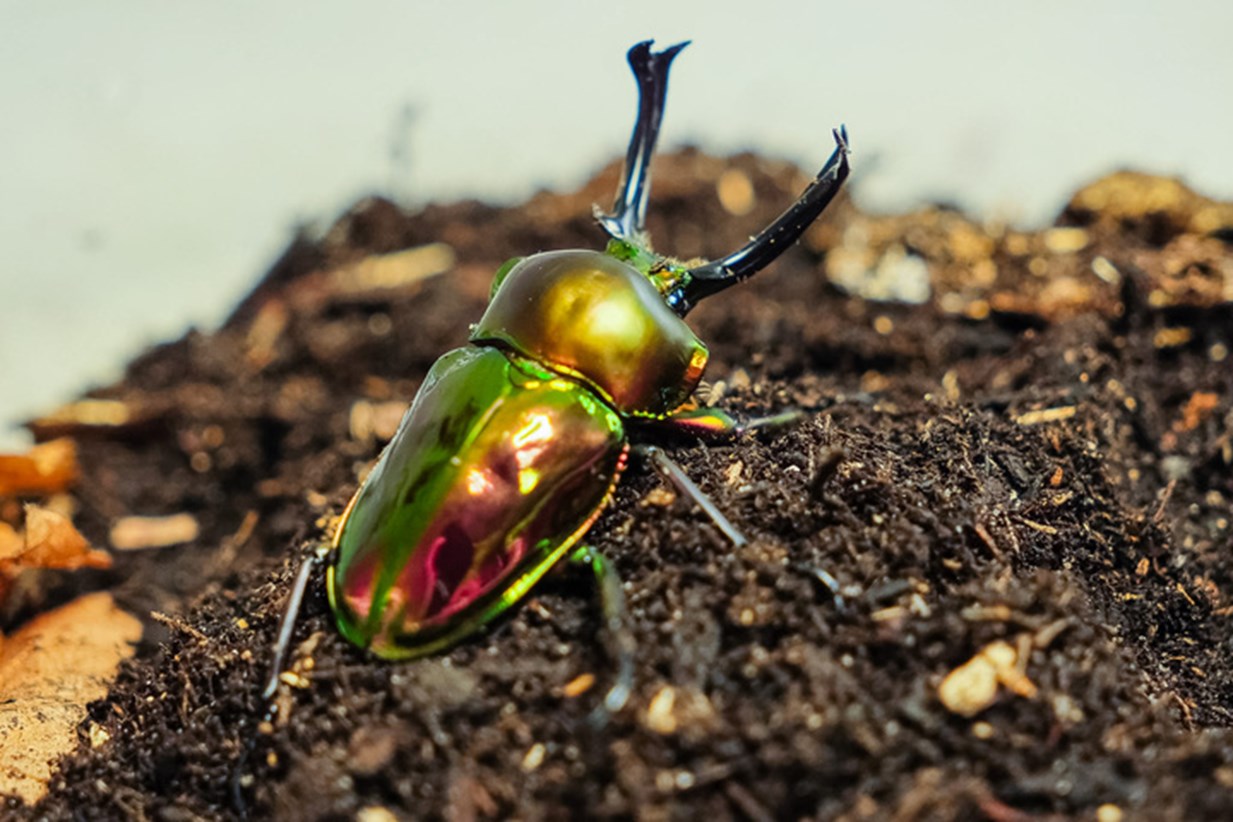 The Rainbow Stag beetle is native to New Guinea, Australia and northern Queensland.Ruth Finch/CapRadio
Bryan first began selling chameleons, tarantulas and scorpions at the age of 19 before pivoting to isopods in 2021. He started to sell off all of his inventory and quickly realized that isopods were really popular.
“Basically, they sold super fast, and a lot of people use them in their terrarium,” Bryan said. “I was like, ‘okay, I'm gonna start investing in them.’”
He was using the isopods to clean up poop from the chameleons he was selling. According to the Terrarium Tribe, isopods are used as a clean up crew in which they remove organic decay.
A friend reached out to Bryan and asked if he wanted to sell some of his isopods at a reptile show, which he agreed to.
“I thought maybe I'll make 400-500 bucks, but I came home with $3,000 and I just started buying more and more isopods,” he said. “Now we're the number one biggest company in California for isopods.”
Love for the business
The prices for isopods, depending on the species and morph, are as low as $15. Morphs are color or pattern variations within the same isopod species – similar to dogs and horses that come in different colors and markings, according to Bryan.
“A lot of people like to breed stuff to get a certain color out of an animal,” he said. “What I'm doing is I'm getting the pigmentation and I'm turning it to a different color.”
The most expensive isopod in their inventory is the Ardentiella “Red Scarlet” morph. It is native to Thailand and Vietnam and resembles the colors of a Marvel superhero.
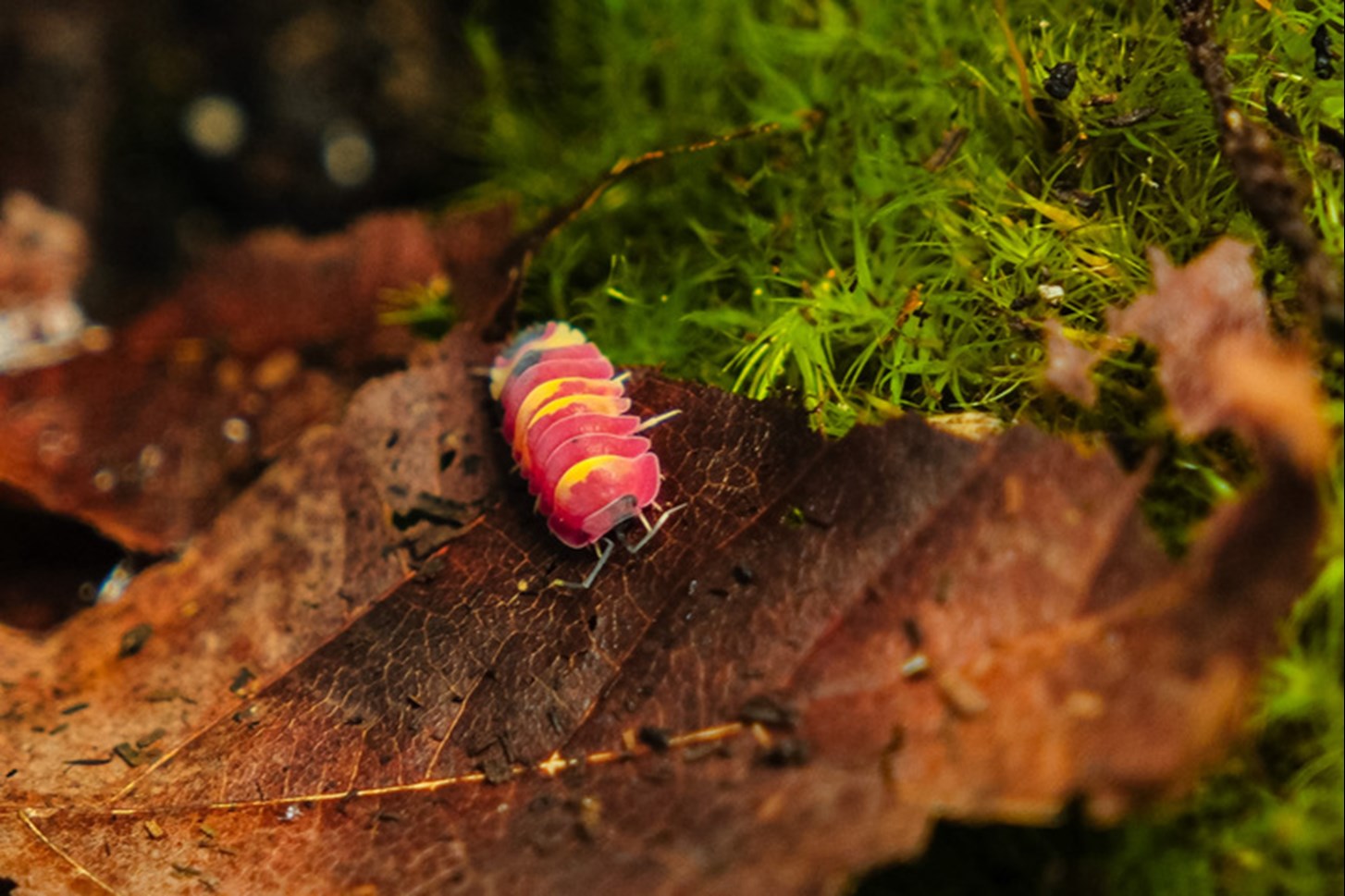 The Ardentiella isopod with the "Scarlet" morph. This is the most expensive isopod for sale.Ruth Finch/CapRadio
“Those species range in very cool colors, like sometimes even pinks, bright reds, and they look literally just like Iron Man,” Bryan said. “But those ones sell for like $100 to $200 a piece, just for the one little, tiny roly-poly.”
Omar Martinez is a friend of Bryan and an employee of The World of Isopods. He’s been working with Bryan for about a year and he assists with small tasks.
“I'm learning new things, like every other week, but so far, it's like taking the orders down, printing the labels, making the boxes for such shipments,” Martinez said. “Now I've been handling some of the bugs, like putting them in the container containers, or helping with packaging stuff.”
Martinez finds the job fascinating and wants more people to learn about the critter.
“If you're not aware of roly-pollies or their scientific name, isopods, at all, I think it's worth giving a look into because they're definitely a unique creature,” he said. “I think you'd be surprised about how much you like them.”
Bryan also mentioned his passion for his job.
“I would say the most I like about my job is just the fact that I grew up being outdoors, loving to be with bugs, finding bugs, and just being around bugs for my job, it's just literally my dream.”
Business operations
Daily operations include three to four hours of care usually starting the day off buying organic yams and fish flakes. Bryan and his employees go through every bin and check to make sure they are fed and their climate is ok.
Isopods can live anywhere from 5 to 10 years–with deep-sea isopods living on the longer side.
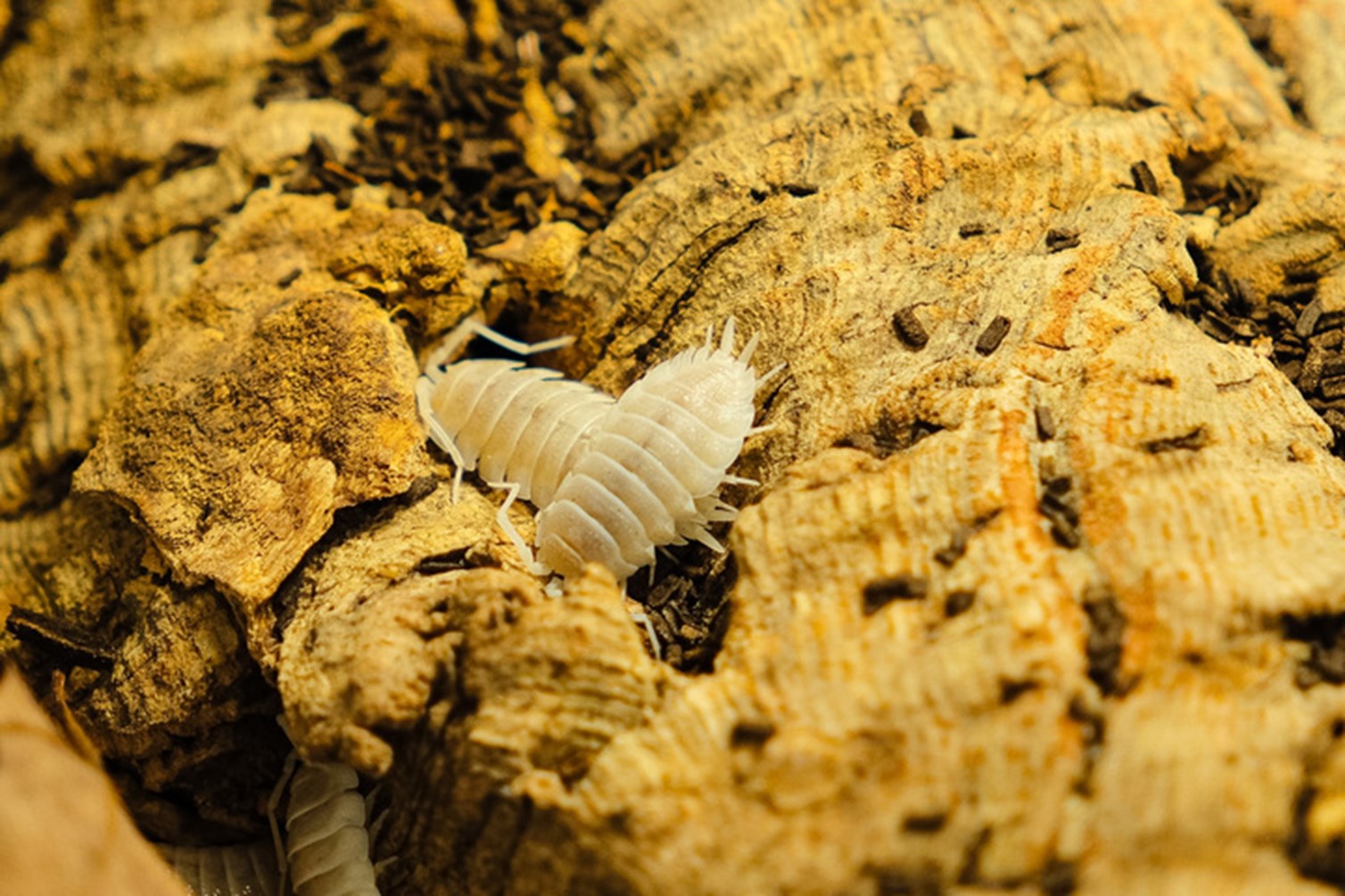 The Porcellio Hoffmanseggi "White Out" isopod is a solid white color morph.Ruth Finch/CapRadio
The most challenging part of the job is the supply because they sell so many isopods weekly, Bryan said.
“We ship out about 50 to 70 orders, and that's not even including our wholesale orders,” he said. “So usually, most of the time we get the breeding process. I have two employees that help me, and we try to keep up with demand.”
Although the demand is pretty high, Bryan said he loves what he does.
If you want to buy isopods or other insects from The World of Isopods, they’ll be at the Reptile Realm Expo in San Jose on June 13-14. You can also purchase the isopods on their website.
CapRadio provides a trusted source of news because of you. As a nonprofit organization, donations from people like you sustain the journalism that allows us to discover stories that are important to our audience. If you believe in what we do and support our mission, please donate today.
Donate Today