Homelessness is an enduring crisis, both in Sacramento and across California.
Local, state and federal officials have poured in billions of dollars to address these issues, but often those who are most vulnerable are left with few resources.
This is especially true for people who are living on the streets with a terminal illness, many of whom are seeking care and stability as they navigate a complicated and emotional process.
For the past year, a facility in South Natomas has been helping them live out their final days with dignity and respect.
Joshua’s House is the first hospice providing end-of-life care to people experiencing homelessness on the West Coast.
It opened in summer 2025, but the home’s history has deep roots going back more than a decade — as the personal mission of a retired Sac State and UC Davis medical professor.
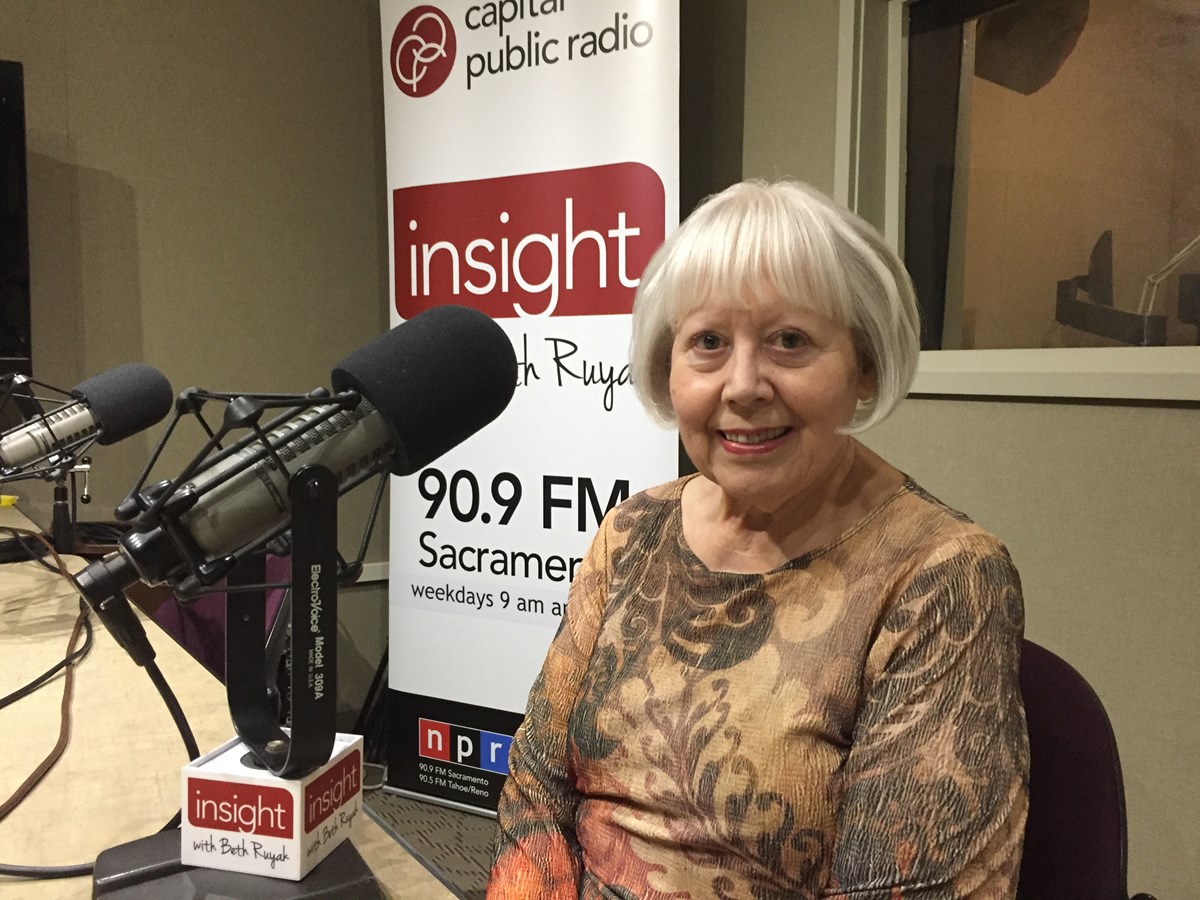
Chris Erdman is the Director of the Center of Loss and Hope at YoloCares, which operates Joshua’s House, and spoke about the facility with Insight Host Vicki Gonzalez.
This interview was edited for length and clarity.
Interview highlights
I remember first reporting on Joshua's House almost a decade ago. For people who have not heard about it, how did things get started?
Marlene von Friedrichs-Fitzwater started it. She was a medical researcher, and her grandson Joshua died on the streets of Omaha, Nebraska, a young man. She decided she wanted to do something to help: how could I alleviate the kind of suffering that Joshua experienced, and how can I change the reality for so many people?
She decided to put her research brain to good use and she interviewed hundreds of people who are living on the streets to find out what is their chief concern, and that was dying. What would it mean to die on the streets? She started Joshua’s House and worked for a decade to bring it to fruition, creating a community-based network of supporters and donors, and then turned it over to YoloCares. We picked it up and started last summer.
Do you have an idea of what the need is like for those experiencing homelessness that would need a place like Joshua's House?
It's massive, and part of the problem is getting the word out. Our historic partners have been the four major hospital systems locally: Dignity, UC Davis, Sutter and Kaiser. They've all been part of a coalition that helped make this possible. They donated, they helped encourage Marlene, they continue to be our partners. But helping them remember that this small little experiment — five cottages, three bedrooms in each cottage, 15 patients — [is] there, that's a challenge.
Joshua's House has no walk-in services; that's our commitment to the neighborhood. You have to be referred to a healthcare partner and provider.
You’re able to care for 15 people, but given that Joshua’s House is the first facility of its kind on the West Coast, the hard reality for many others is that they die on the streets.
Exactly. Current statistics say that maybe we lose one person on the street every 36 hours in Sacramento County, which is an appalling number. How do we change that? The reality of the spike of homelessness is among us, and we see it every day. It's not going to get any better.
Part of the ethic of Joshua’s House and YoloCares is how do we inspire other similar movements across the West Coast, to provide some kind of safety net at the end… the kind of dignity and compassion people deserve who've lived for a long time on the margins.
What is the experience like at Joshua’s House for someone in hospice care?
I anticipated, when I helped make it a reality, that it would be really challenging for people coming off the street, living alongside a river bank [or] under a bridge, to come in behind a tall fence into a cottage, behind a door in their own bedroom. I thought this would be really challenging for people, and there is some evidence that it is. They're having to deal with that psychologically and emotionally. However, with the kind of compassionate care we provide there's a remarkable dropping down emotionally into what it means to be tended at the end of life.
One of our early patients, an elderly man who lived on the streets for much of his adult life. He came to us and it really freaked him out to be inside on this property… and have his own bed. The staff courageously walked with him through that settling period. Found out that he'd once played the guitar and loved the guitar. It came up in one of our interdisciplinary team meetings, which is where all our clinicians get together and talk about every patient we have on hospice and palliative care. One of them said, “we have a guitar here.” The nurse got it, presented it to him and his eyes lit up. And he played.
Another patient was dying and had not seen her family for two decades. Inside this homelike atmosphere, three of her family members came. The evening before she died, they reconciled. She had not spoken a word to anybody since she came. She whispered, "I love you." That shattered the barriers. That's the way to die, right? With dignity and hope and reconciliation.
What were some of the challenges over the years of getting things up and running?
I think for Marlene it was fundraising, getting the people together who could provide the funds to make it possible. It was permitting, moving it through the city and the county. It was just building that coalition to make it possible. And then, what does it mean to operate it? She originally envisioned it as a volunteer hospice, but this is the kind of work that can't be left strictly to volunteers.
 Joshua's House founder Marlene von Friedrichs-Fitzwater.Cody Drabble / Capital Public Radio
We have a really robust program of volunteers at YoloCares. Over 100 volunteers serve not just Joshua's House, but all of our programs. But we had to put our business and operations acumen to work to make this possible, and we have.
How is this funded?
I figure that about 50%-60% of the funding comes from Medicare, Medi-Cal benefits. Fortunately, federal and state funds are still there for that. We have to raise the balance of that through philanthropy. We have health care partners that we hope will support us, we have individuals who support us generously.
Have you received interest from other cities or counties?
We have, and one of our chief goals is: how do we inspire five more similar innovations in the next five years? Now, there are other innovations across the country. There's some that are happening in California. But we're trying to create a network of providers who can make this kind of small dent right at the end of life when people need dignity most.
How does someone get connected to Joshua's House to see if there is a vacancy?
The best way is through our partners, either community agencies or primarily the health care systems. [They] know how to move through the care navigation process on their side to create a handshake with our clinical teams and that creates the intake that's necessary for a person to be able to come to Joshua's House.
Do you take people from outside of the Sacramento region?
We do. We envisioned supporting Sacramento almost entirely. We have found that we're getting calls from Enloe Health up in Chico. Providence in the North Coast has sent us patients. Stockton has sent us patients. It's really a large-scale thing which we hope will also inspire local innovations in those spaces as well.