Correction: The Tiger's Eye Abutilon Tree was misidentified as Koelreuteria Bipinnata in a previous version.
If you’re walking through Capitol Park you may notice the abundance of trees covering 40 acres, or about 12 city blocks.
Capitol Park was established in 1860 as a four-block area on L, N, 10th and 12th streets. The park expanded throughout the years adding more blocks in 1870, 1872, and 1917.
The beautification of the park began in 1869, and according to Michael Nielson, the grounds operation manager for the Department of General Services, the park houses around 850 trees from all over the world.
Nielson said the idea of Capitol Park and its conception was very unique because not only do they have California native trees established at the park, but people have the opportunity to see trees that people may never see if they’re not world travelers.
“That's not something that you see every day,” Nielson said. “So they brought pieces of the world and forms of these trees to say, ‘Hey, this is a tree that's growing in another country or even another state for that matter.’”
Nielson noted some of the trees in the park from other parts of the world and the country include a Chinese Lantern tree, a “Moon Tree” that was grown from seeds that orbited the moon during the Apollo 14 mission in 1971, and some Civil War trees that came from the battlefields.
Nielson said the groundskeeper team is continually working to keep the trees healthy through proper maintenance, pruning techniques and fertilization, making sure they're giving good irrigation to the trees.
Nielsen gave CapRadio a tour of Capitol Park to showcase some of California’s native trees and trees from around the world.
Trees Native to California
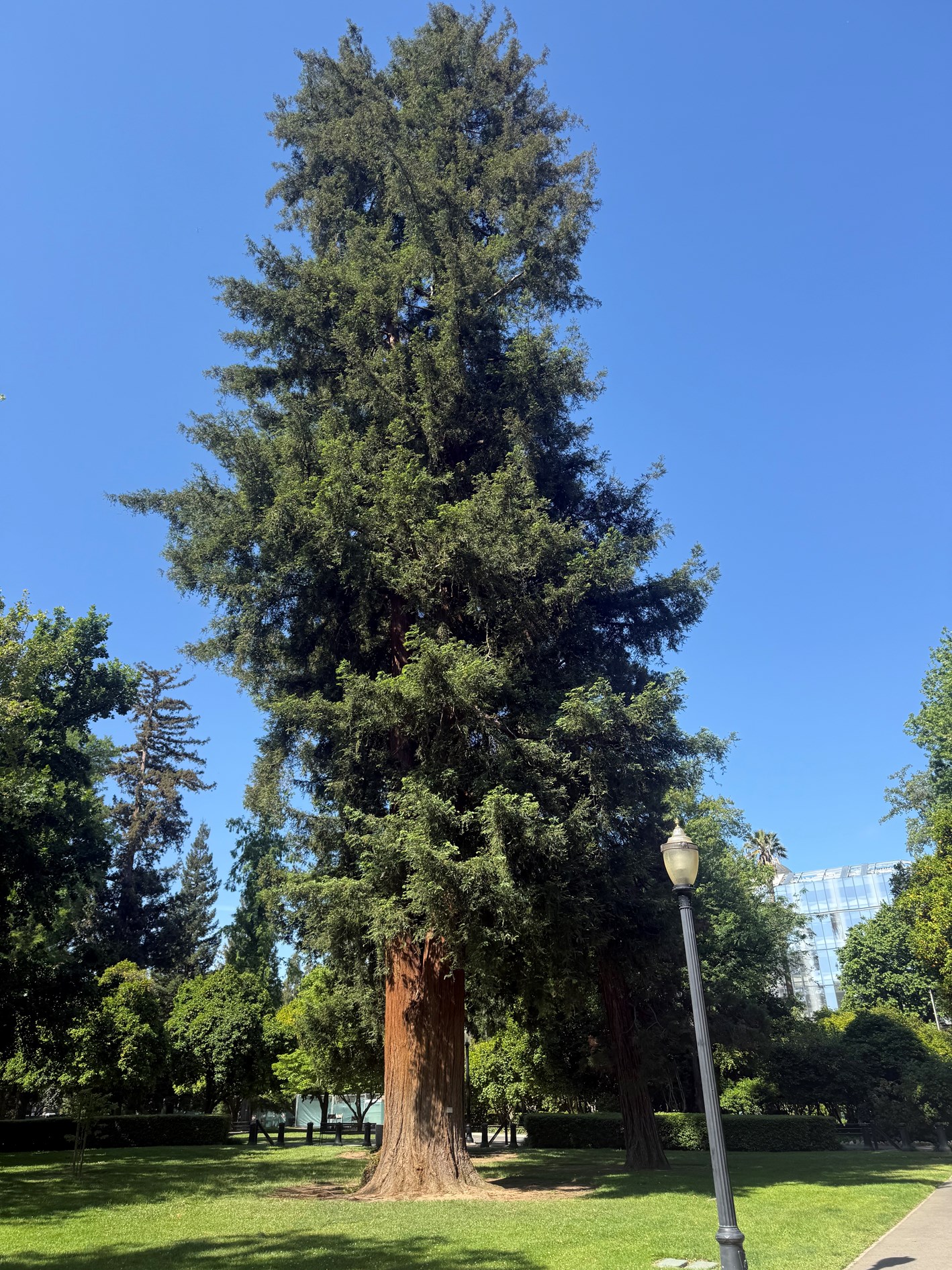 Coastal Redwood tree is approximately 130 feet tall and was estimated to be planted in 1921.Keyshawn Davis/CapRadio
Coastal Redwood: One of the native California trees in Capitol Park is the coastal redwood also known as the Sequoia sempervirens.
There are many planted at the park and one of the coastal redwood trees is approximately 130 feet tall and was estimated to be planted in 1921.
“It's a majestic tree, and one of the really unique things is it's a double top,” Nielson said. “One of the cool things that people have come to notice is that we have a pair of nesting hawks that return there every year, and they fly in and out of that tree. I think they've been coming in and out for about the last eight years.”
Nielson said you can see the tree from every angle on the east side of the park.
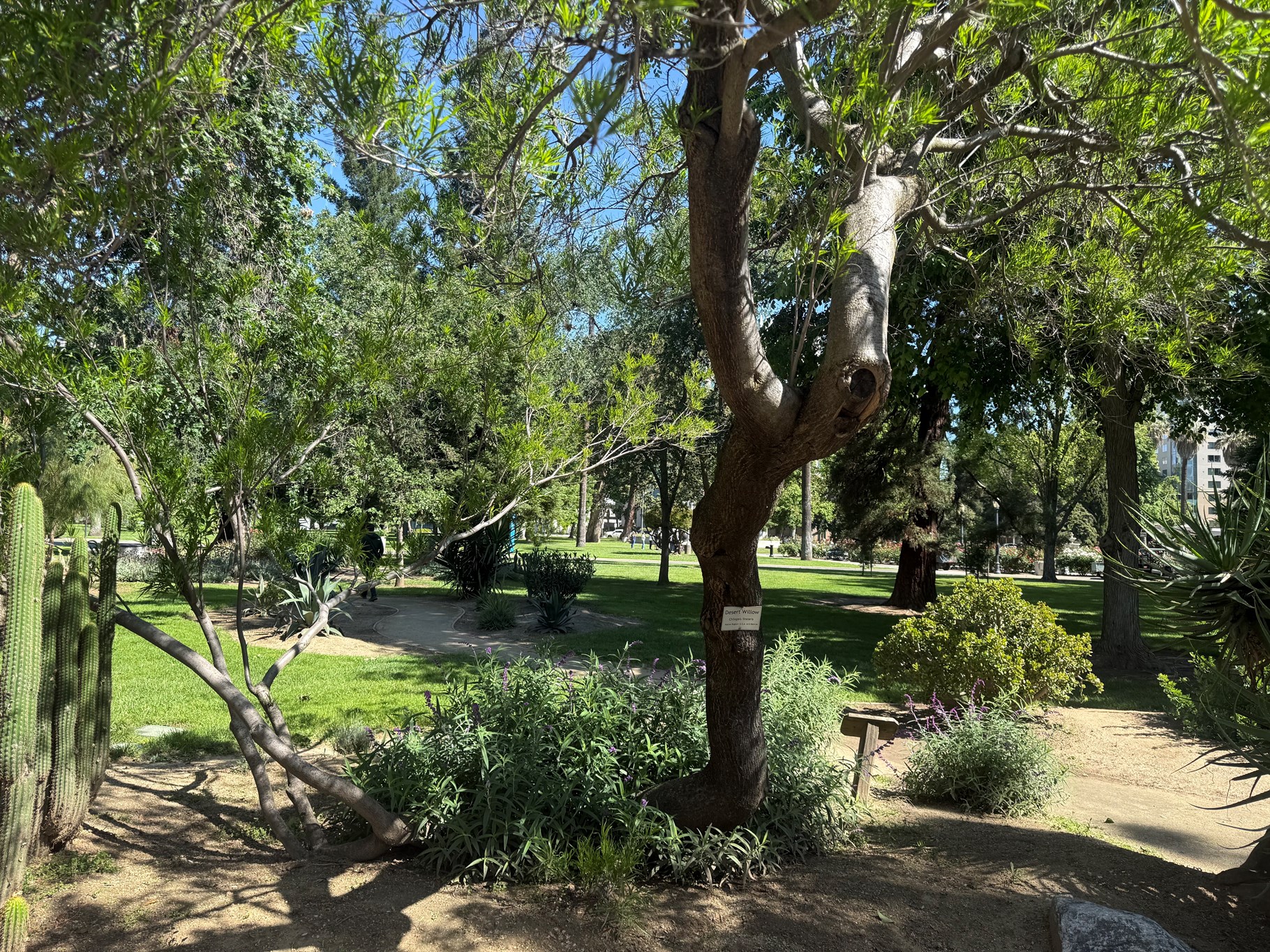 Desert Willow is a California native species that has orchids during the warmer seasons.Keyshawn Davis/CapRadio
Desert Willow: Desert Willow also known as the chilopsis linearis is a California native species at the park that has an interesting trunk with a little bit of a bend. Nielsen said his team has the tree cabled in the back to make sure it provides extra stability.
“[The tree] puts out a really nice orchid colored flower during the warmer season, and it's really cool because the hummingbirds will come and they'll draw nectar from the blossoms,” he said. “It's also an attractant for our pollinators, bees, they're flying in and out of here.”
This tree is located South of the Capitol in the Cactus Gardens.
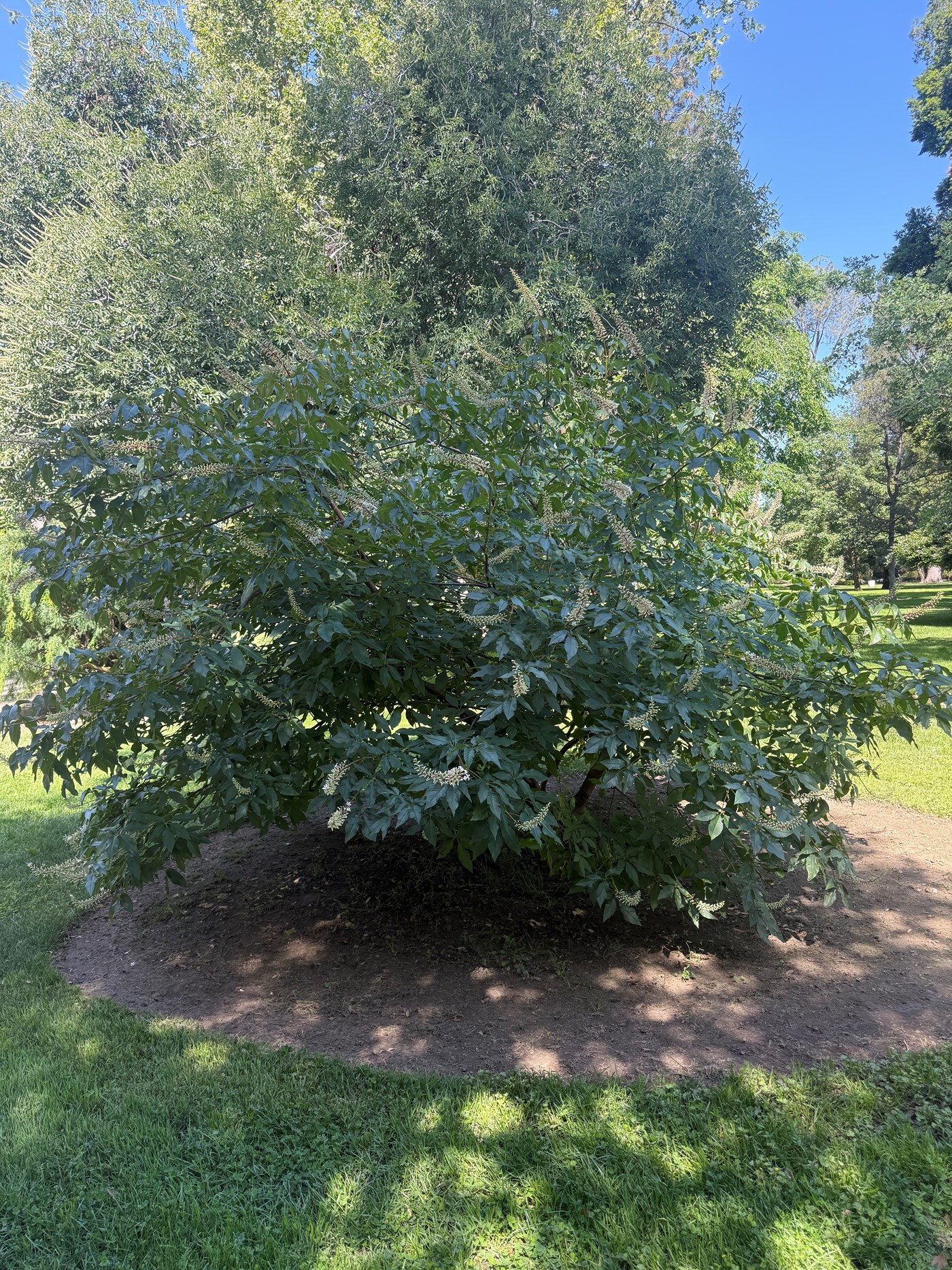 The California Buckeye is a small tree or shrub that is native to California.Keyshawn Davis/CapRadio
California Buckeye: The California Buckeye, also known as the Aesculus californica, is a small tree or shrub that is of course native to California. The one located at the park was planted about 10 years ago as a replacement, according to Nielson.
“That's one of the things that's really important to us here at the Department of General Services, is that when we do lose a specimen, we want to make sure that we go back with a very similar item, if possible,” he said. “Sometimes it may not be as easy to get something that we've lost, and so we'll go to the next closest species possible.”
The buckeye has blossoms sprouting from the tree and hummingbirds come to the Buckeye just like they do with the desert willow tree.
The tree at the park is approximately nine feet tall and about 12 feet wide, Nielsen said.
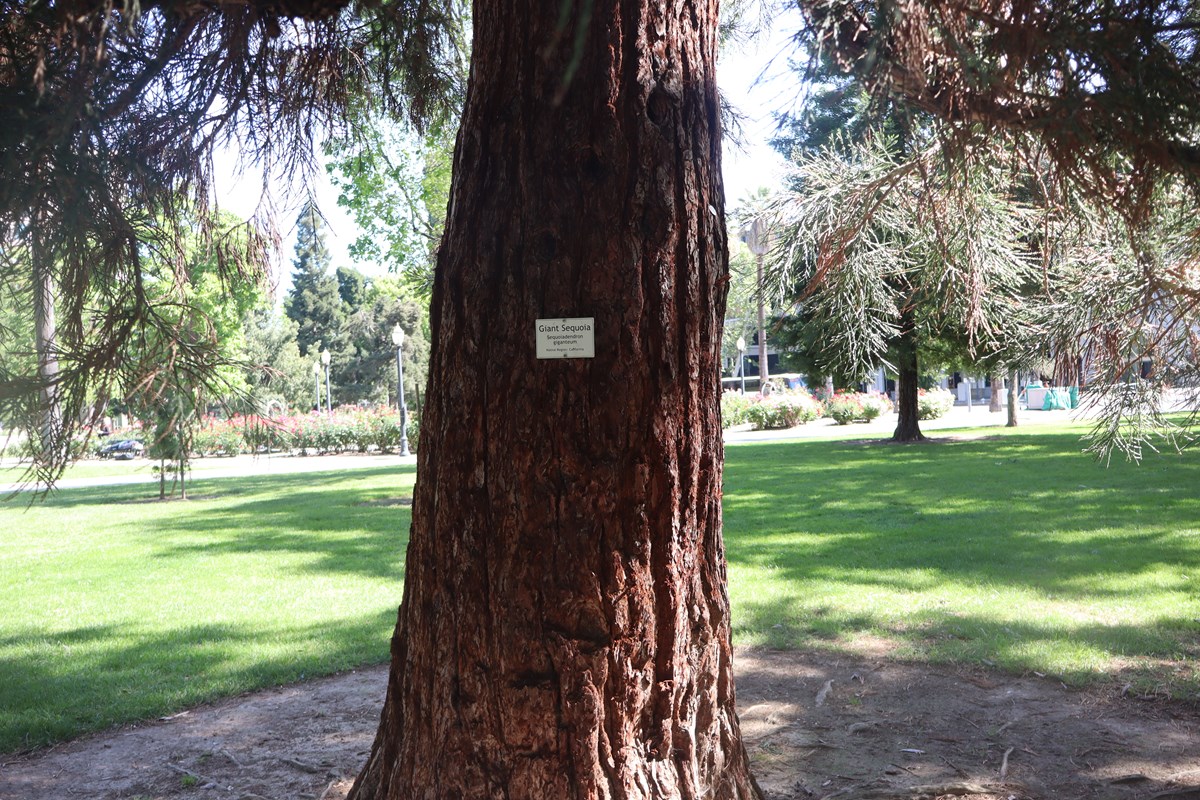 The Giant Sequoia is a species that is related to the redwood. One of the giant sequoia’s at the park is estimated to be about 85 years old.Keyshawn Davis/CapRadio
Giant Sequoia: The Giant Sequoia, also known as the Sequoiadendron giganteum, is a species that is related to the redwood. One of the giant sequoia’s at the park is estimated to be about 85 years old, according to Nielson.
“We have a few of them throughout the park, and it's related to the coastal redwood, but has a little different needle, a little different texture,” he said. “If you notice how the bark has a little different look on the coastal redwood, as opposed to this little redder tone to the giant sequoia.”
Trees from around the globe
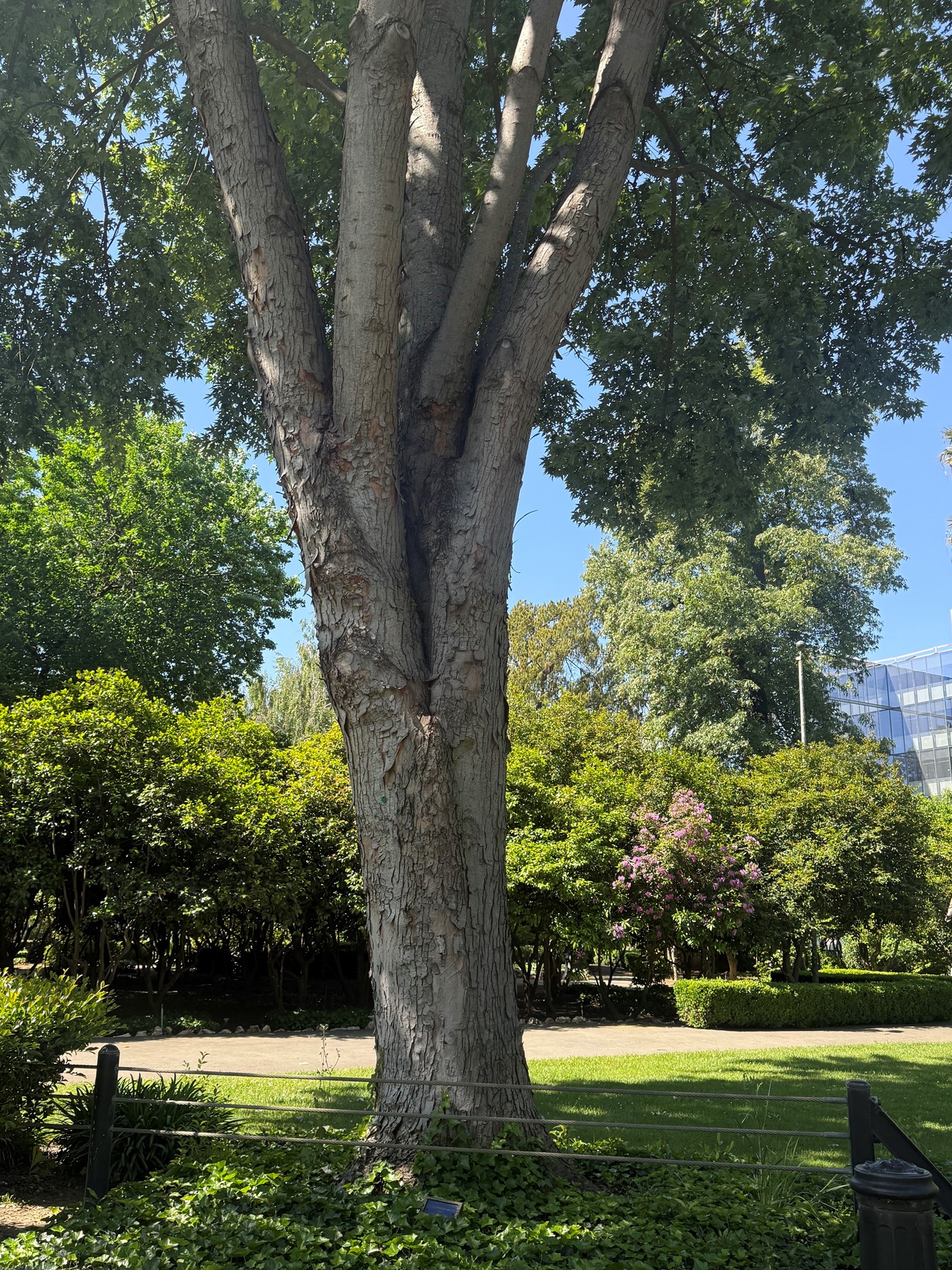 Shiloh silver maple from Tennessee is a tree came from the battlefield from the Civil War.Keyshawn Davis/CapRadio
Civil War Tree: There are a few trees in the park from where the Civil War battles were fought. One tree in particular is a Shiloh silver maple from Tennessee.
The park actually has a Civil War Memorial Grove that pays tribute to the soldiers that lost their lives.
The tree started as a sapling that came from the Battle of Shiloh, also known as the Battle of Pittsburg Landing, which resulted in a Union victory.
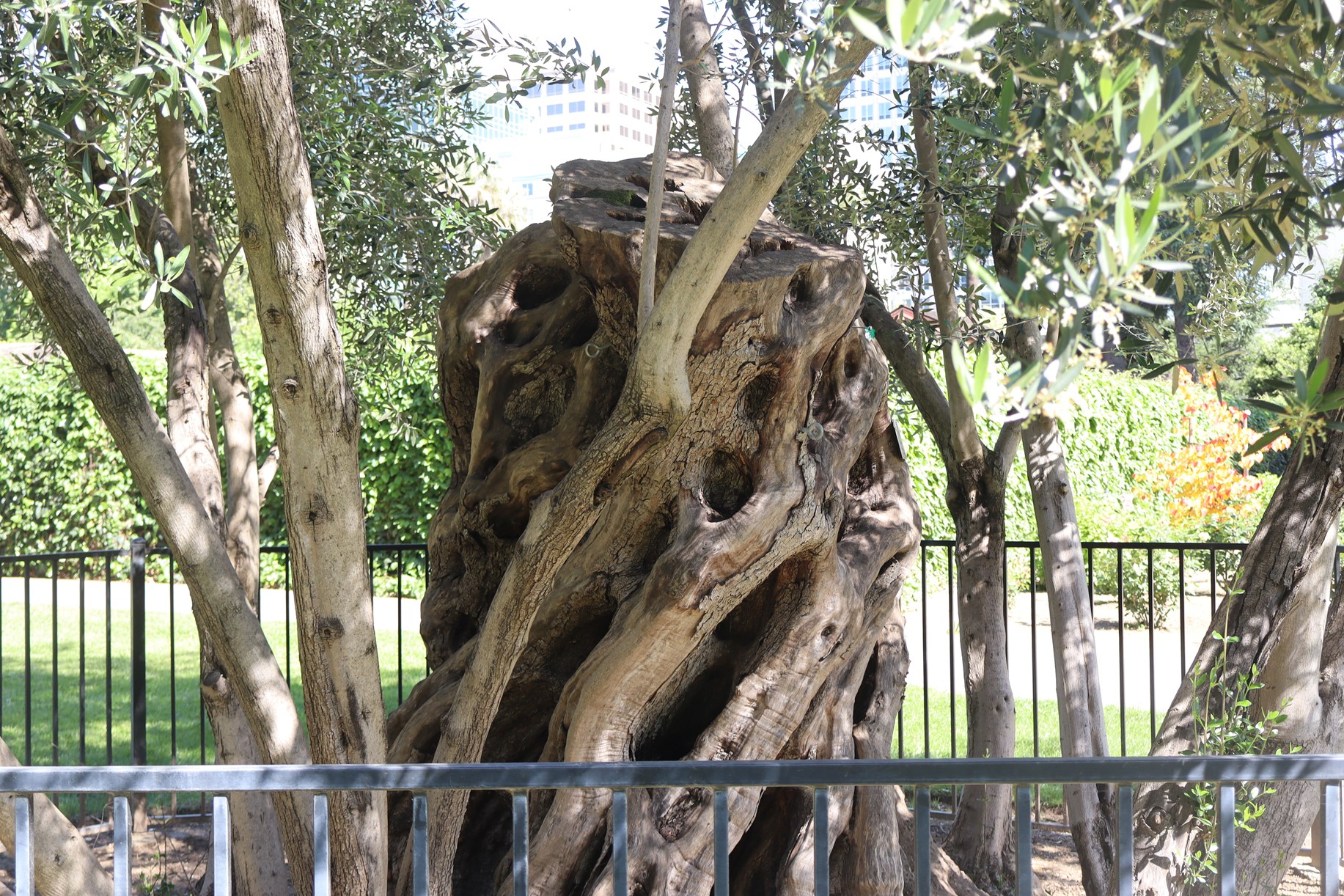 The olive tree at Capitol Park is the only tree that has a fence around it because people kept taking olives from it.Keyshawn Davis/CapRadio
Olive Tree: The olive tree at Capitol Park is the only tree that has a fence around it. The fence went up almost 20 years ago after people kept taking the olives from it.
Nielson said the circumference of the olive tree is quite amazing.
“If you look at the detail of the trunk and some of the cavities and the pockets and the way that it has that swirl, it was just magnificent,” he said. “So [the fence] was a way to be able to still have the tree producing some life, and still keep the trunk present for people to come and just kind of Marvel at just the way that it looks.”
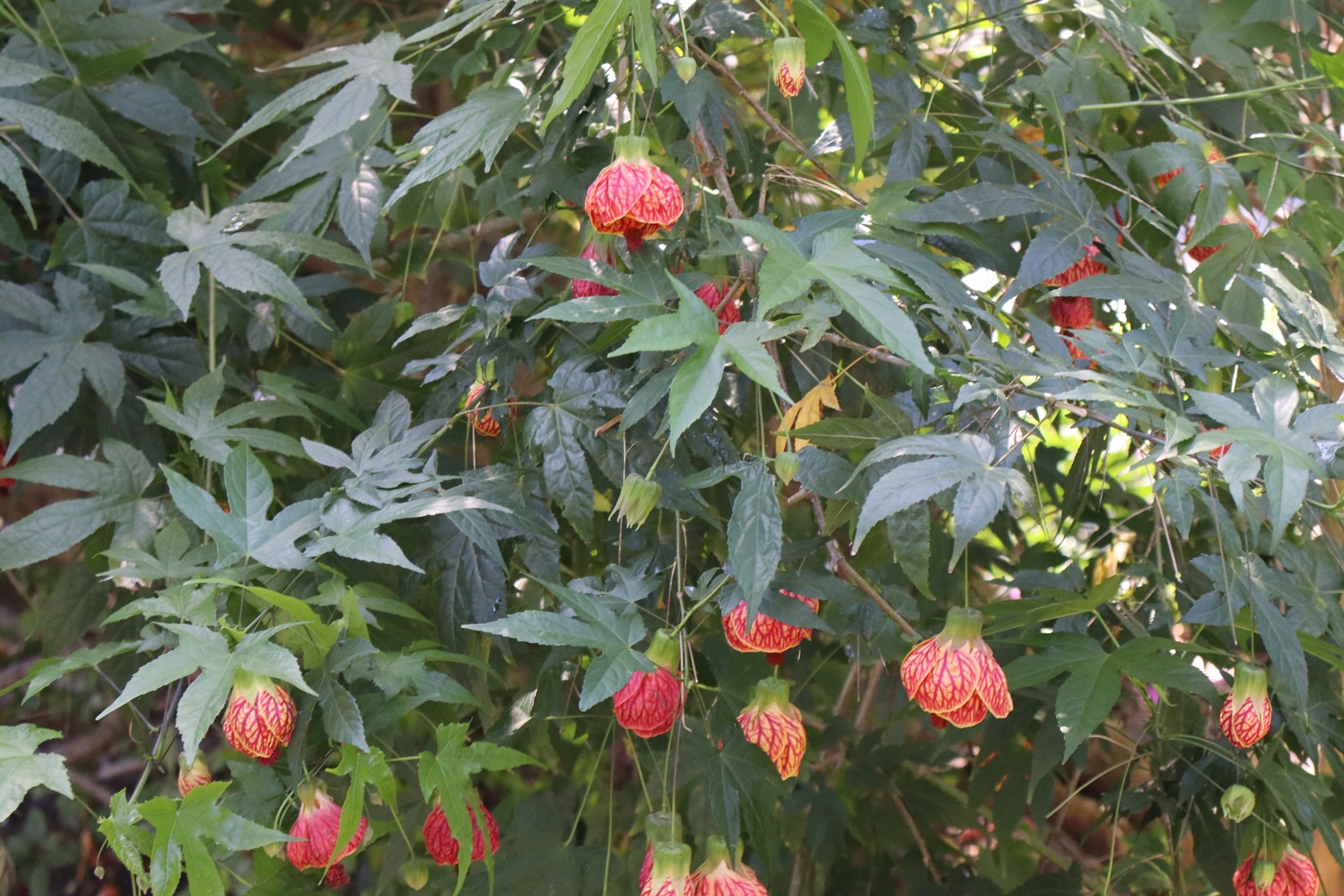 The Tiger Eye Abutilon is a small tree that lantern shaped flowers hanging from the branches called Tigers eye.Keyshawn Davis/CapRadio
Tiger Eye Abutilon: The Tiger Eye Abutilon is a small tree that could be treated as a shrub. What makes the tree unique is that it sometimes has red, yellow or pink flowers with red veins that are hanging from the branches that resemble Chinese lanterns.
Those lanterns are called “Tiger’s eye.”
“It's just a fabulous tree,” Nielson said. “A lot of people like to come and take a look at it. And I'm sure they take a blossom home with them once in a while, because they're really unique flowers.”
Follow us for more stories like this
CapRadio provides a trusted source of news because of you. As a nonprofit organization, donations from people like you sustain the journalism that allows us to discover stories that are important to our audience. If you believe in what we do and support our mission, please donate today.
Donate Today