When Sara Granda crashed on the freeway between Davis and Woodland in 1997, she was paralyzed from the neck down. It took over a year for her to recover enough to receive care at home.
“I was life-flighted to UC Davis Medical Center, where they did actually save my life,” Granda said. “But after saving my life, it was hard to keep it saved.”
Granda has required in-home care for more than two decades.
After the accident, her life has consisted of navigating hospitals, healthcare systems and the law to arrange her care and get it covered by insurance. Today, she finds herself in the middle of a lawsuit with CalPERS to continue her care.
Her father is a state employee, and since Granda was 17 at the time of the crash, her care was covered by CalPERS. Granda’s case was the first time CalPERS had ever administered in-home care of this kind, and they delegated her 24-hour care to a nursing agency. The public pension giant made an agreement with Granda to split billing of the care with Medi-Cal.
“I came home and then I would say within nine months, along with the nursing agency, the agreement basically collapsed, “ Granda said.
According to Granda, the care provided by the original nursing agency assigned to her case withdrew. In her original agreement of care that she reached, it was mandated that when a change in provider happened, she was supposed to meet with CalPERS. When they wouldn’t meet with her, Granda had to take it on herself.
“You’re running an entire agency of one, me, top to bottom. So that means that you are the dealer and you are the scheduler,” Granda said. “You are the implementer of all care. You are the trainer of all care.”
This would normally be someone’s job in an agency or on a floor of a hospital - ensuring medications are distributed at the right times, measurements are taken accurately and that care is being conducted with oversight.
They reimbursed Granda for the wages of individual nurses, but they didn’t pay for anyone to administer her care.
“They’re a bad boyfriend. They create these promises, these programs, these entitlements, these benefits,” Granda said. “But, they do not implement them at all.”
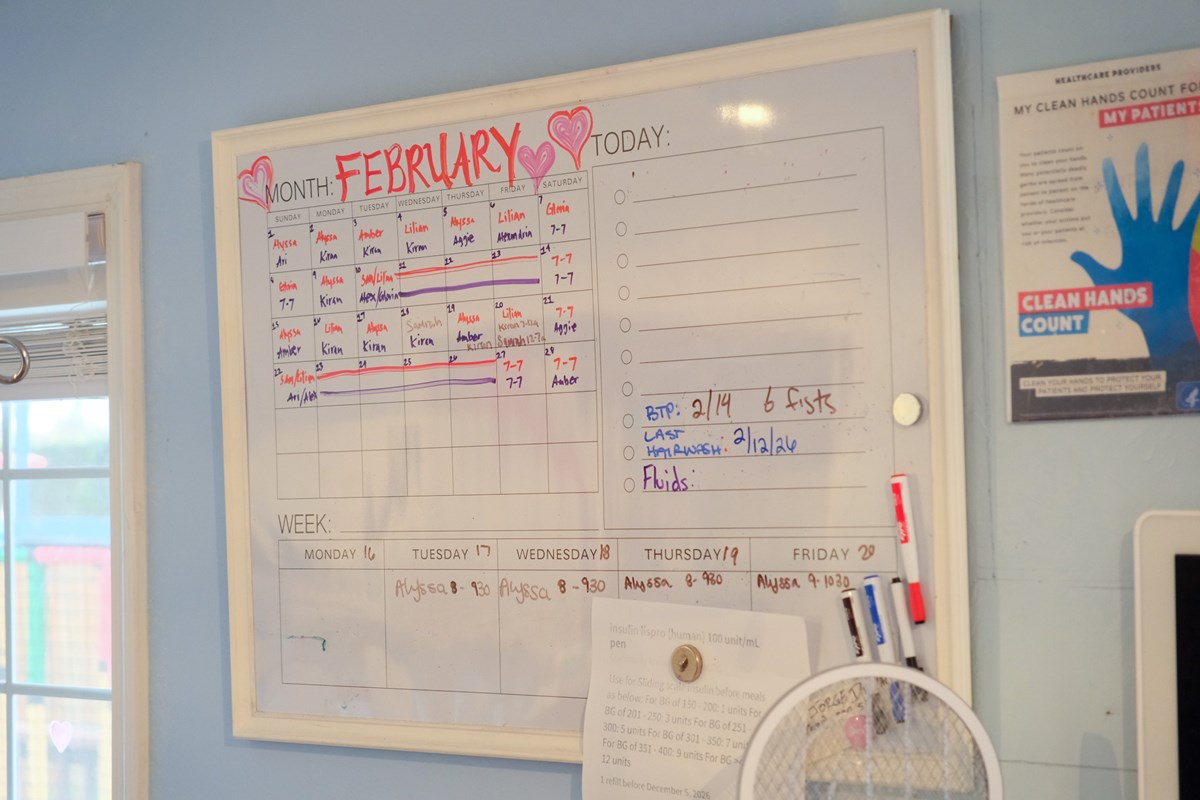 Sara Granda’s calendar organizing her care and nursing schedules on Feb. 19, 2026.Ruth Finch/CapRadio
Having to manage her own care would be hard enough to execute on its own, but after her accident, Granda still had aspirations. Namely, to be a lawyer.
However, when it came time to take the bar exam, the California Bar Association said she missed their registration deadline because she didn’t pay online. It was covered by a check from the Department of Rehabilitation, who had been paying her school expenses.
In 2009, Granda sued the bar association to take the exam. The case went to the California Supreme Court, where she found an unlikely ally - then Governor Arnold Schwarzenegger.
After hearing about her case and writing to the court, the court ordered the California Bar Association to let her take the exam.
She passed, earning her status as a full-fledged lawyer. Then, the Governor invited her to his 2010 State of the State address.
“Then I meet him… and he’s like, ‘do you want to touch my Conan sword?’” Granda said. “In his office is the Conan sword from when he was Conan the Barbarian. And [I said] ‘No, [it’s hung] way too high up. But, I do think you should appoint me.’”
Schwarzenegger appointed her to work at the Department of Health Care Services as an attorney. The DHCS is a state agency, which means her insurance was still going through CalPERS.
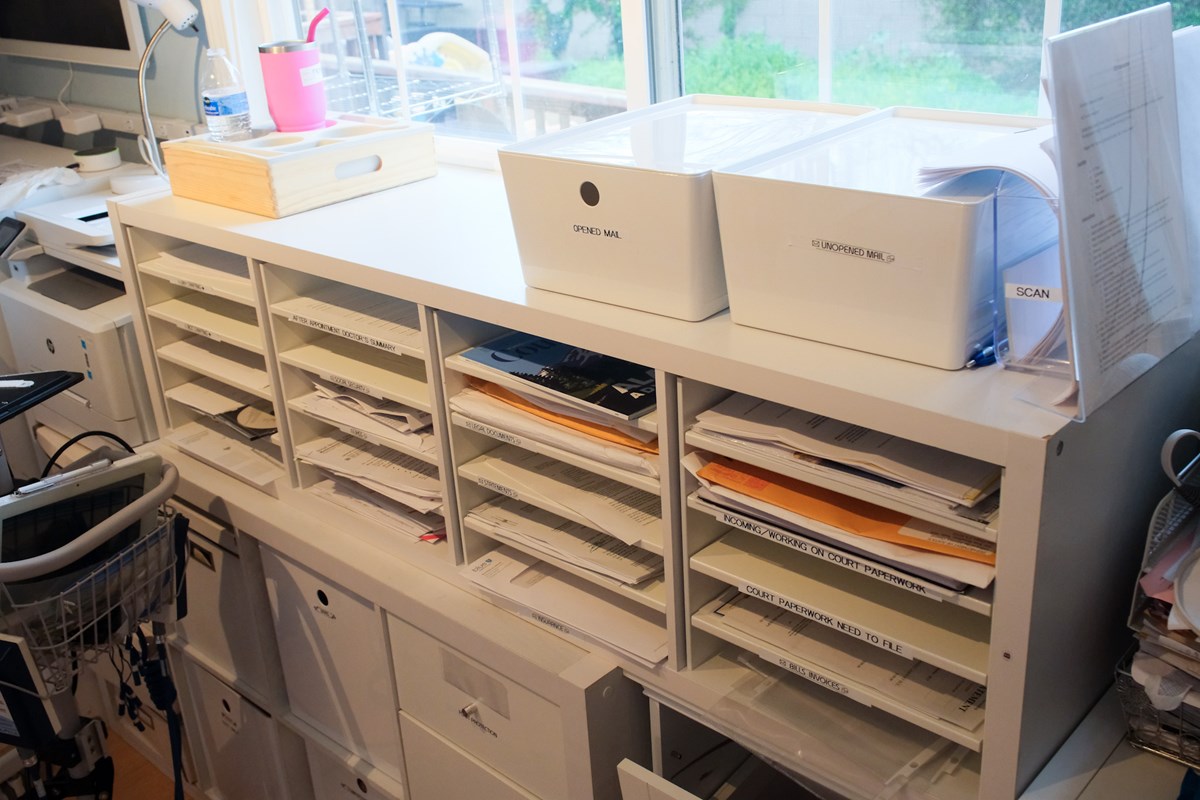 Sara Granda’s file organization system in her home, organizing legal documents and medical records on Feb. 19, 2026.Ruth Finch/CapRadio
Granda still was responsible for administering her own care, and in May 2014, she developed a complication. She said two wounds appeared on her body, and she didn’t know where from.
“And my caregiver, not any of these nurses, the only person working who’s not a nurse says ‘look at your cushion, your cushion – there’s no cushion,‘“ Granda said. “‘You have no cushion, so you’ve been sitting on this hard metal pan for the last five, six months.’”
She’s been battling in court with CalPERS since 2021 to cover complications that resulted from the injury. According to her lawsuit, CalPERS is still billing nurses at a 2012 rate that is “40-50% less than the market rate” for the skilled nursing required to ensure Granda’s survival, and that nurses are disincentivized to work for her.
Granda has also been struggling to appear and file in federal court. She said that she hasn’t been able to work with an ADA coordinator at the Eastern District federal courthouse to file paperwork she needs in her case.
She’s still fighting in court. Granda said that her whole life since she was paralyzed has put her in courtrooms and hospitals just to survive. While it might seem like she’s especially resilient, she just does what she has to to get by.
“The survival need is just, I mean, it’s primal … It drives every decision I make, every piece of my day, every piece of my care implementation,” Granda said. “Which is all my job, now. And if [I] want to live, here’s what [I’m] gonna have to do, and it’s a lot. And I thought well, okay, sure, game on.”
CalPERS declined to comment on the lawsuit, stating that they don’t comment on pending litigation.