To drivers, it might seem like an unassuming road with diversions that force them to turn and roundabouts that prevent high speeds. But those same obstacles make it a haven for Sacramento cyclists trying to avoid the city’s busy streets.
E Street is the northernmost street considered a bike path in Sacramento’s core region. It connects cyclists to the city’s downtown, midtown and East Sacramento neighborhoods through a three-mile stretch of road extending from 7th Street to Elvas Avenue.
Debra Banks, executive director for Sacramento Area Bicycle Advocates, likes to call roads like this “side connectors,” or “side streets.”
“That's my terminology, and it's sort of the same terminology as for skiing,” she explained. “You take the lift up to the top and then you ski down the main runs, but then there's those kind of side runs that are a lot quieter and not as many people take them, so slightly out of the main.”
What she's referring to are roads with little traffic near well-traveled streets that cyclists often use to get around town.
“E Street is sort of a side connector,” she said. “It's not J Street, it's not H Street, these areas of town that are much more central to the center core, which makes them quieter. There are fewer cars on it, which makes them lovely for cycling.”
As part of an ongoing series on biking in Sacramento, CapRadio’s Gerardo Zavala recently took a ride on E Street to see why these streets are important to Sacramento cyclists. Here’s what he saw and who he spoke to along the way.
E Street Bike Shop
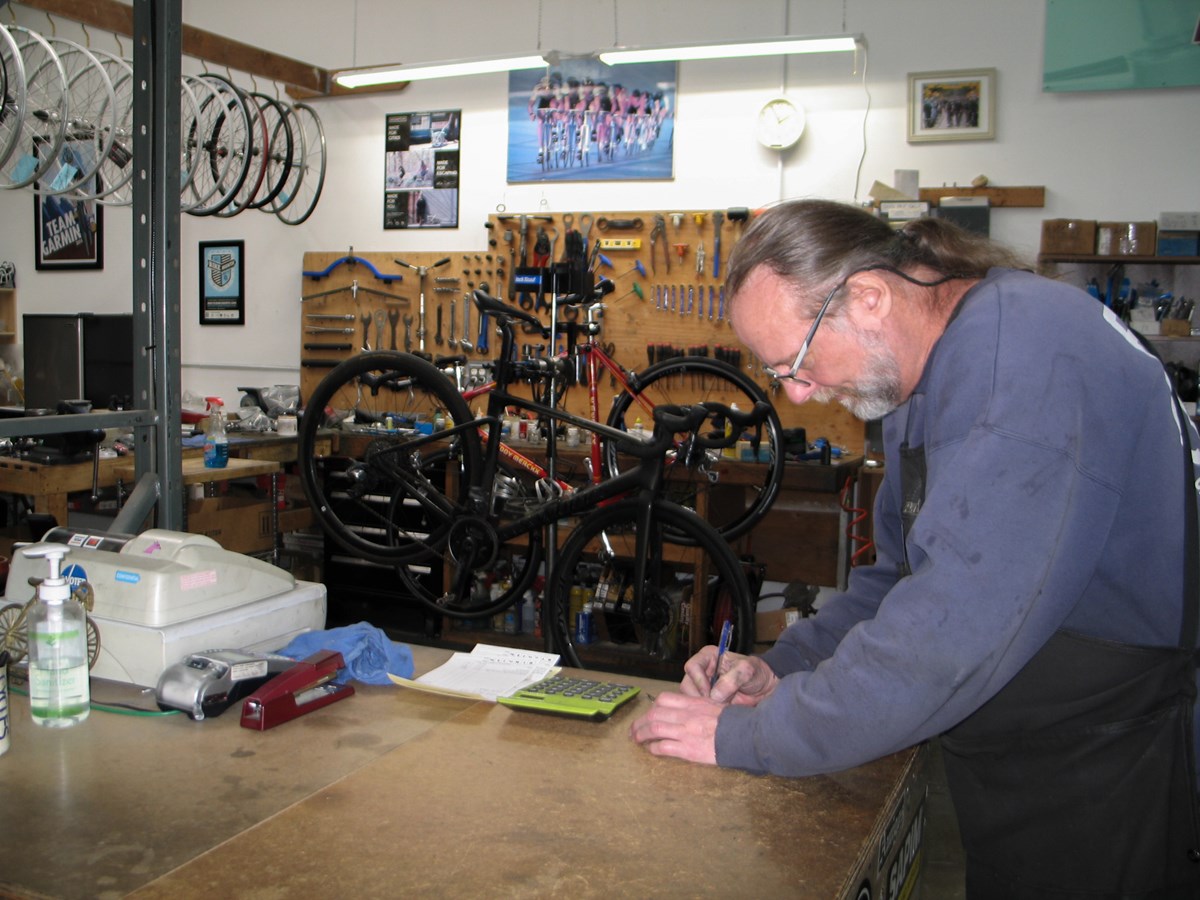 Douglas Maxwell, owner of E Street Bike Shop, Tuesday, Feb. 18, 2025, at 1609 Dreher St., Suite E in Sacramento.(Gerardo Zavala/CapRadio)
Although it’s in the name, Douglas Maxwell’s E Street Bike Shop is not on E Street. That’s because he moved the shop in 2021 to its current location six blocks away near Capital Casino along Dreher Street.
It’s located near the scenic Sacramento Northern Bikeway, which makes it a great pit stop for cyclists commuting into the city from Natomas or North Sacramento.
Maxwell understands E Street’s importance to cyclists, particularly those who used to bring their rides to get fixed at his previous location. He argued that E Street, and the streets surrounding it, are “conducive” to cyclist travel because of its safety compared to other roads.
“Those streets there — D, E, F, maybe G — those are really great streets for getting across town because of the limited traffic,” he added. “You have roundabouts and diversions to try to keep the cars from going through there and keeping them on H and J.”
Maxwell said he was “bike only” for 20 years to save money on car insurance, maintenance and registration costs. The Sacramento native has relied on side streets like E Street to safely get around the city.
“I always joke about how great the registration costs on a bike are,” he said. “It’s amazing how much money we dump into cars. I understand some situations you need that, but just eliminating a couple of trips a week can make a difference to your budget, your health and your well-being. It’s a pretty amazing machine.”
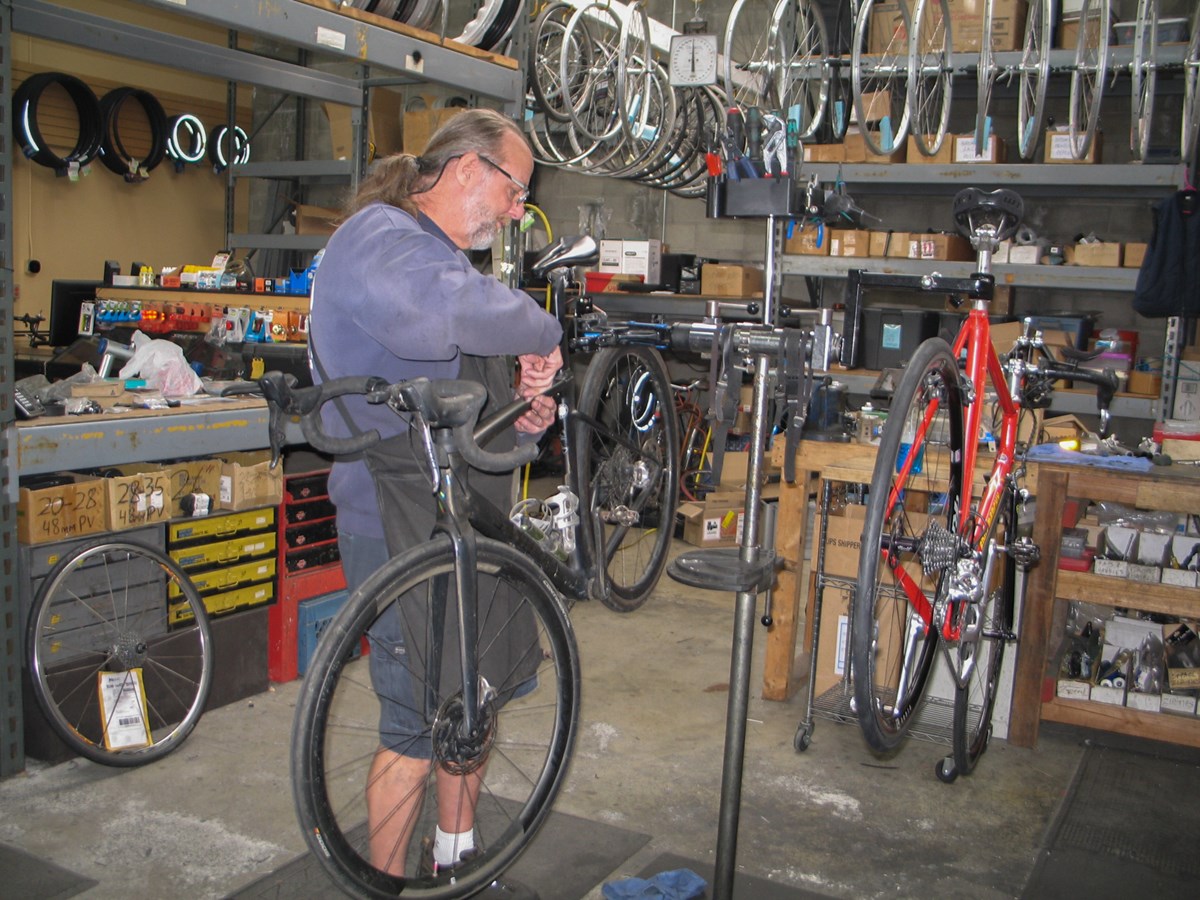 Maxwell fixes a customer’s bike Tuesday, Feb. 18, 2025, at E Street Bike Shop in Sacramento.(Gerardo Zavala/CapRadio)
And while he applauded the city for its efforts to add protected bike lanes with offset parking throughout the city, he argued that most people are still going to use side streets.
“I think E Street or M Street would be a great idea to encourage people to ride,” he said.
He encouraged more Sacramentans to get on bikes arguing that it’s a “win, win, win.”
“It's frankly the most efficient mode of transportation known to man,” he stressed. “It's amazing how much distance you can travel on a potato.”
New Roma Bakery
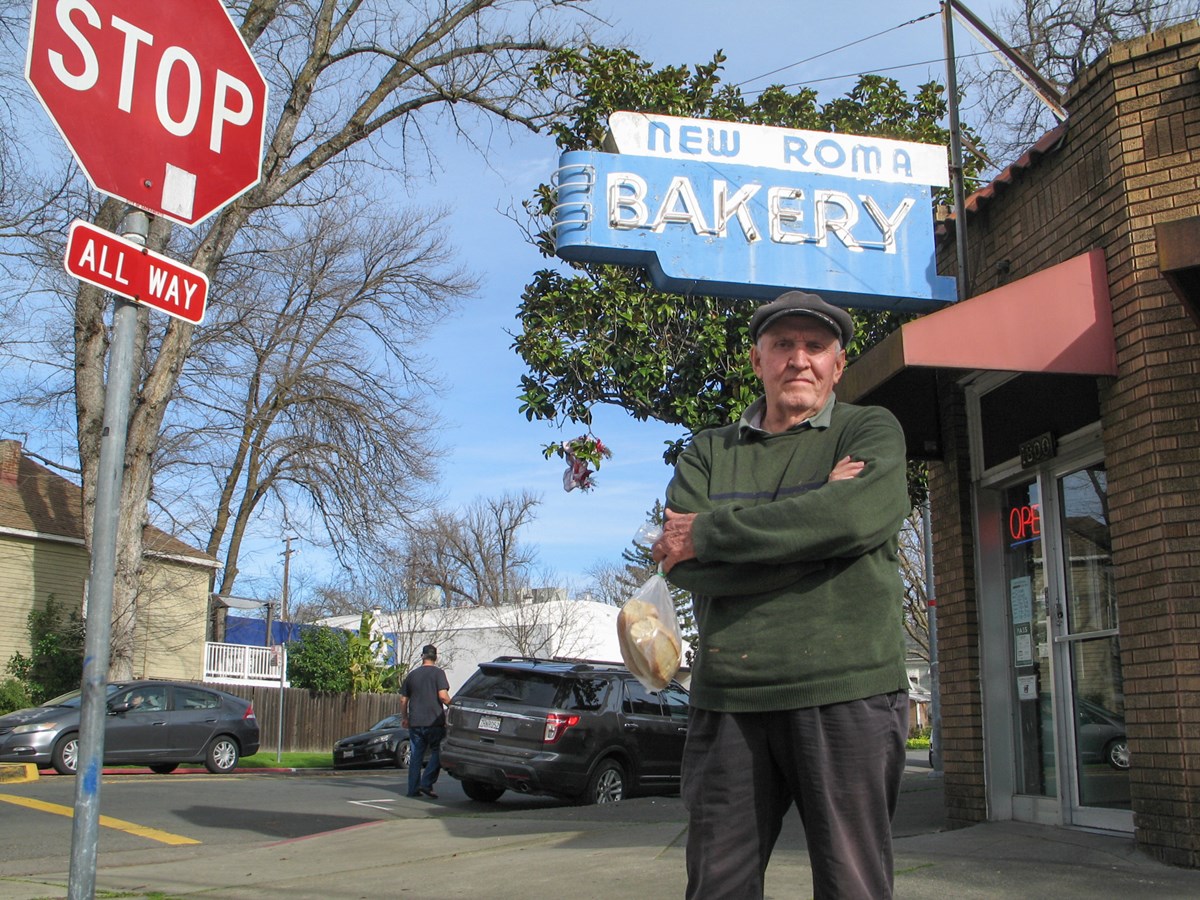 Adolfo Mercado stands outside of New Roma Bakery Tuesday, Feb. 18, 2025, at 1800 E St. in Sacramento.(Gerardo Zavala/CapRadio)
Tucked inside the New Era Park neighborhood along E Street is a Sacramento relic that’s served an assortment of pastries, cakes and fresh-baked breads for nearly 100 years.
New Roma Bakery, which opened in 1934, dons an old-school neon sign that welcomes guests, many of whom have been visiting the bakery for decades. Ample bike parking is available outside making it a great stop for cyclists.
Adolfo Mercado is one of the bakery’s regular customers. He's lived in the New Era Park neighborhood for over 50 years.
His family owned a popular Mexican bakery called Jalisco Market in the 1950s, which he said was one of the first businesses selling Mexican products like pan dulce and fresh tortillas, so he understands the importance of businesses like New Roma to communities like his.
“I come because they have good products that are very delicious,” he said in Spanish.
As he walked out of the bakery one February afternoon holding a couple of bread rolls, which he said he would use to make tortas, Mercado explained that he’s biked daily for the 50 years he's lived along D Street. He’s learned how to get around safely without relying on busy roads, including those that have received protected bikeways or lane reductions through the city’s Central City Mobility Project.
“On D Street, there's barely any traffic,” he said. “So I'll get my bicycle — I live on 13th and D — and I'll go to McKinley Park to walk.”
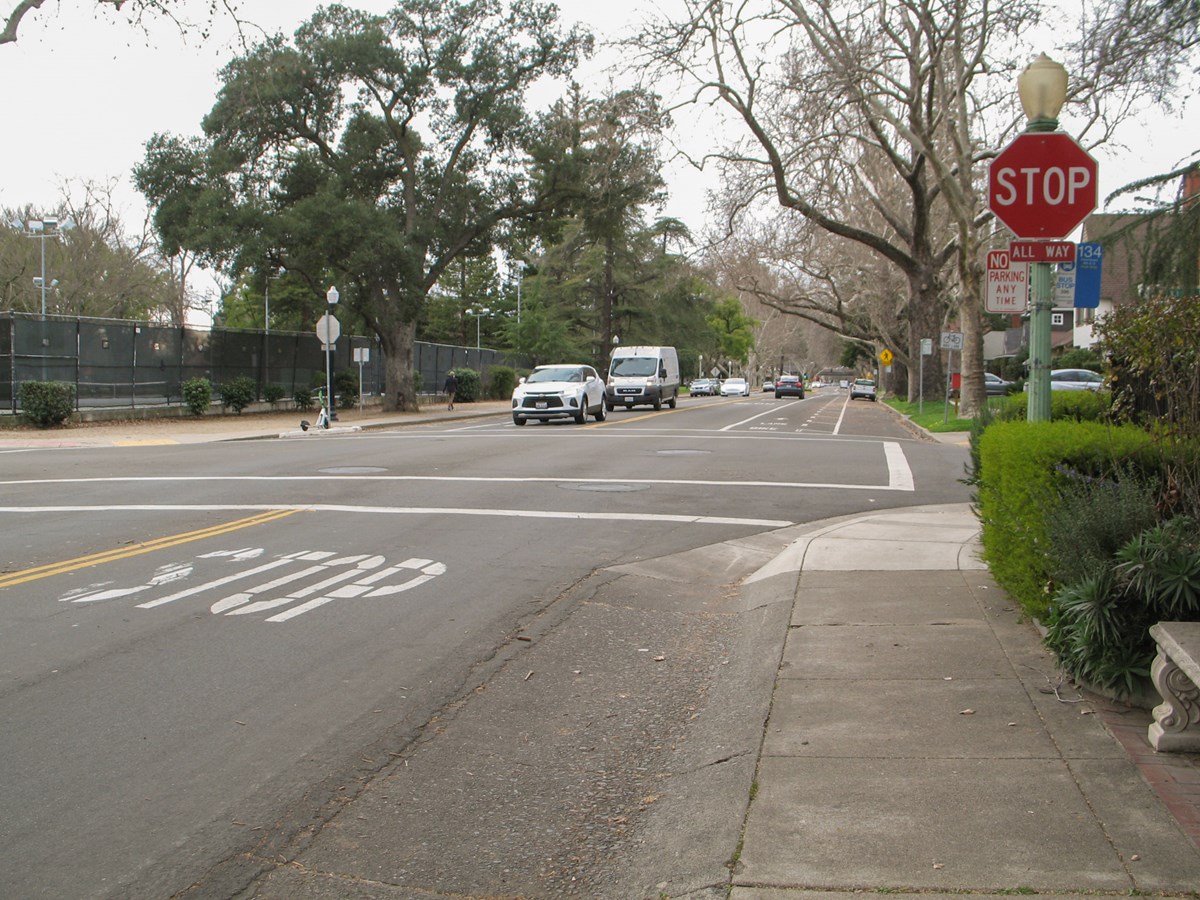 A bike path starts near McKinley Park Tuesday, Feb. 18, 2025, at the corner of 33rd Street and McKinley Boulevard in Sacramento.(Gerardo Zavala/CapRadio)
Mercado said his sister lives near the park so he'll often stop by to say hello during his bike rides.
“My life is happy,” he added. “I'll go walk and look at the ducks.”
He argued that adding biking infrastructure like protected bike lanes along streets like D or E would make biking safer for him and his community.
“Since I live here, I know more or less where it's safe,” he said. “On D, just grab your bike and go because there's no traffic.”
East Village Bookstore
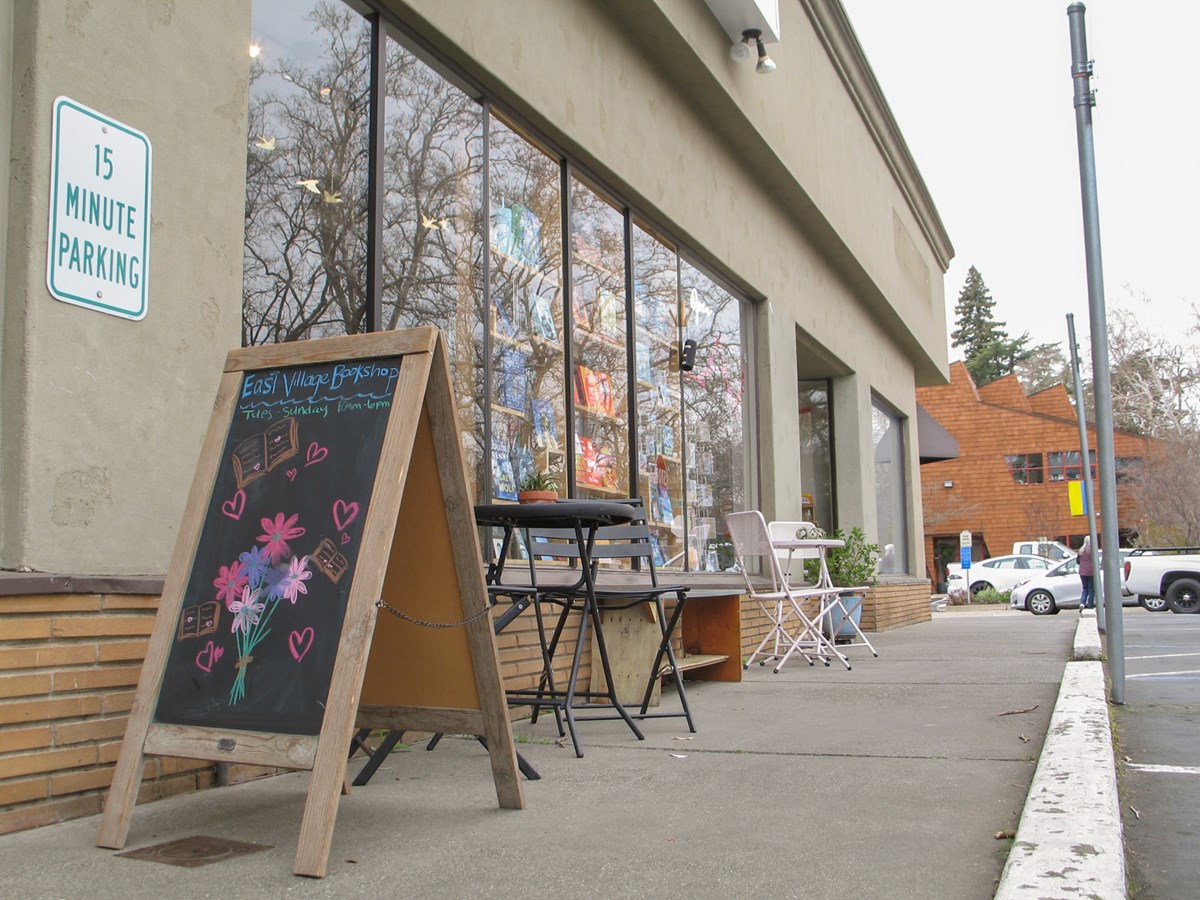 East Village Bookshop Tuesday, Feb. 18, 2025, at 3604 McKinley Blvd in Sacramento.(Gerardo Zavala/CapRadio)
Traveling from West to East, E Street eventually turns into McKinley Boulevard at Alhambra Boulevard. The boulevard connects cyclists to McKinley Park and businesses like East Village Bookstore.
The bookstore is a hidden gem as it shares a small strip mall with a few other businesses surrounded by single-family homes. A couple of years ago, its hidden nature — which is part of what makes it unique to the city's independent bookstore scene — nearly forced the family-owned business to close because it wasn't getting enough foot traffic.
Vivian Tran has been working at the bookstore for several months. She said the store occasionally gets cyclists who park their bikes inside the store — there’s no bike parking available nearby — as they shop.
Tran lives in Elk Grove and said she doesn't see many people biking in Sacramento as a means of transportation.
“I think I see people biking for sport,” she said.
Tran was recently attending UC Santa Barbara and said she would ride her bike everywhere.
“They had bike lanes pretty much right next to every major street so you kind of could just choose to bike if you would like to,” she said. “I feel like here, the bike lanes are very small and could be a little scarier. I definitely don't want to bike on the main streets here. I feel like it's a lot more chaotic.”
Sacramento’s ‘bicycle highway’
If you’re commuting from downtown to Sacramento State, you’re probably familiar with M Street. Banks, the SABA executive director, said it’s “the closest thing to what we would call a bicycle highway.” It’s adjacent to Folsom Boulevard and is used by cyclists and pedestrians to get around and through East Sacramento.
“Folsom gets all the cars, M Street is quieter so you’ll find more people walking and biking M,” she said. “You can jump onto M Street and then you have a lovely, very safe way into the downtown core. We need more roads like that.”
Gaby Miller, a spokesperson for the city, said the recently approved Streets for People: Neighborhood Connections Plan lays out a network of local streets designed to enhance bikeability through traffic calming measures.
“While there are no current plans to add bike lanes to M Street, it is part of the Neighborhood Connections primary network, meaning it could see future investments in traffic calming measures,” she stated in an email.
She said the goal of the plan is to better reflect Sacramento’s diverse bike community “from older adults, to kids, to people traveling by bike because they have no other option, to folks who bicycle for transportation or sport.”
Miller added that the city is working on ways to raise awareness about existing informal street networks — including E Street, F Street, 58th Street, 8th and 9th Avenues, 2nd Avenue and Tamoshanter Way.
“We offer free resources to help residents navigate these routes, including a free monthly Urban Biking and Scooting class, a bikeway map and city-hosted bike rides,” she noted.
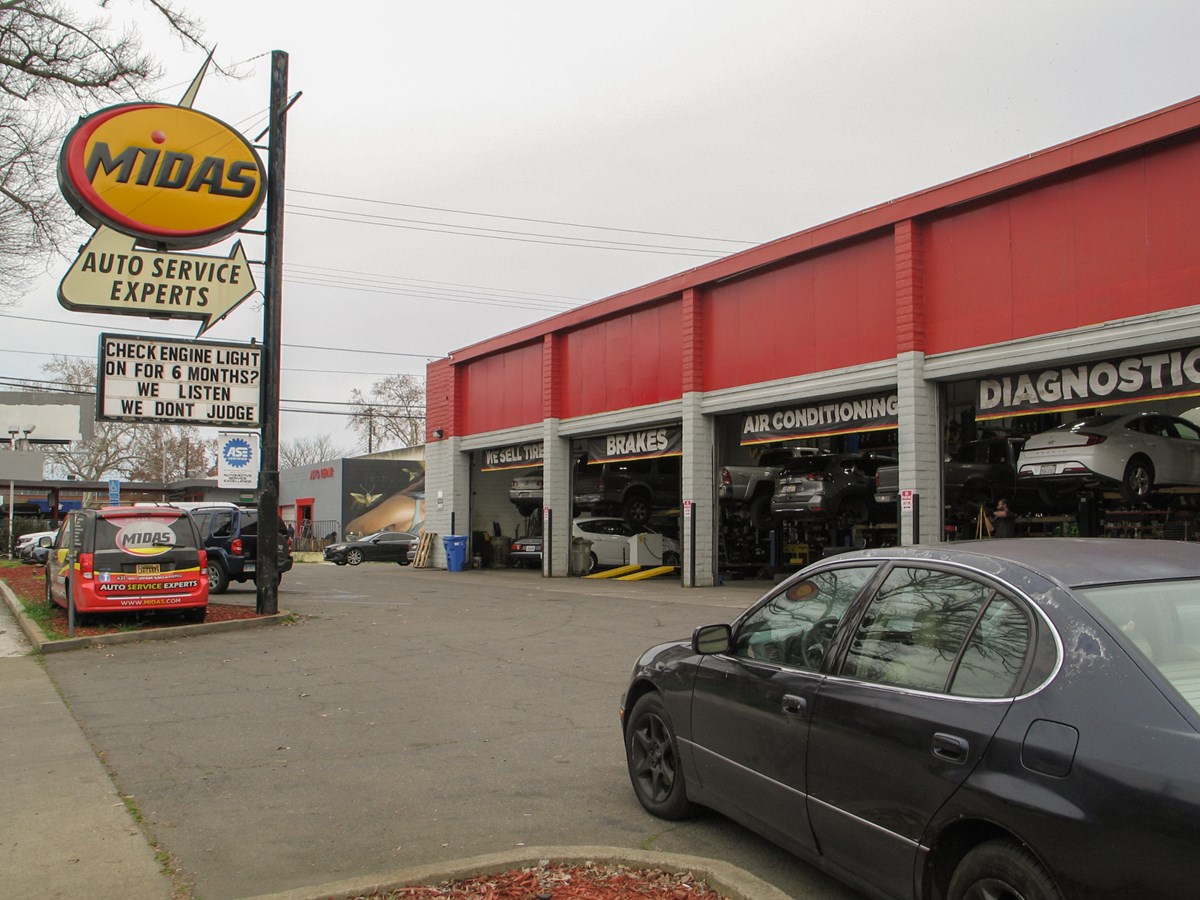 Midas Tuesday, Feb. 18, 2025, at the corner of E and 16th Streets. The auto shop is known for its funny signs.(Gerardo Zavala/CapRadio)
Slowing down traffic
Above all, Banks said slowing streets is the best way to make the city safer for cyclists and pedestrians. That’s why SABA is in favor of all the projects the city is doing, like the Broadway Complete Streets Project.
But she noted that these projects require a lot of time and funding and argued that the city should adopt “quick build programs” that are smaller, less expensive and can lead to positive results in shorter periods of time.
“The larger issues are not so much that the projects aren’t good ones, they’re all good,” she said. “It’s about timing to get them implemented and built sooner than later, and then what’s the maintenance afterward?”
More education needs to be provided to cyclists to help them adjust to new configurations as the city continues expanding its biking infrastructure, she said.
“There are a lot of new assets in town that are really helping to make things safer for cyclists,” she added. “We do have a long way to go, but I think it’s getting better.”
Follow us for more stories like this
CapRadio provides a trusted source of news because of you. As a nonprofit organization, donations from people like you sustain the journalism that allows us to discover stories that are important to our audience. If you believe in what we do and support our mission, please donate today.
Donate Today