Jessie Mabry is the CEO of Opening Doors, a Sacramento-based nonprofit that serves over 3,000 immigrants, refugees and survivors of human trafficking a year. According to her, the biggest sentiment she’s heard from the people she serves is anxiety.
“They’re worried about whether it’s safe to send their kids to school,” she stressed. “They’re worried about what will happen not just to their family if someone is detained or deported, but also what will happen to the economic security of their household if that person is an income earner.”
These sentiments are in response to President Donald Trump’s numerous orders and directives to increase enforcement on immigration. According to experts, the “shock and awe” strategy is meant to coerce fearful immigrants to depart voluntarily.
In Sacramento, that fear has led many immigrant families to avoid being in public places and spending less money as concerns of facing deportation grow. The effect that’s starting to have on the regional economy can be seen most starkly through businesses that rely on immigrant support, like Gondo Fusion.
The Stockton Boulevard restaurant serves Mexican- and Cuban-inspired cuisines. Owner Silvia Rodriguez said she’s experiencing a major decrease in business because of the misinformation and fear.
Gondo Fusion
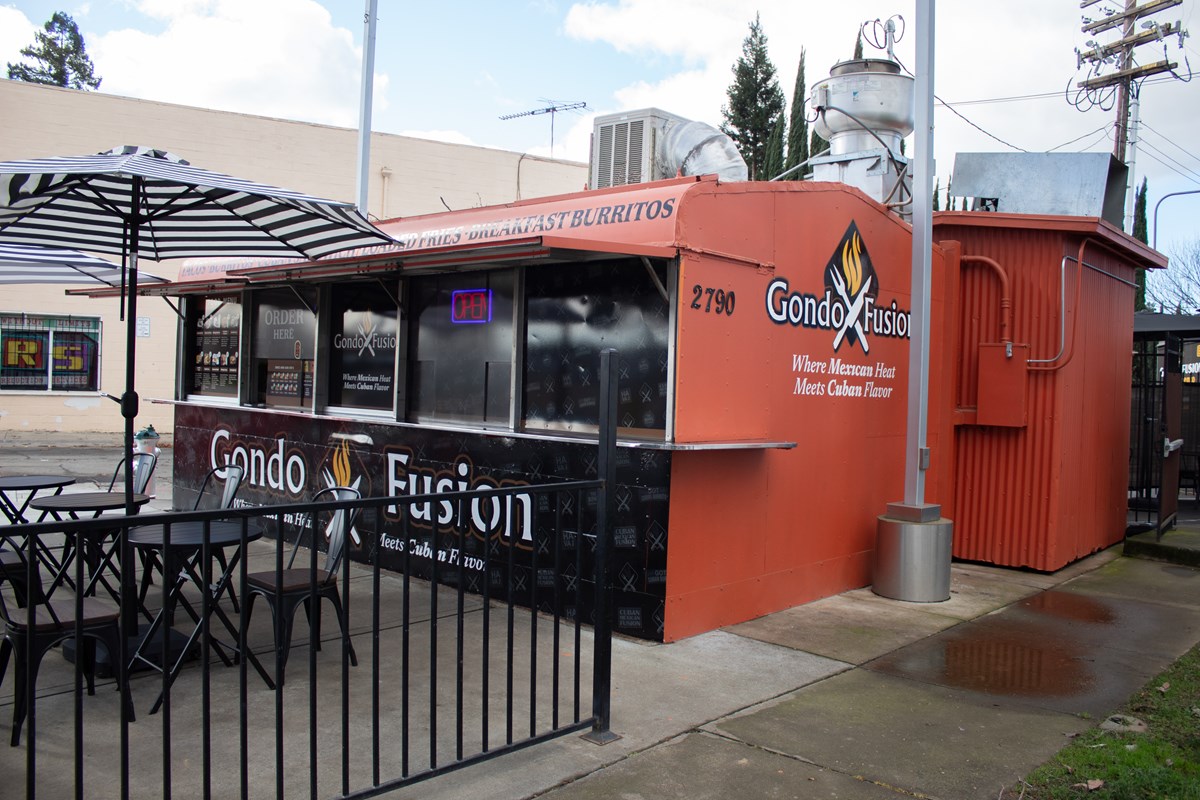 Gondo Fusion Friday, Feb. 7, 2025, at 2790 Stockton Blvd in Sacramento.
It’s easy to miss the restaurant while driving down the busy boulevard despite its bright-orange facade. Even so, the business managed to form a steady stream of regulars who have kept the business afloat.
Rodriguez opened the small restaurant in May 2024 but has been operating a food truck under the same name for 13 years. As an immigrant herself, Rodriguez said she understands what her community is feeling.
“The fear was always there,” she said in Spanish while recounting her time as an illegal immigrant. “Sacramento is a community with a lot of Latinos [and] I saw a lot of people from other nationalities like Muslims, Hindus, people from all over the world. We haven’t seen any of them because they’re afraid.”
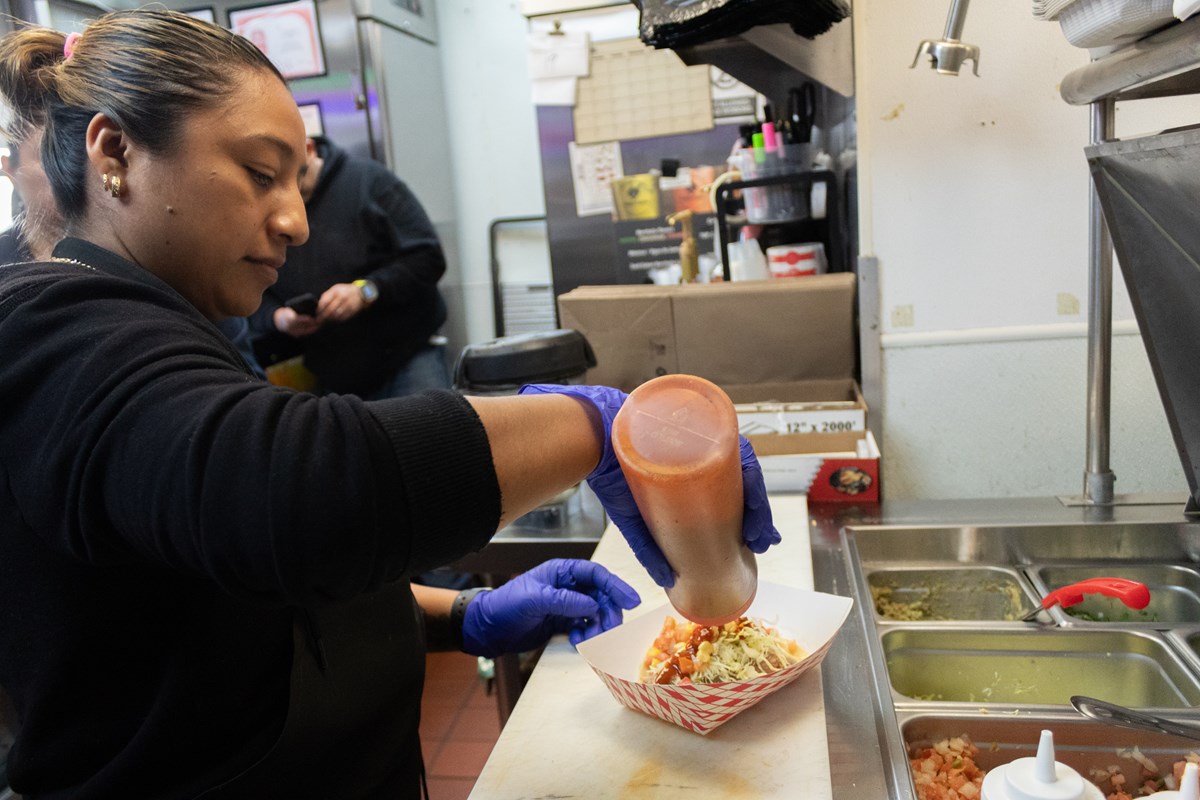 Lisa Barrentos makes a taco Friday, Feb. 7, 2025, at Gondo Fusion in Sacramento.(Gerardo Zavala/CapRadio)
According to her, it’s normal to see a drop in business in January because people spend a lot of money during the holidays. But the 60% drop she’s seen is unusual.
“It’s normal to have a drop, but this is the first time we’ve had this problem that not a single person shows up,” she said. “It’s not just our restaurant, it’s our food trucks too.”
She’s heard from the community that people don’t want to spend money for fear of what might happen regarding increased immigration enforcement. That’s also led to a “diminishing” of Hispanic people at events she takes her food truck to.
The result has been a cut to staff hours and even closing early on days when there aren’t enough customers coming in.
“What we want is to hire more people, so cutting hours on staff really affects us because they have to find other ways to make money, and we might lose our employees,” she said. “At this moment, I don’t have a plan because everything occurred overnight. We didn’t think this would happen. We knew things were coming, but this was too much for small businesses.”
She encouraged people to not be afraid and to continue supporting small businesses.
La Superior
 La Superior Friday, Feb. 7, 2025, at 4940 Stockton Blvd in Sacramento.(Gerardo Zavala/CapRadio)
Reynaldo Cruz, assistant manager for La Superior, said his grocery store felt the effect of online misinformation almost immediately. In Sacramento, social media posts warning of Immigration and Customs Enforcement checkpoints on some of the city’s busiest streets spread quickly over the last couple of weeks, leading to many staying home.
“We started getting a lot of calls roughly a week ago saying ICE was here, but everything has been false,” he said in Spanish. “We don’t doubt that ICE could be here, but there’s a lot of misinformation.”
He noted that he’s seen posts and videos on social media warning people to stay away from certain streets or areas of the city because of alleged ICE activity.
“They mention places like Walmart and Home Depot, which is where Hispanic people go,” he noted. “So where the Hispanic community is concentrated most, that’s where the claims are. Including here.”
Cruz said initial claims about ICE being present at the grocery store started last week leading to a 90% drop in sales.
Although the business was able to keep most staff on during that time, Cruz said they had to send some people home early because of the lack of business. He also noted that money orders, which are often utilized by immigrants to send money to their home countries, have decreased significantly.
However, business is slowly picking back up as customers learn to sift through the misinformation.
“Our sales are going up because people are starting to catch on to the misinformation,” he said. “They’re realizing who to believe, and who not to believe.”
Immigrant contributions to economy
Mabry argued that there is no way mass deportations can only impact immigrants because of how intertwined they are in communities.
“Our entire community benefits from the contribution of immigrants and refugees, whether they are starting businesses or paying taxes,” the Opening Doors CEO said.
A 2024 study looking at immigrant contributions to the economy found that, despite their exclusion from most public benefits, undocumented immigrants contributed $8.5 billion in California state and local taxes in 2022. Nationally, they contributed $96.7 billion in federal, state and local taxes in the same year.
“Sixty percent of Sacramento County’s undocumented community has lived here for more than 10 years, so immigrants and refugees are woven into the fabrics of our community,” she noted. “As we see the consequences of these anti-immigrant policies play out, we are going to see our entire community is harmed, not just our immigrant and refugee community.”
The Public Policy Institute of California found that immigrants account for nearly 37% of the state’s labor force — up from 11% in 1970. The institute noted that immigrants are also less likely to be unemployed than native-born workers.
Mabry said the effect mass deportations would have on the labor market in California alone would be detrimental.
“I think that’s something else that is going to be one of those consequences that we’re going to feel very deeply as these policies continue to be in effect,” she said.
Opening Doors helps immigrant- and refugee-owned entrepreneurs launch or expand their businesses through its Economic Prosperity Program. Through the program, qualifying participants can apply for microenterprise loans and receive business counseling.
“Immigrants and refugees are incredibly entrepreneurial and open businesses at two and four percentage points more frequently than U.S.-born entrepreneurs,” she added. “So they’re an incredibly entrepreneurial population, but often face barriers to accessing either the technical assistance or the capital they need to start your businesses.”
Follow us for more stories like this
CapRadio provides a trusted source of news because of you. As a nonprofit organization, donations from people like you sustain the journalism that allows us to discover stories that are important to our audience. If you believe in what we do and support our mission, please donate today.
Donate Today