This story was featured in our SacramenKnow newsletter. Sign up to get updates about what’s happening in the region in your inbox every Tuesday and Thursday.
Finally, finally, finally, we’re here. The end of the 2024 temperature blanket.
Before I get too sappy about it, I’ll go over the final few weeks of squares that Claire and I crocheted to finish our blanket up: During my last update, I talked about crocheting a few purple and blue squares, which represent weekly temperature averages in the 40s and 50s.
We saw that again with these final squares, meaning we closed out the year with more of the same purples and blues — well, sort of. You might notice that some of those purples and blues look a little different. That was just Claire and I running out of yarn and, since some of these colors have gone out of stock since we started this project, we had to get creative!
Anyway: While we saw some storms earlier in the season, things have dried out a lot since then. The final square of the blanket — a purple square that represents the week that started on Dec. 30 and edged into the new year — also covers the last time we saw rainfall in the Sacramento region.
“We did receive two-tenths of an inch of rain on Jan. 3 and since then, we haven't observed any precipitation over the Sacramento area,” Katrina Hand, a meteorologist with the National Weather Service in Sacramento, told me last week. Since then, we’ve received a very slight drizzle — literally a hundredth of an inch, according to a more recent report. So safe to say, it’s still been pretty dry.
California usually sees its peak precipitation between the months of December and February, and Hand says there’s still time for more to come. But since that bit of rain earlier in the month, there’s been no sign of any big storm on its way.
But back to the sappy stuff! Crocheting that final square got me thinking about where this all started, with a blue square back in January 2024.
Claire and I spent the first few months of this project slowly adding to our multi-colored pile of squares without thinking too hard about what the end product would look like. It wasn’t until September that we realized just how many we’d stacked up, at that point finally deciding to start the process of stitching them together into an actual blanket.
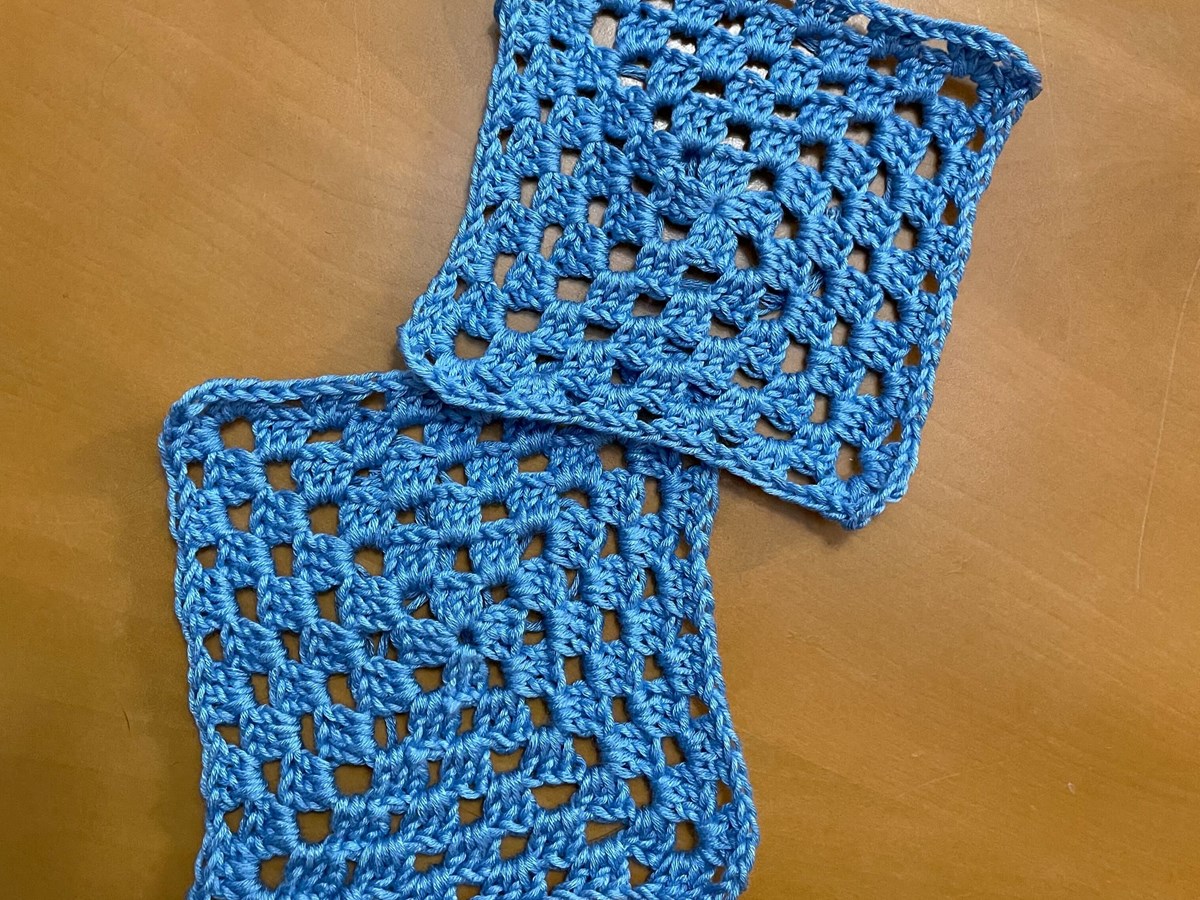 The first squares produced as part of CapRadio's temperature blanket, depicting average temperature in January of 2024.Claire Morgan/CapRadio
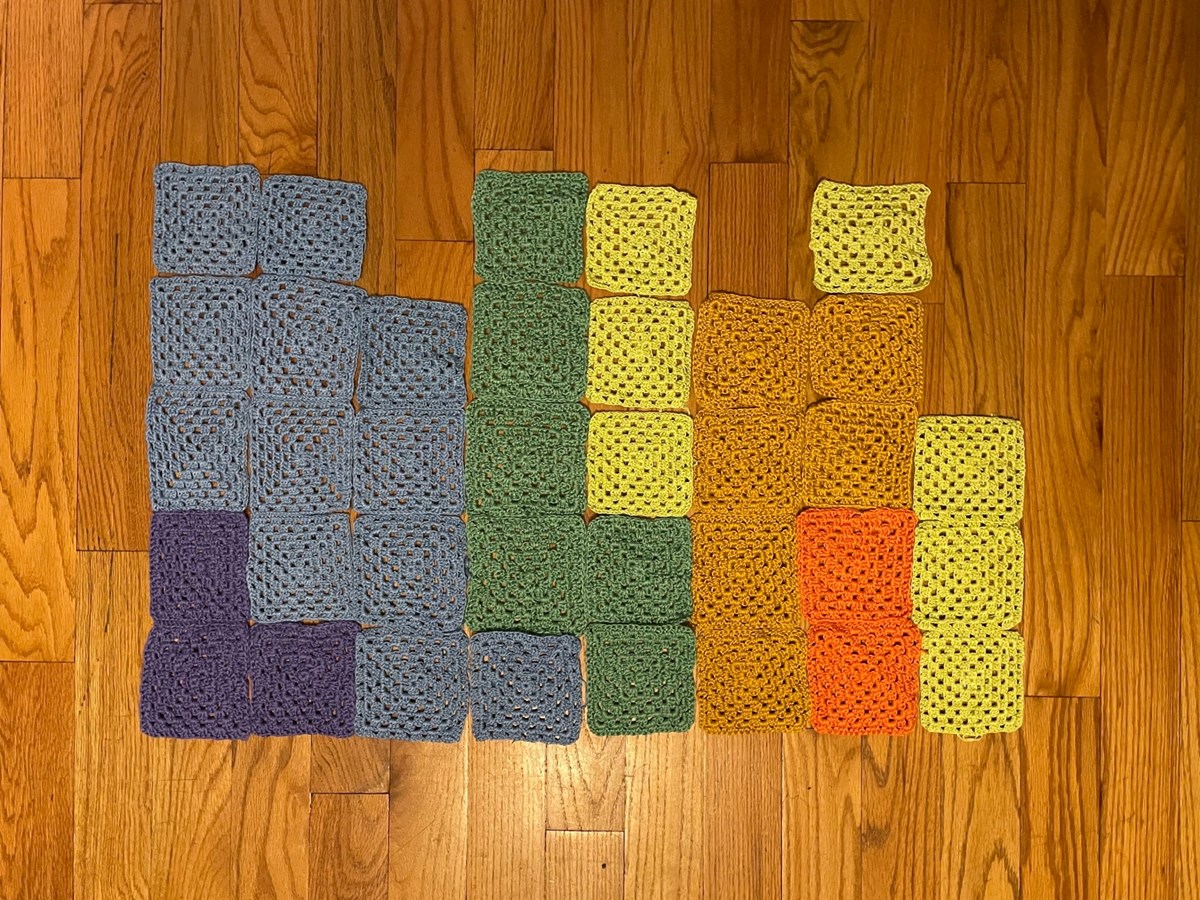 Crochet granny squares representing January through August average temperatures in Sacramento, produced as part of CapRadio's temperature blanket.Claire Morgan/CapRadio
Something I like about crocheting is the intimacy of the process. Every piece of thread, every stitch, is one that’s been through the hands of either Claire or myself. There’s no part of it that wasn’t made with intention.
That intention spread into the analysis. I’d never paid quite that much attention to daily weather. But after a year with this blanket, I’ve found I’m more aware of what’s normal and what’s a little more unusual in the Sacramento region — like in the summer, when Claire and I stitched the story of summer heat that broke records in Sacramento as well as the rest of the state.
Alone, this information might not mean much. But in the context of what we know, I see it as one point in the larger mosaic of climate change, especially as research tells us that the number of record-breaking heat events are on the rise globally, outnumbering record-breaking cold events. So, this doesn’t just amount to weather talk. It impacts the way people work, what people eat.
For me, this blanket was another way to pay attention. It’s one small snapshot of that larger picture — and with its focus on the Sacramento region, a way to bring that picture a little closer to home.
If you want to make your own temperature blanket for the Sacramento region in 2025 — whether that be taking weekly averages like us, or even recording daily average temperatures — the National Weather Service tracks that data on its website. In making our blanket, we decided to represent weekly temperature averages with what’s called a crocheted “granny square.” But other blanket-makers record daily temperatures by creating a crocheted line for each day of the year. You can find more on one version of that method by visiting the Tempestry Project’s website — and happy stitching!
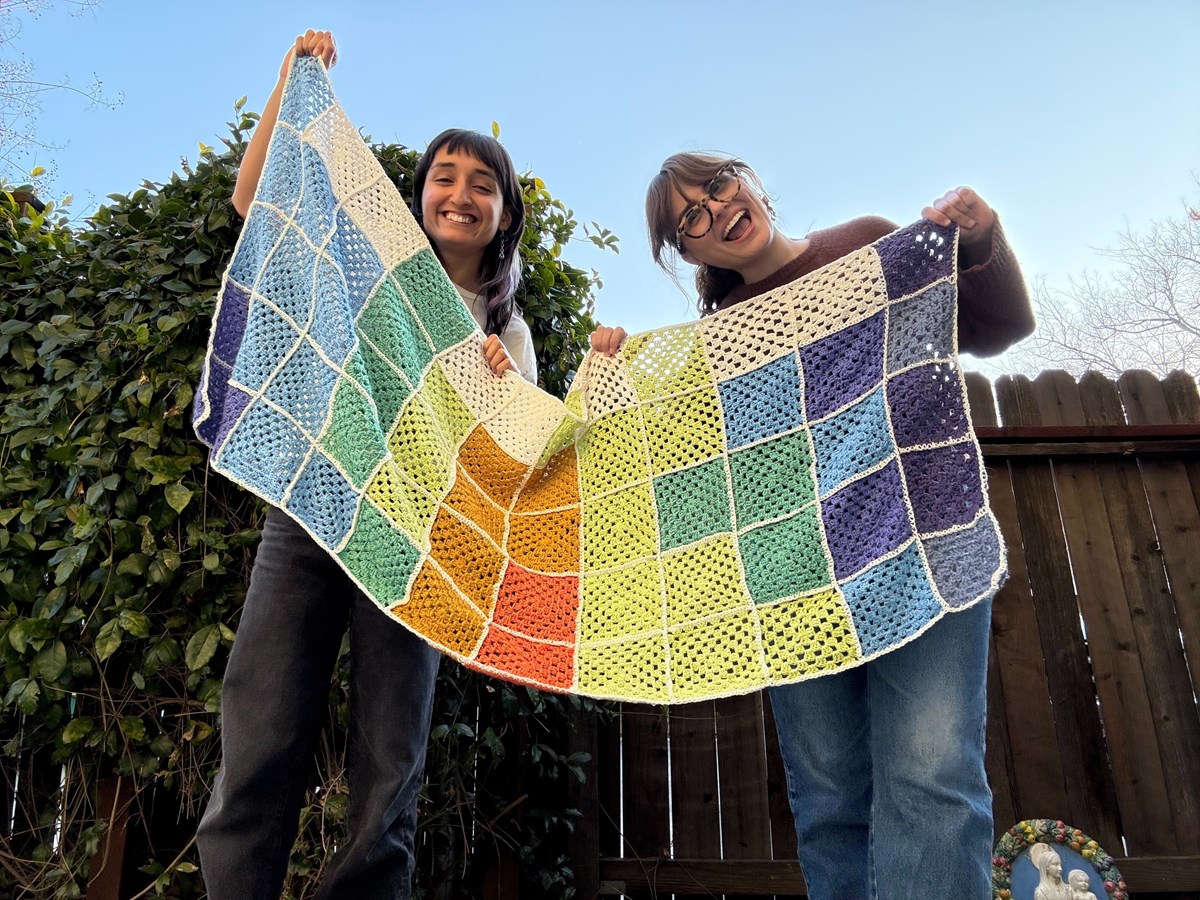 Manola Secaira and Claire Morgan hold CapRadio's finished 2024 temperature blanket.Claire Morgan/CapRadio
CapRadio provides a trusted source of news because of you. As a nonprofit organization, donations from people like you sustain the journalism that allows us to discover stories that are important to our audience. If you believe in what we do and support our mission, please donate today.
Donate Today