This story was featured in our SacramenKnow newsletter. Sign up to get updates about what’s happening in the region in your inbox every Tuesday and Thursday.
Although Hispanic Heritage Month is nearing its end, Sacramento’s diverse Hispanic-owned restaurants aren’t going anywhere.
And while a lot of attention is often put on Mexican heritage, culture and food during this month, the city’s Hispanic community — and restaurants — are diverse.
CapRadio Communities Reporter Gerardo Zavala visited three Hispanic-owned establishments and asked owners about their cultural background, what makes their businesses unique and for recommendations on their favorite Hispanic restaurants in Sacramento.
Café Xocolatl
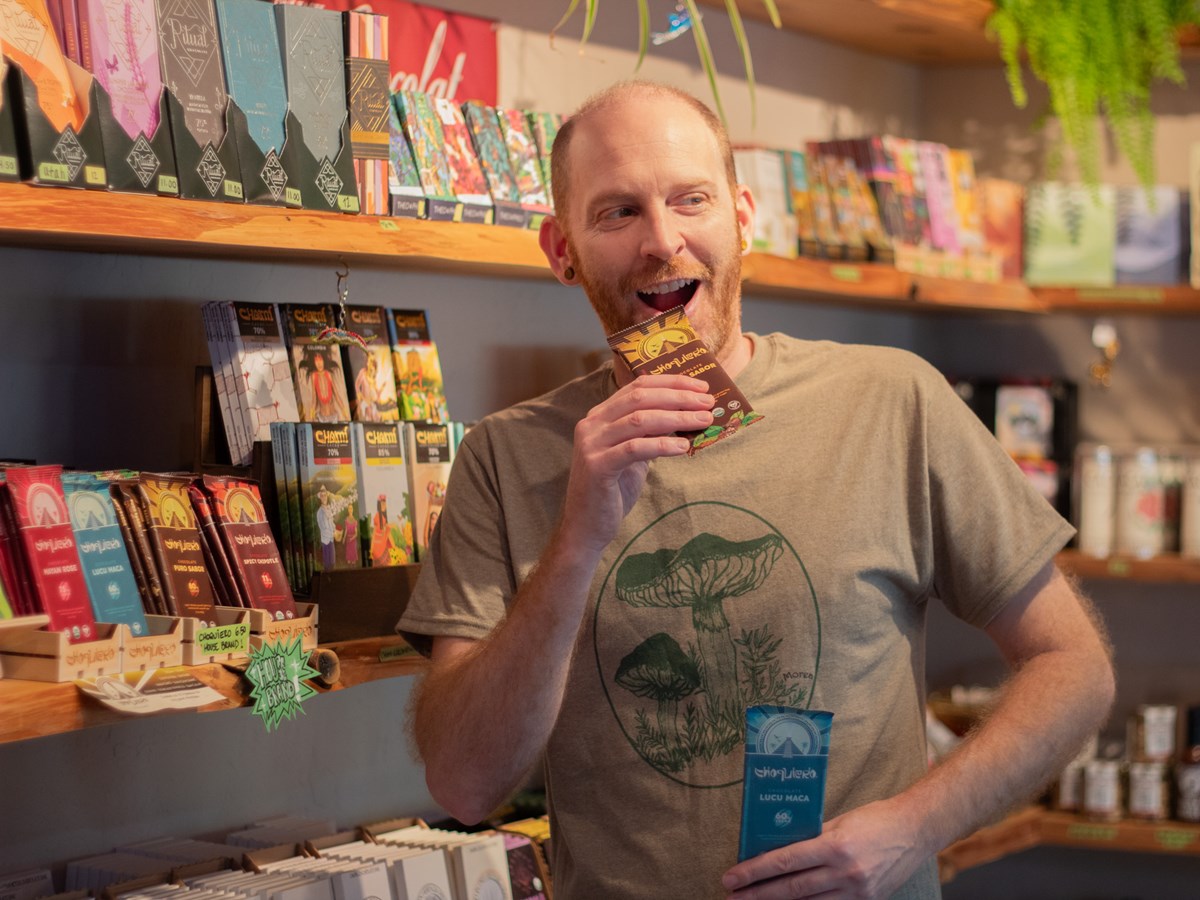 Café Xocolatl owner Ariel Wolansky Monday, Sept. 23, 2024, at 1607 10th St in downtown Sacramento.(Gerardo Zavala/CapRadio)
Choquiero Chocolate owner Ariel Wolansky opened Café Xocolatl in downtown Sacramento last year to introduce more people to authentic, unprocessed chocolate from communities that have grown cacao for centuries.
Wolansky is Argentinian, and he said his country has a similar relationship with chocolate that the U.S. does. He grew up eating Hershey's candy bars and other brands of processed chocolate, but eventually realized chocolate’s significance and meaning to Latin culture when he grew up.
Cacao was important to ancient Latin civilizations in that it was used as a form of currency and in special celebrations like funeral rituals, war and harvests, according to the Inter-American Foundation.
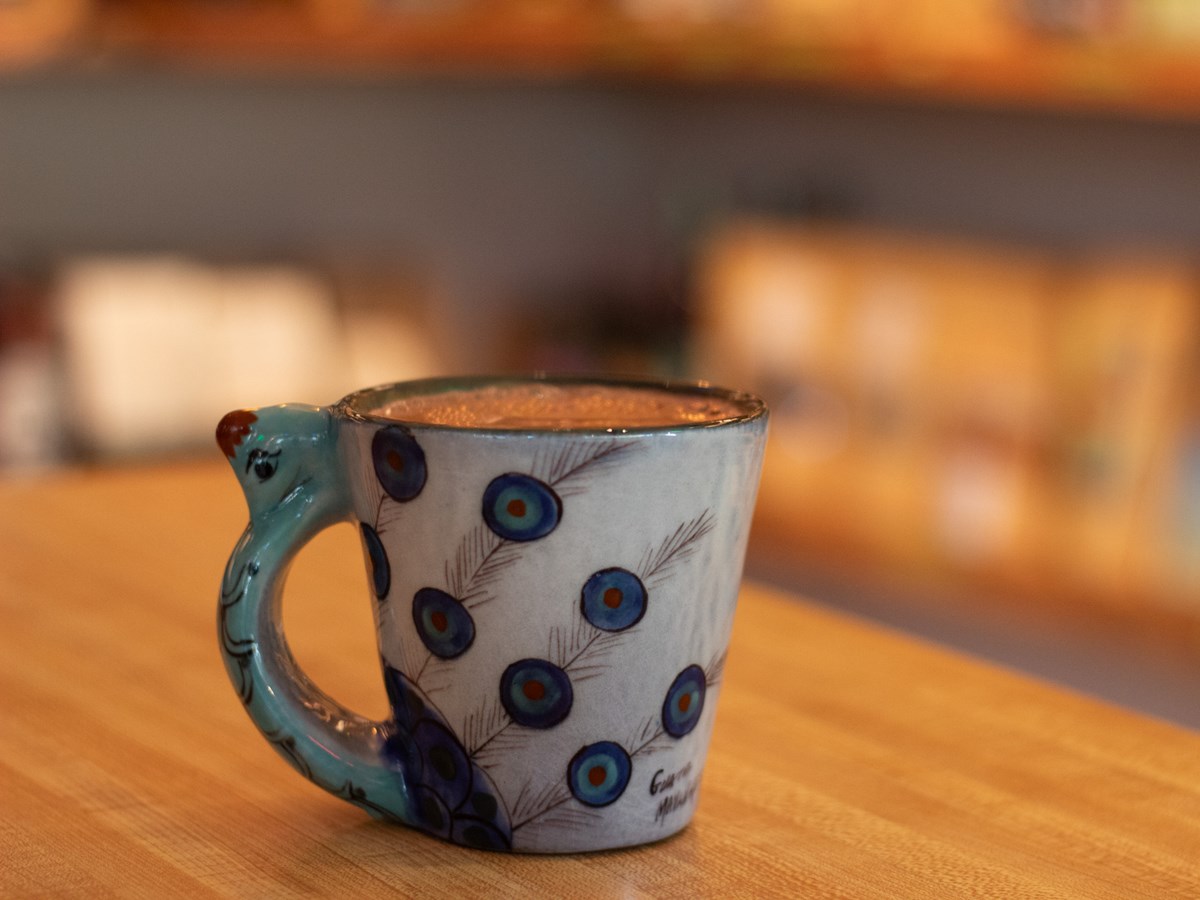 Café Xocolatl’s signature chocolate drink, a xocolatada, Monday, Sept. 23, 2024, at 1607 10th St in downtown Sacramento.(Gerardo Zavala/CapRadio)
“Our whole mission is to get people away from bad quality products that are bad for your body, bad for the environment, bad for all the people behind it except for the very few rich people at the top,” he said. “We’re trying to highlight what I call the chocolate family — people with good intentions making craft chocolate and doing everything right from how they’re sourcing it, how they’re making it and even how they’re shipping it.”
Wolansky said his cafe is unique because he sources high-quality cacao from small farms across Latin America such as DaliLeo Cacao in Guatemala.
“That’s a small permaculture farm that’s trying to keep the heirloom cacao plants alive,” he explained. “There’s less than 1% left of true heirloom cacao in the world, so if they don’t do what they’re doing, we’ll lose all the original cacao plants to GMO crops.”
He said the cafe supports at least 10 to 15 Latin chocolate makers.
Wolansky also encouraged people to visit his two favorite Latino-owned restaurants in the area, Mayahuel and El Novillero.
“The reason I say that is because I’m vegetarian and they have a secret plant-based menu if you ask for it,” he said of Mayahuel. “El Novillero feels really authentic. The ambience, the way they treat you, the food. That’s my favorite Mexican restaurant right now.”
Melanie Bown works nearby and recently found the cafe. During a late September visit, she said she enjoyed the espresso and the variety of chocolates offered.
“The espresso was really good and a lot of care and attention was paid to it,” she said. “It’s a lot to take in all the chocolate, so it’s fun because you discover new things.”
La Flor
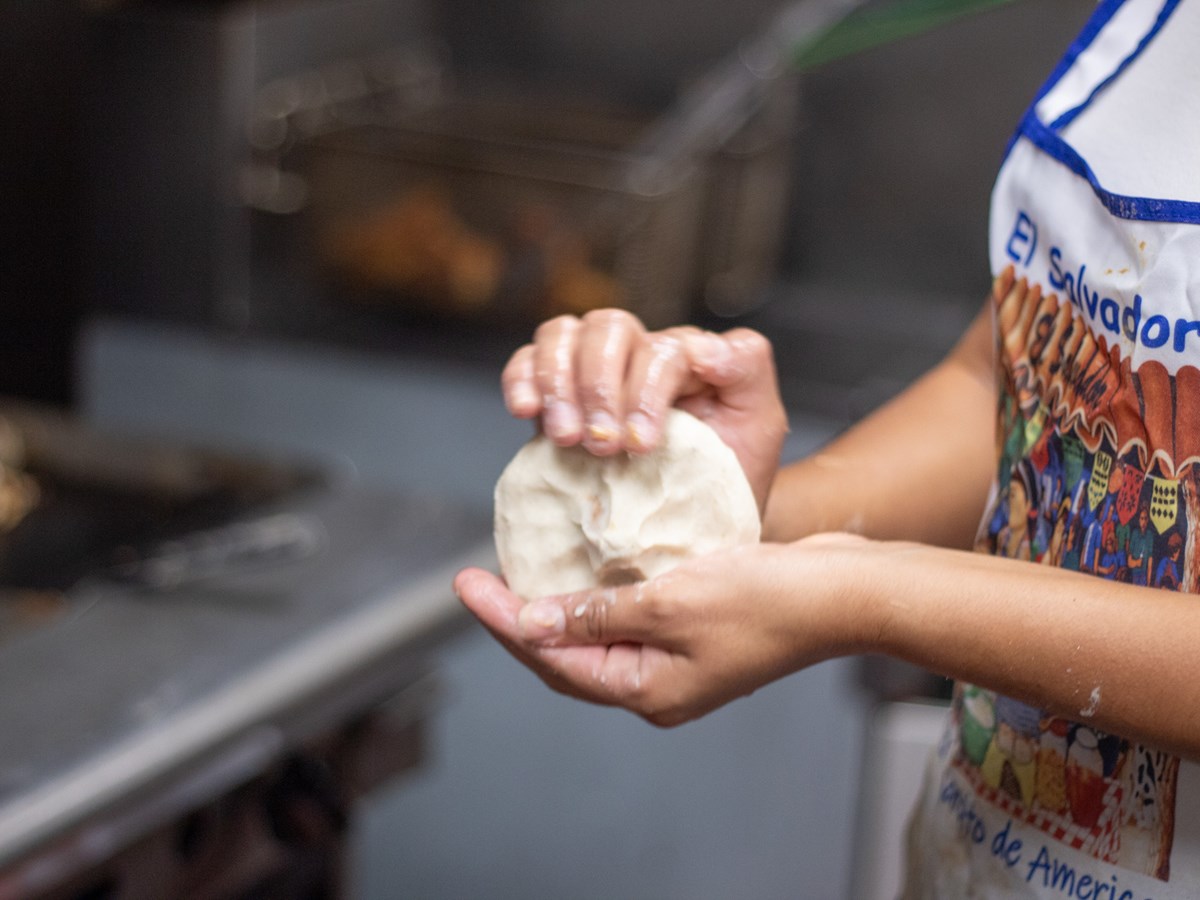 La Flor employee Rosa Garcia makes a Salvadorian pupusa Friday, Sept. 27, 2024, at 2440 Fulton Ave. STE 15 in Sacramento.(Gerardo Zavala/CapRadio)
When La Flor de Michoacán opened at 2390 Northgate Blvd. nearly 40 years ago, the restaurant only served Mexican food. Owner Maria Diaz took over the space from a Mexican restaurant that went out of business, and kept its name as a business strategy to retain its clientele.
But Diaz is Salvadorian, not Mexican. She started offering free pupusas — a staple in Salvadoran and Honduran cuisine — to see if her customers were interested.
“When the buzz started going, she internalized it into the menu and we went with it,” said Ruby Moreno, Diaz’s daughter. “It became one of her big sellers over time.”
Moreno noted that this positioned the restaurant for success as Sacramento began experiencing a population boom of Central Americans, particularly Salvadorians.
That success led Moreno to open a second location in Arden roughly 20 years ago called La Flor Pupusas Grill.
Lizette Diaz, Moreno’s sister, manages the original Northgate location. She argued that La Flor stands out because it is family-owned and offers both Mexican and Salvadorian food to Sacramento’s diverse population.
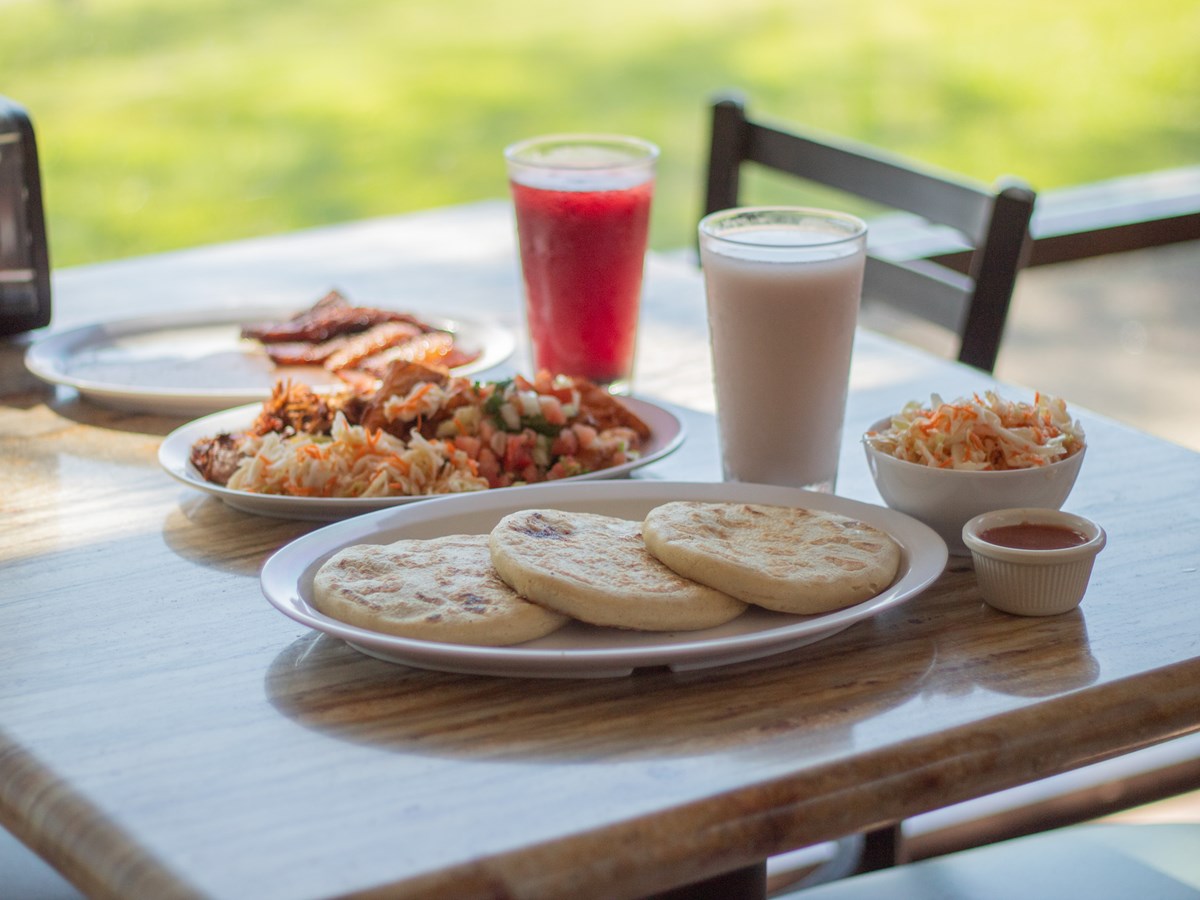 (From front) Pupusas, yuca con carnitas and platanos fritos paired with homemade jamaica and horchata Friday, Sept. 27, 2024, at 2440 Fulton Ave. STE 15 in Sacramento.(Gerardo Zavala/CapRadio)
They added that nothing served at the restaurant is processed or canned, including their homemade aguas frescas. The family even imports ingredients, like guanabana, a tropical fruit only grown in Central America, to ensure their food is authentic.
“We truly do take our time in everything that we make,” Moreno said. “Organic is such a buzz [word] right now, but we’ve been organic for over 30 years. Everything is from scratch.”
And although the two said they don’t often eat out at other Mexican or Salvadorian restaurants in Sacramento because of how good their food is, they do have a soft spot for a couple of birria taco spots around town.
One of them is El Cora Birria, a small eatery located in a gas station convenience store off Fruitridge Road in Sacramento.
“It’s a gas station, but inside they’ll put a speaker for music,” Lizette Diaz said. “They’ve added a couple of tables and they have an actual kitchen.”
They also recommended visiting Doña Mari Cocinita located at 3721 47th Ave. in Sacramento.
Chicha Peruvian Kitchen
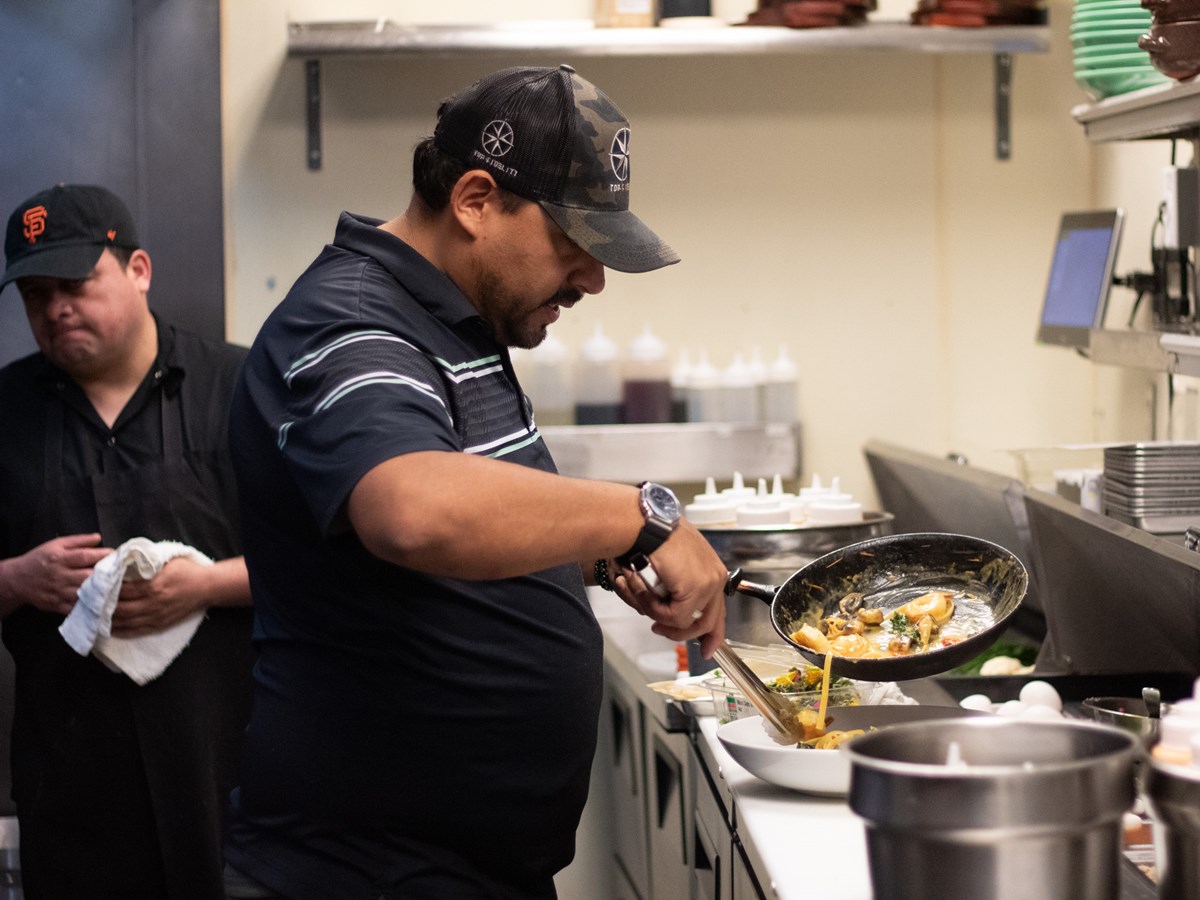 Chicha Peruvian Kitchen owner Giancarlo Zapata prepares food Wednesday, Sept. 25, 2024, at 1501 16th St. in Sacramento.(Gerardo Zavala/CapRadio)
Midtown recently got its first Peruvian restaurant with the opening of Chicha Peruvian Kitchen. The business replaced the old Uncle Vito’s Slice of NY location at 1501 16th St. near Fremont Park.
Owner Giancarlo Zapata said he and his family moved to Sacramento from Peru for better opportunities. He and his wife, who are both professional chefs, started out as cooks at local restaurants. However, Zapata said their goal was to bring the flavors of their home country to Sacramento.
“We started selling food from our home and the Peruvian community supported us tremendously because we were the only ones offering Peruvian cuisine,” he told CapRadio in Spanish. “All of a sudden, we had 20 people, and then more came.”
After establishing that there was a demand for high-quality Peruvian food, the couple decided to upgrade from their small kitchen in their home to an establishment in Roseville. They opened Chicha Peruvian Kitchen along Sunrise Ave. in 2021, and their success there led them to be named by the Sacramento Bee as one of Placer County’s five best restaurants and one of the region’s 50 best restaurants in 2022. The restaurant also participated in the 2023 Tower Bridge Dinner.
All that success led Zapata to open his second location only three years after getting started in Roseville. He argued that what makes his restaurant successful is its commitment to authenticity, creating dishes that most Peruvians grew up with, but elevated through its presentation and distinctive “colors and flavors.”
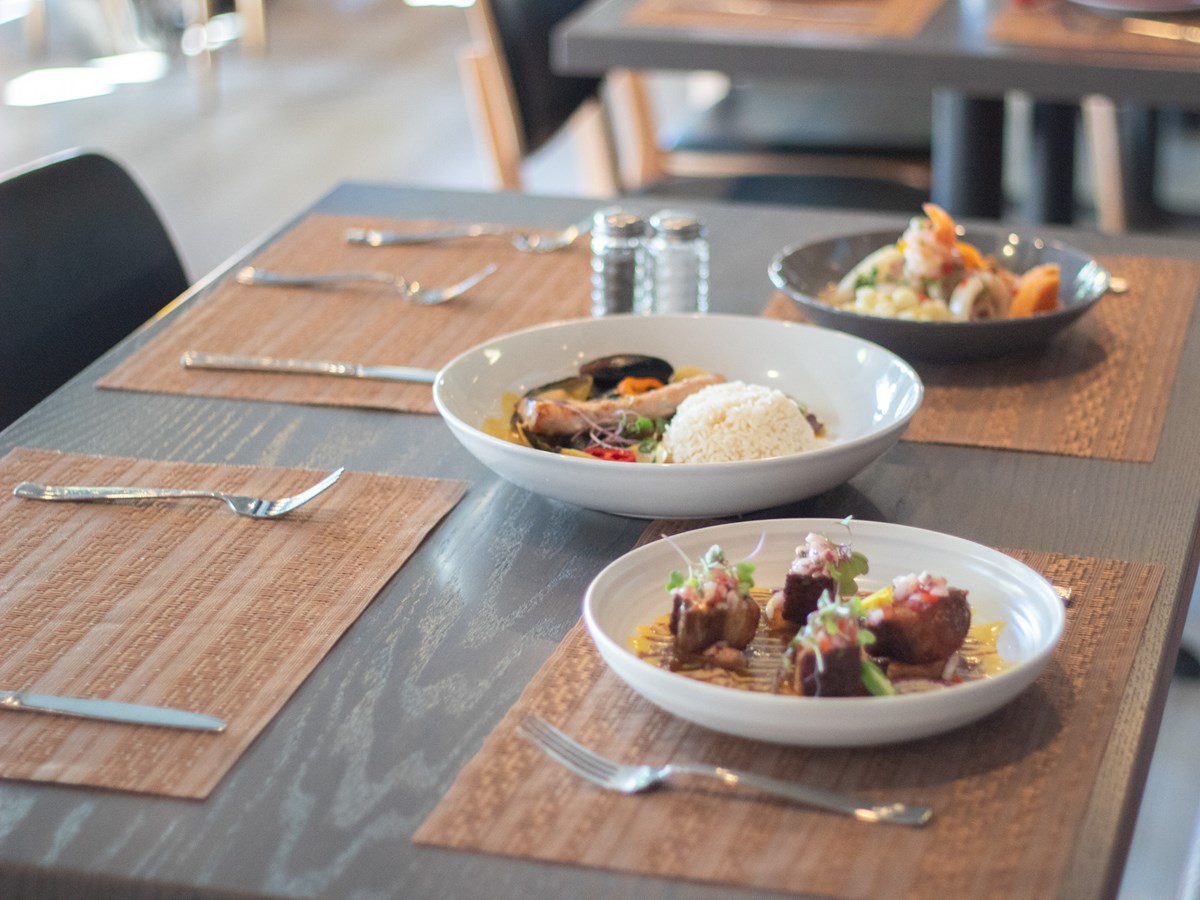 (From front) Pork belly anticuchero, mahi-mahi costeron and ceviche pimentel Wednesday, Sept. 25, 2024, at 1501 16th St. in Sacramento.(Gerardo Zavala/CapRadio)
Zapata noted that a lot of Peruvian food is fused with Chinese, Japanese and African cuisines, to name a few. However, given the lack of Peruvian cuisine in the region, he wanted his restaurant to be as authentic and traditional as possible.
“In Sacramento, there aren’t many Peruvian restaurants and people don’t know about traditional Peruvian food,” he explained. “If we start making fusion food, because there is a lot of fusion in Peru, they would get confused. So we wanted to start with traditional Peruvian food.”
One restaurant Zapata said he enjoys visiting because of its originality is Nixtaco, a Michelin-rated restaurant located in Roseville.
“It seems to me that it’s been very true to its initial proposal with its salsas, their own flour, the color of their tortillas,” Zapata added. “They’re not your typical tacos, they’re more elaborate. That’s what makes it different.”