Placer County researchers are on the hunt for a particular species of insect that could pose a public health risk.
The Placer Mosquito and Vector Control District is working with the Centers for Disease Control and Prevention (CDC) as part of a nationwide surveillance program to capture biting flies called Culicoides, also known as biting midges or “no-see-ums.”
Commonly found in woodlands and near flowing water, these tiny insects could harbor a disease that in recent years has been spreading across different parts of the globe, though not yet in the local area. It’s a tropical infection called Oropouche.
What is Oropouche?
According to the World Health Organization (WHO), Oropouche is a virus spread by the bites of infected insects like Culicoides or possibly mosquitos.
The virus was first identified in 1955 in Trinidad and Tobago, near the Oropouche River, and is largely found in South America and the Caribbean.
The WHO says symptoms of Oropouche include fevers, headaches, joint or muscle pain, chills, nausea, vomiting and rashes. The symptoms can appear similar to other insect-born diseases like dengue, Zika or chikungunya.
Infected patients usually recover within a week after developing symptoms, though recovery can take as long as two weeks and include more serious complications like meningitis, encephalitis or birth defects during pregnancy.
The CDC says up to 60% of patients can relapse and see symptoms reoccur days or weeks later. There is no vaccine or medicine to treat Oropouche.
Catching a “no-see-um”
Joel Buettner is the General Manager of the Placer Mosquito and Vector Control District. He said the agency is part of the larger American Mosquito Control Association, which was asked by the CDC to start catching these biting flies after a recent outbreak of Oropouche.
“In 2024, Oropouche virus was detected in Cuba, Europe and in other parts of South America, so that's what prompted the concern,” Buettner explained. “CDC provided some funding and AMCA members were asked to participate in a nationwide surveillance plan.”
According to the CDC, several cases of Oropouche were reported in the U.S. during the outbreak, but these were attributed to travel and the disease did not spread within the country. Several deaths from Oropouche were also recorded globally, despite the virus rarely being fatal.
Buettner said the district began catching the biting flies earlier this summer.
“As part of this program we've been asked to set some traps, that are very similar to mosquito traps, in places that we feel like we would be able to capture large amounts of local Culicoides,” Buettner explained.
 Casey Hubble, Lab Supervisor at the Placer Mosquito and Vector Control District, places one of the traps used to catch biting flies.Courtesy of the Placer Mosquito and Vector Control District
The captured insects are then sent to the CDC for testing and identification,“to try and get an idea [if] we have the same species that exists in the Amazon, or in places where Oropouche is being transmitted,” Buettner said. “If that's the fact, that's a little bit of a red flag for us.”
He said it is not uncommon for vectors like the biting fly to carry a virus like Oropouche, but without any human cases or other indicators, “they want to just get a baseline.” Buettner added that the CDC will then likely make recommendations to inform people living close to areas where an Oropouche outbreak is happening, and set up long-term surveillance on Culicoides.
Placer County has already sent at least 1,500 samples to the CDC, and trapping will continue throughout the rest of the season.
Prevention and protection
Buettner says while no cases of Oropouche virus have been detected in Placer County, or across the Western U.S., much of the district’s work is preventative in nature.
“Our mosquito and vector control districts not only address the threats that we have here… but part of our job is to anticipate future threats and do the research and the preparation,” he explained. “We've seen diseases like Zika, and even West Nile back in the early 2000s, just kind of crop up and move pretty quickly from one part of the globe to another.”
He said the district is helping to anticipate some of these diseases, track threats that are emerging overseas, and compile important scientific information, “to make good decisions in terms of prevention and response… if and when they come here.”
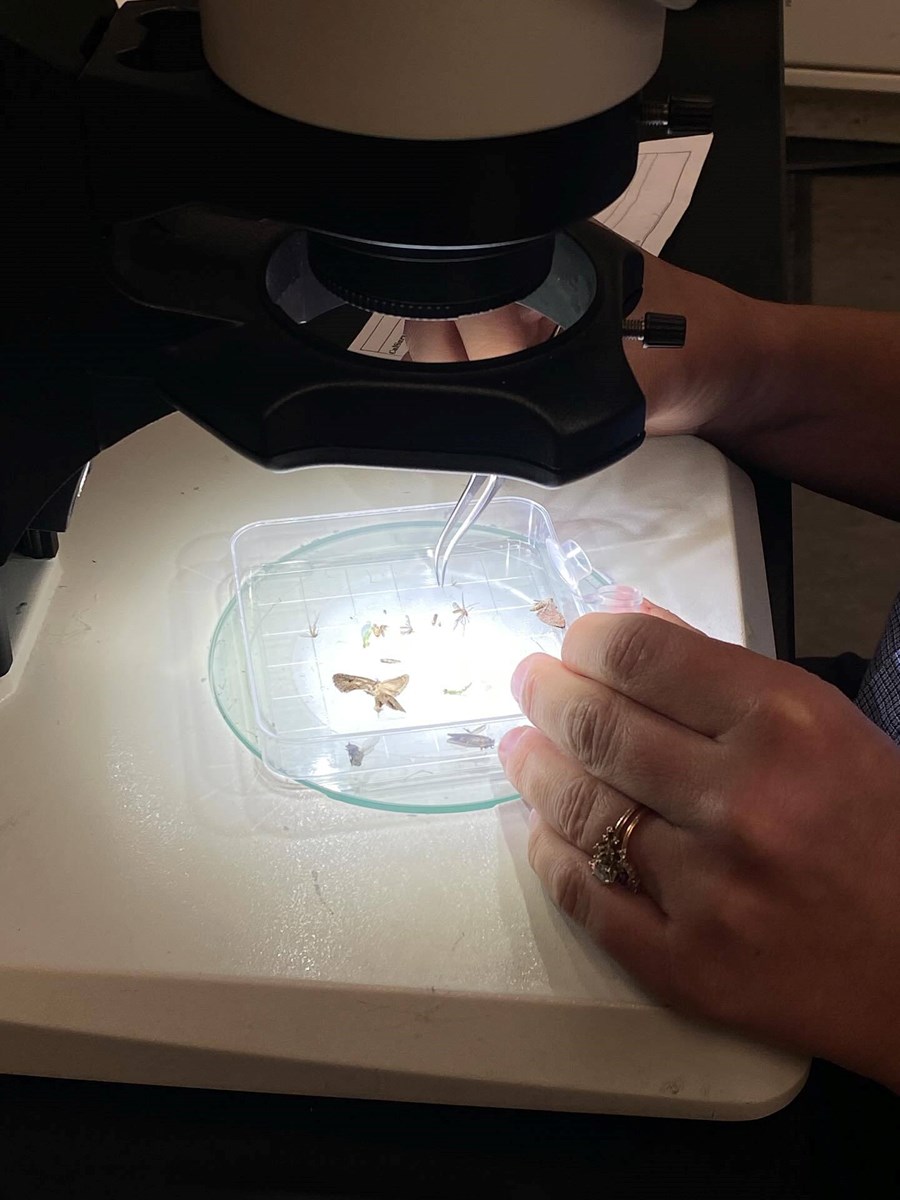 Vector Control Technician Melissa Cooke analyzes a sample.Courtesy of the Placer Mosquito and Vector Control District
In the meantime, Buettner said people can take simple measures to keep themselves safe from “no-see-ums,” mosquitos and other insects. These include wearing protective clothing, such as long-sleeved shirts and pants, and using insect repellents that contain EPA-approved ingredients. The district also has more information available on its website.
“We will be putting out information that is relevant, to help people stay safe and enjoy their summer,” Buettner concluded.
Follow us for more stories like this
CapRadio provides a trusted source of news because of you. As a nonprofit organization, donations from people like you sustain the journalism that allows us to discover stories that are important to our audience. If you believe in what we do and support our mission, please donate today.
Donate Today