It’s not always easy getting the average person obsessed with snakes. They’re often an object of fear. But some enthusiasts want to change that — like Michael Starkey. He’s the founder of the Sacramento-based conservation nonprofit Save the Snakes.
He gets it. It’s true that some snakes are venomous, so the fear isn’t totally unjustified. Sometimes, that makes the work of conserving them a little complicated.
“Saving snakes is hard because most people really are afraid of them or don't know about them and don't understand why they're important,” Starkey says.
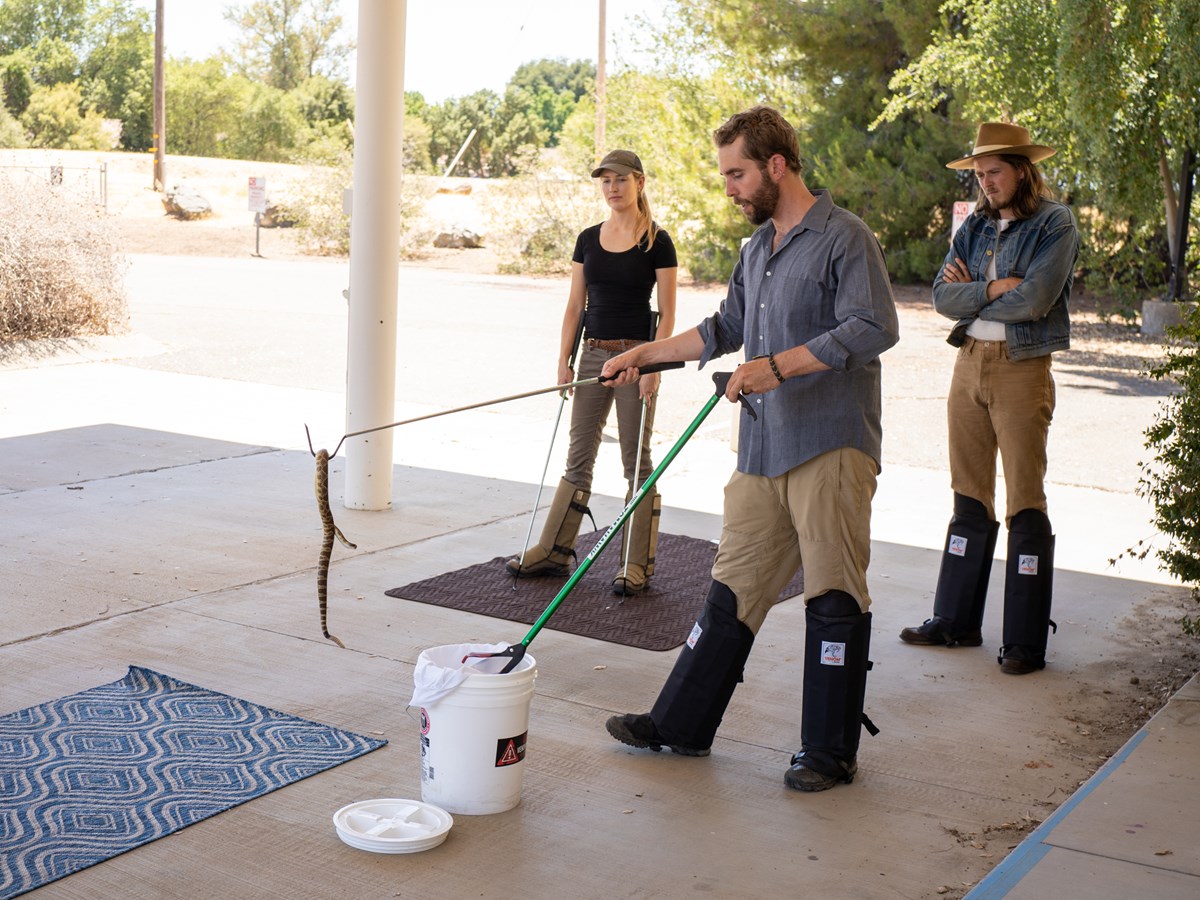 Save the Snakes regularly hosts venomous snake training courses to get more people educated on how to handle them. Starkey says this work, as well as all the work led by Save the Snakes, is aimed at boosting understanding and conservation.Courtesy of Michael Starkey
But he also believes that if Californians knew more about them, there’d be a lot less fear of an animal that plays an important role in the state’s ecosystems. That’s why his group partnered with the California Rice Commission and Senator Roger Niello on legislation to make the giant garter snake — a species that’s native to the Sacramento region — California’s state snake.
CapRadio’s Manola Secaira visited Starkey’s office, where he keeps a variety of snakes that are native to the region for educational workshops hosted by his group, to learn more about his mission.
This interview has been edited for clarity and length.
A lot of your work is aimed at getting people more comfortable with snakes. How do you open up that conversation with someone who’s afraid or a little skeptical?
It's really important to recognize that many people fear snakes and for good reasons. Some snakes are venomous and some venomous snakes kill people. That is a reality that people face around the world.
I feel fortunate that I have a little bit of an understanding of snakes and therefore, I see them in a different way. It's really interesting when I have people who go on a hike with me or they come to our snake conservation center to learn about snakes, they may be hesitant. But when they see myself or our volunteers share their passion about them and they talk about the different behaviors, they help people who are hesitant or afraid of snakes to see them in a different way.
When people understand snakes a little bit more, that it just completely takes away the fear factor because they're less unknown, and that's what a big part of the fear of these animals is. It's hard to relate to something that doesn't look like you. It doesn't move like you, right?
So, the more people understand snakes, the more likely they're going to see them in a way that's positive.
What kind of snakes should someone expect to find in the Sacramento area?
In the state of California, we have many different types of snakes. It's kind of what makes California super cool.
In the Sacramento area, there are a few different non-venomous species that people will see, like our Pacific gopher snakes, our California kingsnakes.
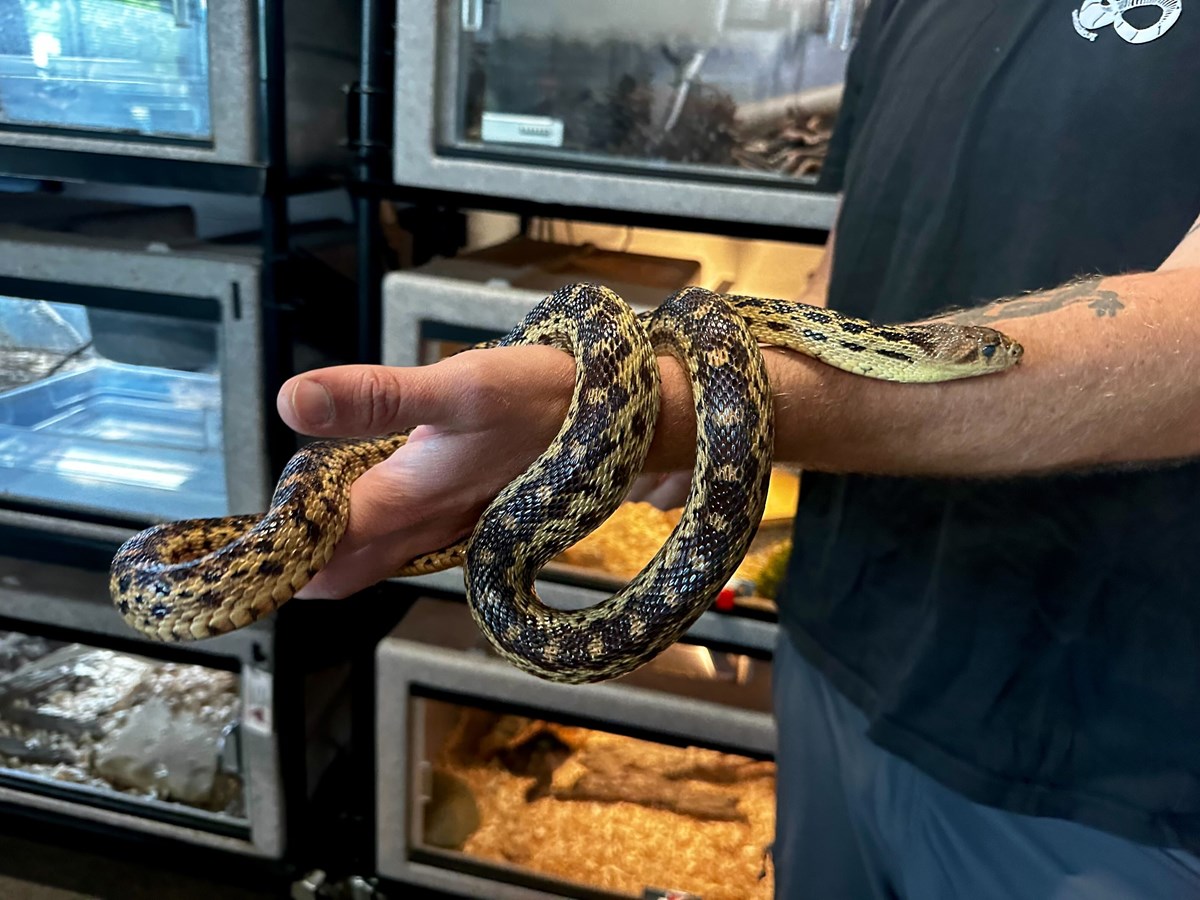 Michael Starkey showcases a gopher snake on May 21, 2025. The snake is housed at Save the Snakes’ office, the Snake Conservation Center, for educational purposes.Manola Secaira/CapRadio
But if you're concerned about venomous snakes, you just need to learn the rattlesnake because in the Sacramento area, and actually all of Northern California, we only have one type of rattlesnake species. And if you know what a rattlesnake looks like, where it lives, then all the other snakes — they're non-venomous, so you don't have to be concerned about them.
What part do these snakes play in our region’s ecosystems?
Snakes are critically important animals for our world in general because they are not only predators of other animals, but they're also prey to many different types of animals.
In the Sacramento area, even our rattlesnakes — which we might have hesitation about — are an important ecosystem balancer. They eat ground squirrels, they eat other rodents that may cause problems to humans. They serve humans as an ecological pest control service — free of charge, no problem.
But also other animals will eat rattlesnakes, and other snakes. So hawks will eat rattlesnakes, even turkeys will eat baby rattlesnakes.
This balance is what's so important because you have to have a healthy ecosystem. You need to have animals and plants all coexisting together.
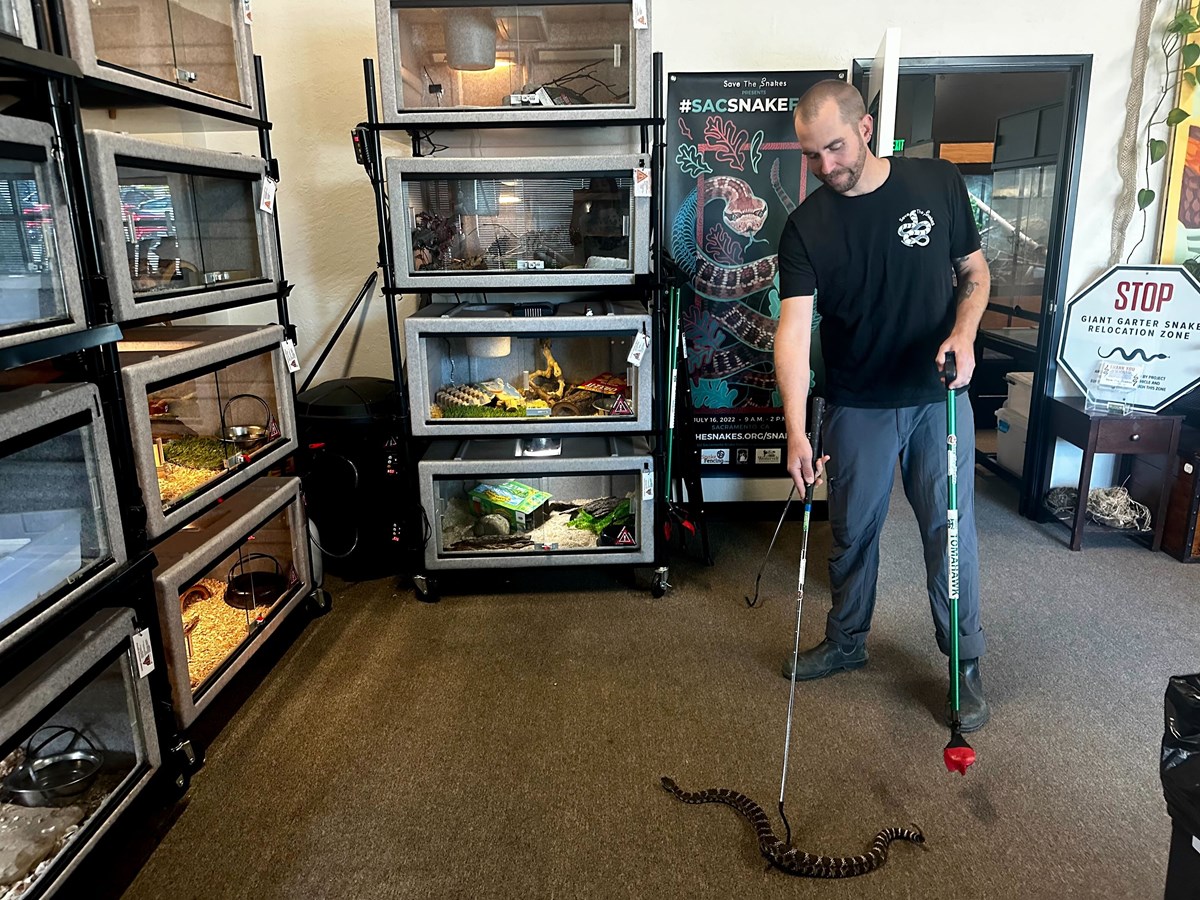 Michael Starkey uses tools to safely handle one of the rattlesnakes housed at Save the Snakes’ office, the Snake Conservation Center, on on May 21, 2025. The snake is kept for educational purposes.Manola Secaira/CapRadio
I know a big part of Save the Snakes’ mission is encouraging snake conservation. What’s endangering native snakes right now?
Well, habitat loss is a big threat for many wildlife, but it's also a big impact to some of our native snake species.
For example, in the Sacramento area, we have a snake called the giant garter snake, and it only lives in freshwater marshes. That’s its prime habitat. And marshes and wetlands in general are some of the most threatened ecosystems on the planet. So, if we look at loss of habitat due to development or, you know, climate change drying up parts of California, that's just going to shrink those habitats even more.
Now, you’re looking to, hopefully, bring more awareness to the giant garter snake by making it a state symbol. Why that snake, and what do you hope will happen if your effort is successful?
So, the giant garter snake is truly a special snake to California. It is the longest garter snake species in the world. They get up to 5 ft long. They are only found in the Central Valley of California.
The problem is no one knows about this snake. It’s because it's usually found in private land or in preserves or in areas where most people can't see the snake, and they're highly secretive. If you walk by a giant garter snake, the first thing it does is it dives into the water and it disappears. It's very hard to find the snake, but it is greatly imperiled by habitat loss.
Those problems are only getting worse if people don't know about it. If it's enshrined in California's legislature to make it our state snake, children will learn about the snake every single year, and the more people we have that learn about it, that become inspired by its presence, they'll hopefully also be inspired to want to save it and protect it for the long term.
What would you say to the average person who wants to be prepared if they encounter a snake in the wild? What’s the best approach?
If people see snakes in the wild, they just need space. That's all they need.
Some people are like, "Well, what does that mean? What's space?" You know, give them like 10 feet and then just watch them. It's just like if we see other wildlife, like a fox or a turkey. You would observe it from a distance and you would be, maybe, feeling a little fortunate that you'd get to see wildlife. Obviously, don't be grabbing snakes because you want to keep yourself safe.
But when you give a snake space, they usually just mind their own business or try and get away from you. We're predators to them.
If anyone is in doubt [about the snake species], you can take a picture. You can call Save the Snakes. We have a number on our website. But there's also apps [like] Seek by iNaturalist which will instantly identify a snake.