Kayley Walker is no stranger to fire.
It’s a force that’s painted all parts of her life — like as a kid, when she’d watch her grandfather light piles of dried sticks and brush at the family ranch. That’s a good memory for Walker, and one she counts among her first experiences with fire in an Indigenous context.
But that relationship became more complex in 2017 when, as a teenager, she saw her home consumed by a blaze during the Tubbs Fire.
“At that point, fire was just something to be afraid of,” Walker said.
Despite that fear, she felt drawn to work with fire. She’s a tribal member of the Picayune Rancheria of the Chukchansi Indians and says the practice of cultural burning has been an important one to her Tribe for millennia. After some years, she started to explore her relationship with fire and began connecting to Indigenous practitioners.
That journey eventually led her to the Tribal EcoRestoration Alliance, or TERA, the Indigenous-led group dedicated to sharing knowledge with a generation of cultural burners. She took the group’s five-day firefighter and firelighter training with her sister, MJ, during the summer last year.
“We sort of began rebuilding our connection with fire as something not to be afraid of, but just something to be respected,” she said. “It’s a tool, it’s an ally, it can be a friend.”
California, as a whole, is also working to rebuild its relationship with fire. State forest managers spent most the 20th century suppressing fires, believing it would do more harm than good. That also meant banning Indigenous cultural burning, a tradition that’s been carried on in the state’s fire-adapted landscape since long better settlers arrived.
The rest of the story is one often repeated by forest managers today: Suppression led to the build up of dried brush and other fuels for fires in state forests, creating an environment ripe for some of the biggest wildfires in California’s history.
Nowadays, state officials have walked back that previous stance and set goals to burn hundreds of thousands of acres in California annually as a way to cut back on wildfire threats. Part of achieving those goals includes encouraging the practice of cultural burning.
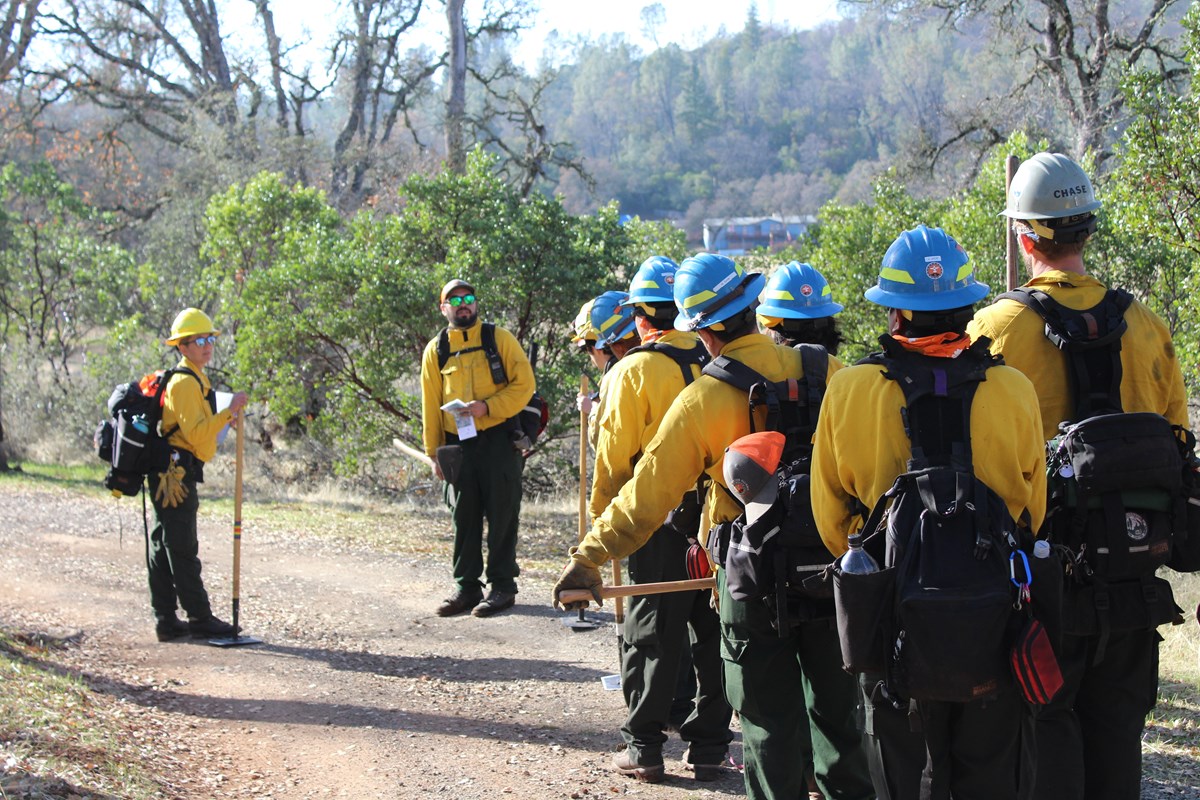 TERA Field Coordinator Jordan Reyes and TERA Stewardship Manager Thea Carlson address hand crew members at a burn on December 11, 2024.Manola Secaira/CapRadio
Rowena Yeahquo, a regional tribal relations specialist for the Forest Service in California, says she’s seeing more collaboration between the forest service and tribes.
“We're working with them in a way that we've never worked with them before in how we're incorporating a lot of their traditional ecological knowledge,” Yeahquo said. “And I think it’s a momentous turn.”
Now, tribes and groups like TERA are working to revitalize the practice and integrate it into California’s plans. The group itself is a collaboration, including the Robinson Rancheria Pomo Indians of California, the Scotts Valley Band of Pomo Indians and the U.S. Forest Service in the Mendocino National Forest.
But change requires seeing fire as more than a tool — as it's often viewed in the more clinical context of a prescribed burn, which is focused primarily on reducing wildfire risks.
Lindsay Dailey, TERA’s executive director, says cultural burning accounts for the wellbeing of a forest overall.
“The ecological and cultural context of land stewardship is missing from fire suppression, because that's not what fire suppression is about,” she says.
Plants as relatives
Participants, including the Walkers, gathered on Pinoleville Pomo Nation tribal lands in Mendocino County for a training last summer. Subjects included what state officials see as the basics of prescribed burning — like a session on using firefighting equipment and physical tests of endurance.
But it also involved ecological lessons, like one where participants were asked to identify native plants and share their knowledge of the landscape.
“It’s not first thinking about plants as fuels,” Dailey says. “We're thinking about plants as relatives. We're thinking about their role within this whole system.”
A key lesson in TERA’s workshops: Cultural burning is more than a means to an end. It’s a practice that requires a deep respect and understanding of the ground you’re standing on before you light a blaze.
Jordan Reyes, a TERA field coordinator and Middletown Rancheria tribal member, often leads group trainings and burns. He says cultural burning may have similar impacts to prescribed burning, but it considers a wider breadth of factors — like ensuring plants that could be used for food or medicine aren’t damaged.
“Cultural fire is for our food sovereignty, for our sovereignty of our water, for sovereignty of everything for us,” says Reyes. “It's a part of us, of who we are.”
 Jordan Reyes, a TERA field coordinator and Middletown Rancheria tribal member, led sessions on using fire fighting equipment and cultural burning techniques at the group’s five-day firefighter and firelighter training in August 2024.Manola Secaira/CapRadio
Stoney Timmons, a Robinson Rancheria tribal member and TERA’s crew lead, says cultural burning methods and the people involved can also look pretty different than what you might expect to see on a prescribed burn.
Sometimes that means using alternate methods to spread the intentional fire — like using lit bundles of tule, a California native plant, instead of a drip torch. And historically, Timmons says the team behind a cultural burn included all kinds of members of an Indigenous community.
“With cultural fire, it’s your elders, the adults, your children — a continuous cycle of learning right through your elders, sharing stories,” he says. “So that way, when [the kids] grow up, they’ve seen the process and have heard the stories. To me, that's the biggest difference.”
Restoring the land, and relationships
In December, Walker finally worked on her first burn with TERA. That meant walking around with a backpack pump full of water — often affectionately referred to as a “piss bag” by crew members — and monitoring pile burns, occasionally spraying them to keep the fire in check.
It wasn’t her first burn, but Walker says working with TERA has made her relationship with the practice even stronger.
“I can know what the weather looks like and how it’s going to affect the fire behavior,” she says, as one example. “I love what I've been able to do with fire in the past, but I really feel like I have been able to approach it with a deeper understanding.”
And like any traditional cultural burn, participants included more than trained crew members. Nikcole Whipple, a recent TERA trainee, attended the burn with her daughter, Rosie.
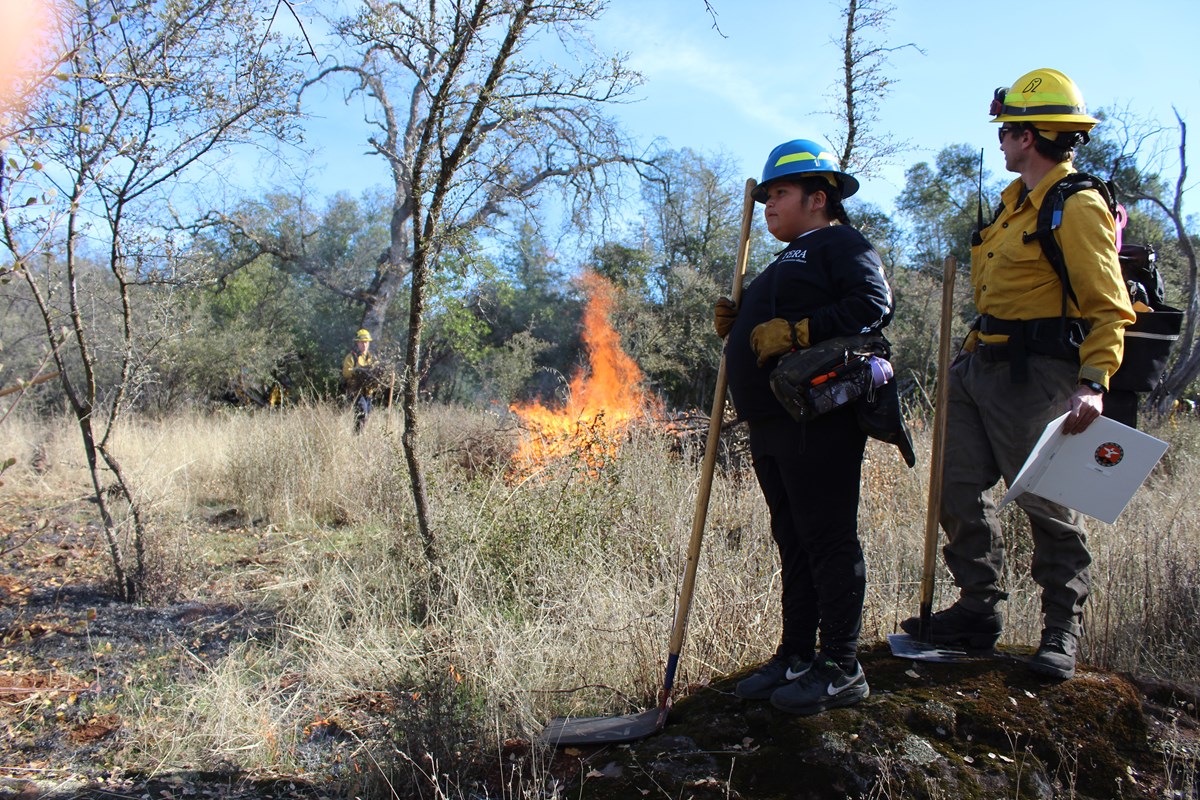 Ten-year-old Rosie Whipple attended a TERA burn on December 11, 2024. She attended with her mother Nikcole, who’s a TERA trainee. At cultural burns, it’s common practice for both children and elders to attend alongside trained crew members.Manola Secaira/CapRadio
While Whipple recited weather reports for Walker and other members of the hand crew at work — a task meant to keep them informed of any changing weather conditions that could impact the burn — Rosie chatted with burners, occasionally asking questions and even contributing to the reports herself.
Whipple, a Round Valley tribal member, said she first witnessed cultural burning as a kid. But a decades-old incident where a nephew sustained serious burns made her family feel more fearful of fire.
With TERA, she’s been able to reconnect with it and bring her children into the practice as well.
“We have always been on our lands,” Whipple says. “So, I really want to continue teaching my daughters how to rematriate the land and … how important it is that our women are part of this restoration.”
Rosie says she’s become more interested in burning and one day, wants to lead a burn herself. She says it’s normal to be scared of fire. Sometimes, she gets a little nervous herself. But she says it’s important to recognize the good it brings.
“It will help burn all the bad things so new plants and stuff can grow,” Rosie says.
TERA’s classes aren’t just for Indigenous burners. People from all backgrounds attend, including firefighters who work with Cal Fire. Dailey says keeping these classes open is an important step toward reframing California’s overall approach to fire. She sees TERA trainings as a place to encourage people to shift out of “a fire suppression mentality and into a stewardship mentality.”
“We are passionate about and committed to working with agency partners that are interested in that shift in mentality,” Dailey added.
 Jordan Reyes, a TERA field coordinator and Middletown Rancheria tribal member, led sessions on using fire fighting equipment and cultural burning techniques at the group’s five-day firefighter and firelighter training in August 2024.Manola Secaira/CapRadio
Decades of repressing the practice of cultural burning has taken a toll. But Walker says TERA gives her hope for the future of the practice. She says she expects to continue working with fire for the rest of her life.
“I just feel like there's so much goodness that can come from the community around fire and how welcoming everybody is,” Walker says. “There's always that opportunity for new people to come and burn and gain that healing relationship because I know a lot of people have trauma, like I've had in the past.”
She says along her journey, this group — which has connected her to others equally passionate about the life-giving force that fire can be — has felt like home.
“We're still rebuilding our relationship with [fire] and it's always going to be an ongoing process,” Walker says. “But ultimately, it's up to what you're doing with your own hands that makes the difference.”
Editor's note: An earlier version of this story incorrectly identified Stoney Timmons as a member of the Middletown Rancheria. Timmons is a member of the Robinson Rancheria.
Editor's note: An earlier version of this story incorrectly said the Pinoleville Pomo Nation tribal lands are located in Lake County. The tribal lands are located in Mendocino County.
Follow us for more stories like this
CapRadio provides a trusted source of news because of you. As a nonprofit organization, donations from people like you sustain the journalism that allows us to discover stories that are important to our audience. If you believe in what we do and support our mission, please donate today.
Donate Today